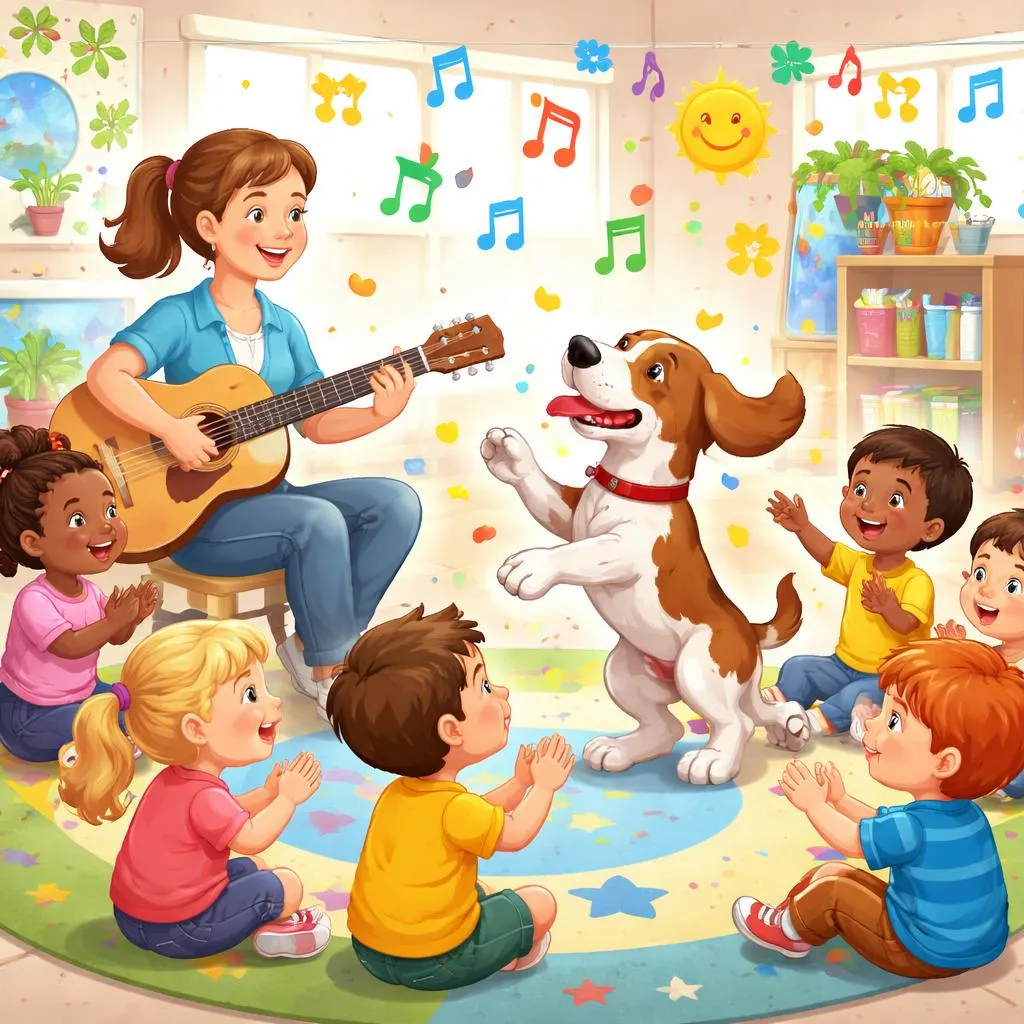

Hello, fellow educators! Today we are exploring a timeless classic. The song "Bingo was his name oh" has delighted children for generations. It offers much more than simple entertainment. This rhyme provides rich opportunities for language development. We will examine its structure and learning potential. We will explore vocabulary, phonics, and grammar points. We will also share engaging activities for the classroom. This guide will help you maximize this song's educational value. Let's discover the magic behind this farmer's faithful dog.
What Is the "Bingo" Song?
This song tells the story of a farmer and his dog. The dog's name is Bingo. The rhyme has a unique spelling pattern. Each verse spells out the dog's name. The song starts with the full name B-I-N-G-O. With each verse, one letter is removed. Clapping replaces the missing letter. This creates a fun and interactive experience. Children love the clapping parts. The repetition builds anticipation. The song works well for group singing. It encourages participation from everyone.
The Lyrics of the Nursery Rhyme
Let us review the complete lyrics. The most common version goes like this:
There was a farmer had a dog,
And Bingo was his name oh.
B-I-N-G-O, B-I-N-G-O, B-I-N-G-O,
And Bingo was his name oh.
The next verse replaces the first letter with a clap. It becomes (clap)-I-N-G-O. The pattern continues. Each verse removes another letter. By the final verse, all letters become claps. The song ends with five claps and then the final line. This cumulative structure builds memory skills. It also teaches sequencing in a fun way.
Vocabulary Learning from the Song
This song introduces several useful vocabulary words. Let us explore each one.
Farmer: This is a person who works on a farm. We can discuss what farmers do. They grow food and take care of animals. We can show pictures of farms. We can talk about other farm workers.
Dog: This is a common animal. Dogs are pets for many families. We can discuss different dog breeds. We can talk about how dogs help people. They can be friends and helpers.
Name: This is what we call a person or animal. We can practice asking and giving names. We can say, "My name is Teacher." We can ask students, "What is your name?" This builds social interaction skills.
Bingo: This becomes the specific name. We can talk about why people choose names. Names can have meanings. They help us identify each other.
Phonics Points to Practice
The spelling pattern in "Bingo was his name oh" offers excellent phonics work. We focus on letter recognition and sounds.
Letter Names and Sounds: The song spells B-I-N-G-O clearly. We can point to each letter as we sing. We can practice the sound each letter makes. B says /b/. I says /i/. N says /n/. G says /g/. O says /o/. This connects letter names to their sounds.
Initial Sounds: We can focus on the first letter B. Bingo starts with B. We can think of other words that start with B. Words like ball, boy, and big are good examples. We can make a list together.
Rhyming Words: The song has a simple rhyme pattern. Dog and oh do not perfectly rhyme. However, the repetition of the name creates rhythm. We can explore words that rhyme with Bingo. Words like lingo and dingo might come up. This stretches phonological awareness.
Grammar Patterns We Can Teach
The simple sentences in this song provide grammar lessons. Let us look at a few patterns.
Past Tense Verbs: The song uses "was" in the title line. "Bingo was his name oh." We can explain that was is the past tense of is. The dog existed before. This introduces the concept of past tense. We can practice with other examples. "He was happy." "She was tired."
Possessive Form: The phrase "his name" shows possession. His means belonging to him. We can contrast with her and my. We can say, "This is my book. That is his pencil." Using physical objects makes this clear.
Sentence Structure: The song uses a complete sentence. "There was a farmer had a dog." This is slightly informal but understandable. We can rephrase to standard structure. "A farmer had a dog." We can practice making similar sentences. "A girl had a cat." "A boy had a fish."
Learning Activities for the Classroom
Let us explore activities that bring this song to life. These ideas work for various learning styles.
Activity 1: Letter Cards and Clapping
Create large letter cards for B-I-N-G-O. Hold them up as you sing. When a letter is replaced by a clap, put that card down. Students clap instead. This visual aid helps children track the pattern. It connects the song to written language.
Activity 2: Name Spelling Practice
Use the song structure to spell student names. Choose a short name like M-A-X. Sing, "There was a boy who had a dog, and Max was his name oh. M-A-X, M-A-X, M-A-X, and Max was his name oh." This personalizes the learning. Children feel proud to hear their names in the song.
Activity 3: Farm Animal Discussion
Talk about the farmer in the song. Discuss what farms look like. What other animals live on farms? We can name cows, pigs, chickens, and horses. This expands vocabulary beyond the song. We can make animal sounds together.
Printable Materials for Your Lessons
Visual supports enhance learning for young children. Here are some printable ideas.
Letter Flashcards: Create cards for each letter of the alphabet. Have a special set for B-I-N-G-O. Use these during the song. Also use them for other letter recognition games.
Sequence Cards: Create picture cards showing the song's progression. Card one shows B-I-N-G-O. Card two shows clap-I-N-G-O. Continue through the pattern. Students arrange them in order. This builds sequencing skills.
Farm Coloring Page: Create a simple farm scene. Include a farmer, a dog, and a barn. Students color while listening to the song. This combines fine motor practice with language exposure. They can point to the dog and say "Bingo."
Educational Games to Reinforce Learning
Games make review sessions exciting and effective. Here are some game ideas.
Game 1: Bingo Letter Bingo
Create bingo cards with letters instead of numbers. Use the letters from B-I-N-G-O and other common letters. Call out letter names. Students cover the matching letters. This reinforces letter recognition. It connects to the song's theme.
Game 2: Name That Tune
Hum the melody of "Bingo was his name oh." See if students can identify the song. This develops auditory discrimination. Once they guess, sing it together. You can also hum other familiar songs for comparison.
Game 3: Doggy, Where's Your Bone?
Hide a small object like a dog bone or a toy. One student leaves the room. The class hides the bone. The student returns and searches. The class sings the Bingo song louder as they get closer. They sing softer as they move away. This game teaches volume control and listening skills. It adds movement to the lesson.
Game 4: Puppet Show
Create simple farmer and dog puppets. Use paper bags or craft sticks. Students act out the song with puppets. One puppet is the farmer. One puppet is Bingo. As they sing, they move the puppets. This dramatic play deepens engagement. It allows shy students to participate through characters.
We have explored the rich learning potential of this classic song. "Bingo was his name oh" offers so much to young learners. We looked at vocabulary development. We practiced letter recognition and phonics. We explored simple grammar patterns. We shared engaging classroom activities. We created printable materials. We played educational games. This integrated approach makes learning natural and fun. The song's repetitive structure builds confidence. Children master the pattern and feel successful. Use these ideas in your classroom. Adapt them to your students' needs. Watch as your learners sing, clap, and grow. The farmer's dog will become a beloved part of your teaching toolkit. His name will echo in your classroom for years to come.