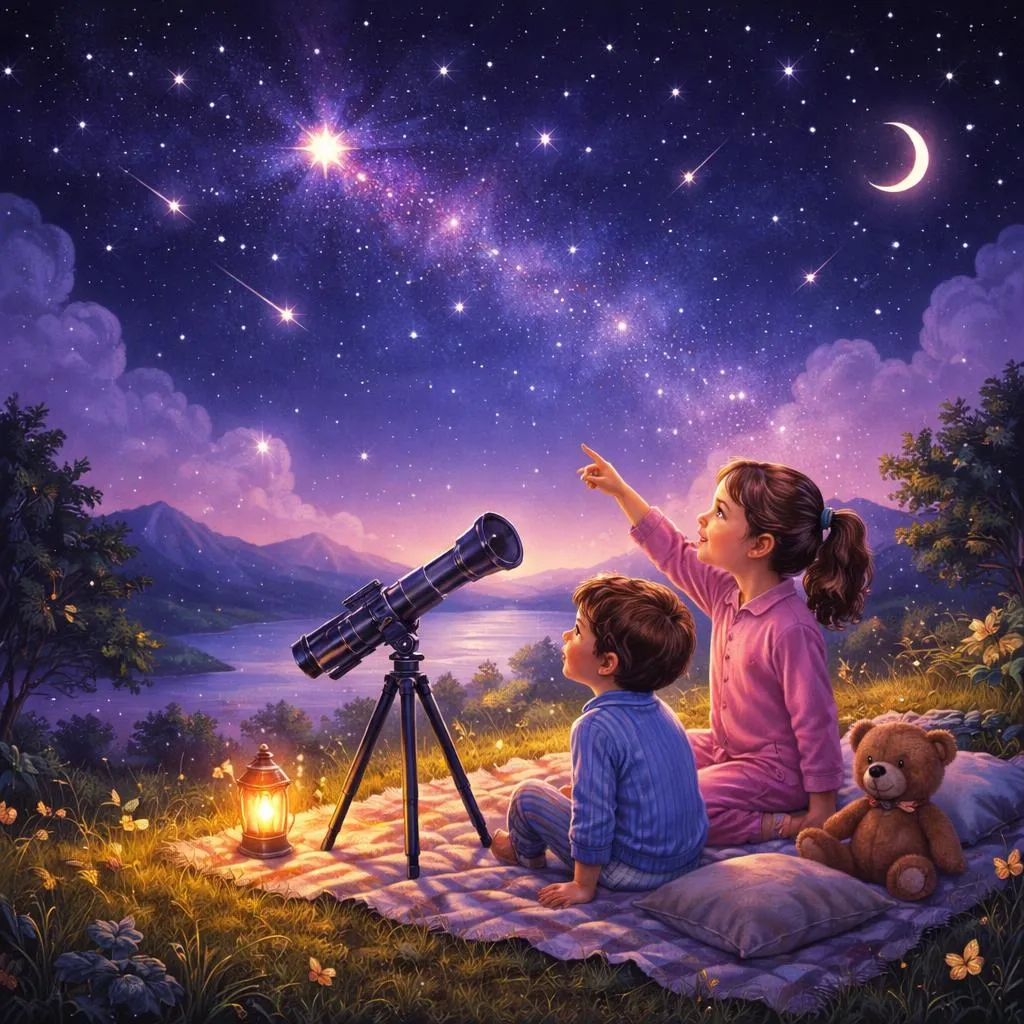

Hello, wonderful educators! Today we are exploring one of the most beloved nursery rhymes of all time. The "twinkle twinkle little star nursery rhyme" has delighted children for over two centuries. This gentle melody asks questions about the night sky. It sparks curiosity about the world above us. We will examine its structure and educational value. We will explore vocabulary, phonics, and grammar points. We will also share engaging classroom activities. This guide will help you maximize this rhyme's potential. Let's discover together what this twinkling star can teach our students.
What Is the "Twinkle Twinkle Little Star" Nursery Rhyme?
This classic nursery rhyme has a rich history. The lyrics come from a poem by Jane Taylor, published in 1806. The poem was called "The Star." The melody is a French tune from the 1700s called "Ah! vous dirai-je, maman." The same melody is used for "The Alphabet Song" and "Baa, Baa, Black Sheep."
The rhyme asks questions about a star in the night sky. It wonders what the star is and what it does. The simple words express wonder and curiosity. These are perfect feelings for young learners.
The rhyme has been translated into many languages around the world. This shows its universal appeal. Stars are a wonder that all children share.
The Lyrics of the Nursery Rhyme
Let us review the complete traditional lyrics. The most common version includes multiple verses.
Verse 1:
Twinkle, twinkle, little star,
How I wonder what you are!
Up above the world so high,
Like a diamond in the sky.
Twinkle, twinkle, little star,
How I wonder what you are!
Verse 2:
When the blazing sun is gone,
When he nothing shines upon,
Then you show your little light,
Twinkle, twinkle, all the night.
Twinkle, twinkle, little star,
How I wonder what you are!
Verse 3:
Then the traveler in the dark,
Thanks you for your tiny spark,
He could not see which way to go,
If you did not twinkle so.
Twinkle, twinkle, little star,
How I wonder what you are!
Verse 4:
In the dark blue sky you keep,
And often through my curtains peep,
For you never shut your eye,
Till the sun is in the sky.
Twinkle, twinkle, little star,
How I wonder what you are!
Vocabulary Learning from the Rhyme
This rhyme introduces several key vocabulary words. Let us explore each one carefully.
Twinkle: This means to shine with a flickering light. Stars seem to twinkle in the night sky. This is a descriptive action word.
Little: This means small in size. The star is little compared to the sky. This builds size vocabulary.
Star: This is a bright object in the night sky. Stars are actually giant balls of burning gas far away. This builds science vocabulary.
Wonder: This means to think about something with curiosity. The rhyme expresses wonder about the star. This builds thinking and emotion vocabulary.
World: This is the planet Earth where we live. The star is above the world. This builds geography vocabulary.
High: This means far above the ground. Stars are very high in the sky. This builds position vocabulary.
Diamond: This is a precious, shiny gemstone. The star is compared to a diamond. This builds comparison and descriptive vocabulary.
Sky: This is the space above the earth where we see clouds and stars. This builds nature vocabulary.
Blazing: This means burning very brightly. The sun is blazing. This builds descriptive vocabulary.
Sun: This is the star that gives us light during the day. It is closest to Earth. This builds science vocabulary.
Gone: This means not here anymore. The sun is gone at night. This builds position vocabulary.
Shines: This means gives out bright light. The sun shines during the day. This builds action vocabulary.
Light: This is what helps us see. Stars give a little light at night. This builds science vocabulary.
Traveler: This is a person who is going on a journey. The traveler needs the star's light. This builds people vocabulary.
Dark: This is the absence of light. Nighttime is dark. This builds descriptive vocabulary.
Tiny: This means very small. The star's spark is tiny. This builds size vocabulary.
Spark: This is a small flash of light. The star gives a tiny spark. This builds descriptive vocabulary.
Curtains: These are window coverings. The star peeps through curtains. This builds household vocabulary.
Peep: This means to look quickly or secretly. The star peeps through curtains. This builds action vocabulary.
Shut: This means to close. The star never shuts its eye. This builds action vocabulary.
Eye: This is the body part for seeing. The rhyme compares the star to an eye. This builds body vocabulary.
Phonics Points to Practice
The rhyme offers excellent phonics opportunities. Let us focus on specific sounds.
The TW Sound: Twinkle starts with TW. This is a consonant blend. We can practice other TW words. Twin, twelve, and tweet are good examples.
The L Sound: Little starts with L. We can practice the /l/ sound. We can feel our tongue on the roof of our mouth. We can think of other L words. Lion, leaf, and leg are good examples.
The S Sound: Star starts with S. We can practice the /s/ sound. We can feel the air hiss out. We can think of other S words. Sun, soap, and sock are good examples.
The Long I Sound: Twinkle and diamond have the long i sound in different places. We can practice other long i words. Ice, like, and time are good examples.
The R Sound: Star ends with R. We can practice the /r/ sound at the end of words. Car, far, and jar are good examples.
The D Sound: Diamond starts with D. We can practice the /d/ sound. We can feel our tongue tap. We can think of other D words. Dog, duck, and door are good examples.
The BL Blend: Blazing starts with BL. This is a consonant blend. We can practice other BL words. Blue, black, and block are good examples.
The TR Blend: Traveler starts with TR. This is a consonant blend. We can practice other TR words. Train, tree, and truck are good examples.
Rhyming Words: The rhyme has beautiful rhyming patterns. Star and are rhyme perfectly. High and sky rhyme wonderfully. Gone and upon rhyme. Light and night rhyme. Dark and spark rhyme. Go and so rhyme. Keep and peep rhyme. Eye and sky rhyme. Recognizing rhymes builds reading readiness.
Grammar Patterns We Can Teach
The simple sentences in this rhyme provide grammar lessons. Let us look at a few patterns.
Exclamations: The rhyme uses "How I wonder" as an exclamation. This shows strong feeling. We can practice making exclamations about other things.
Questions: The rhyme implies questions about the star. What are you? Why do you twinkle? This builds question formation skills.
Comparisons: The star is compared to a diamond. "Like a diamond in the sky." This teaches the use of "like" for comparisons.
Cause and Effect: The traveler needs the star's light to see. If the star did not twinkle, the traveler could not see. This teaches conditional statements.
Pronouns: The rhyme uses "you" to address the star. It uses "he" for the sun and traveler. This teaches pronoun usage.
Present Tense: The rhyme uses present tense throughout. Twinkle, is, shines, show. This describes things that are true now.
Personification: The star is given human qualities. It peeps through curtains. It never shuts its eye. This teaches figurative language.
Learning Activities for the Classroom
Let us explore activities that bring this rhyme to life. These ideas work for various learning styles.
Activity 1: Star Craft Project
Provide yellow paper, scissors, and glitter. Students cut out star shapes. They add glitter to make them twinkle. Display the stars around the room. This builds fine motor skills and connects to the rhyme.
Activity 2: Night Sky Painting
Provide dark blue or black paper. Students paint or draw stars with white or yellow paint. They can add a moon and clouds. They describe their night sky paintings. This builds art and language connections.
Activity 3: Star Gazing Discussion
Talk about what we see in the night sky. Stars, moon, maybe planets. Ask students what they wonder about the stars. This builds curiosity and questioning skills.
Activity 4: Diamond Comparison
Show a picture of a diamond. Compare it to a star. How are they similar? Both sparkle. Both are beautiful. How are they different? One is a gem. One is in the sky. This builds comparison skills.
Activity 5: Day and Night Sorting
Create picture cards showing day activities and night activities. Sun, moon, stars, bed, breakfast, lunch, dinner. Students sort them into day and night categories. This builds science understanding.
Activity 6: Traveler's Path Game
Create a path on the floor. One student is the traveler with eyes closed. Other students make twinkling sounds to guide them. This builds listening and cooperation.
Activity 7: Star Wish Discussion
Talk about making wishes on stars. What would students wish for? They share their wishes with the class. This builds imagination and sharing skills.
Activity 8: Curtain Peek Game
Use a real curtain or blanket. One student hides behind it and peeks out. Others guess who it is. This connects to the line about stars peeping through curtains.
Printable Materials for Your Lessons
Visual supports enhance learning for young children. Here are many printable ideas.
Vocabulary Flashcards: Create cards for key words from the rhyme. Include star, twinkle, wonder, diamond, sky, sun, moon, night, traveler, spark, curtain, peep. Use simple pictures on one side. Write the word on the other side.
Star Number Cards: Create star-shaped cards with numbers one through ten. Students count the stars on each card. They arrange them in order. This builds counting skills.
Coloring Page: Create a coloring page showing a night sky with stars. Add a moon and maybe a traveler below. Add curtains on a window. Students color while listening to the rhyme.
Mini Book: Create a small folded book. Each page shows one verse of the rhyme with simple illustrations. Students can take these home to sing with family.
Day and Night Sorting Cards: Create cards showing day scenes and night scenes. Sun, blue sky, clouds for day. Moon, stars, dark sky for night. Students sort them into categories.
Star Pattern Cards: Create cards showing patterns of stars. Big star, little star, big star, little star. Students continue the pattern. This builds math pattern recognition.
Educational Games to Reinforce Learning
Games make learning fun and memorable. Here are many game ideas.
Game 1: Twinkle Freeze Dance
Play the rhyme. Students dance and twinkle their fingers like stars. When the music stops, they freeze in a star shape. This adds movement and listening skills.
Game 2: Star Memory Match
Create pairs of star cards. They can be different colors or sizes. Place them face down. Students turn over two trying to find matches. They must say "twinkle" when they make a match.
Game 3: How Many Stars?
Place different numbers of star cutouts around the room. Call out a number. Students find that group of stars and count them together. This builds counting and observation.
Game 4: Star in the Sky Guessing Game
Describe a star without saying its name. "I am high in the sky. I twinkle at night. What am I?" Students guess the star. This builds listening and deduction.
Game 5: Diamond Hunt
Hide plastic diamonds or sparkly gems around the room. Students search for them. When they find one, they say, "I found a diamond, like a star!" This builds excitement and connection.
Game 6: Traveler's Path
Create a path on the floor with stars. One student is the traveler. They must follow the star path with eyes closed or blindfolded. Others guide them with "twinkle" calls. This builds trust and listening.
Game 7: Star Letter Match
Write letters on star shapes. Hide them around the room. Call out a letter. Students find that star and bring it back. They say the letter name and sound.
Game 8: Twinkle Bingo
Create bingo cards with star-related pictures. Star, moon, sun, cloud, night, diamond, traveler, spark, curtain. Call out the words. Students cover matching pictures.
Game 9: Star Sentence Building
Provide word cards from the rhyme. Students arrange them to make sentences. "Twinkle, twinkle, little star." "How I wonder what you are." This builds reading and sentence structure.
Game 10: Day and Night Charades
Act out day activities and night activities without speaking. Sleeping for night. Playing outside for day. Students guess whether it is day or night.
Game 11: Star Sensory Bin
Fill a bin with black beans or rice. Add yellow star beads or cutouts. Students search for stars and count them. They can bury and find stars repeatedly.
Game 12: Twinkle Song Creation
Create new verses for the rhyme about other things in the sky. "Twinkle, twinkle, little moon." "Twinkle, twinkle, airplane high." Students invent their own versions.
Game 13: Star Wish Discussion
Talk about making wishes on stars. What would students wish for? They share their wishes with the class. This builds imagination and sharing skills.
Game 14: Star Pattern Cards
Create cards showing patterns of stars. Big star, little star, big star, little star. Students continue the pattern. This builds math pattern recognition.
Game 15: Sparkle Tag
One student is the traveler. Others are stars with sparkly stickers. The traveler tries to collect sparkles from the stars. This adds active play to the theme.
Game 16: Star Sorting by Size
Provide star cutouts in different sizes. Students sort them into groups. Big stars, medium stars, little stars. They count how many in each group.
Game 17: Night Sky Window
Create a classroom "window" with black paper. Cut out star shapes. Shine a flashlight through to create star effects. Students observe and describe.
Game 18: Star Puzzle
Create simple star-shaped puzzles by cutting stars into pieces. Students assemble the puzzles. This builds problem-solving and fine motor skills.
Game 19: Twinkle Adjective Game
Show a star picture. Students take turns adding adjectives. Shiny star. Bright star. Little star. Beautiful star. Twinkling star. This builds descriptive language.
Game 20: Star and Sparkle Craft
Provide materials to create sparkly stars. Glitter, sequins, shiny paper. Students decorate stars and hang them around the room. They sing the rhyme while working.
Game 21: Curtain Peek Guessing Game
Use a real curtain or blanket. One student hides behind it and peeks out. Others guess who it is. This connects to the line about stars peeping through curtains.
Game 22: Traveler and Star Role Play
One student is the traveler walking in the dark. Others are stars who twinkle to show the way. The traveler follows the twinkling sounds or lights.
Game 23: Star Question Circle
Sit in a circle. One student thinks of something in the sky. Others ask yes or no questions. "Is it in the day sky?" "Does it twinkle?" "Is it the sun?" This builds questioning skills.
Game 24: Rhyming Word Hunt
Find all the rhyming words in the rhyme. Star/are, high/sky, gone/upon, light/night, dark/spark, go/so, keep/peep, eye/sky. Write them on cards. Students find the rhyming pairs.
Game 25: Star Lullaby
Talk about how the rhyme is often used as a lullaby. Why do we sing gentle songs at bedtime? Students share their favorite bedtime songs.
We have explored the wonderful world of the "twinkle twinkle little star nursery rhyme." This gentle melody has taught children for over two hundred years. It sparks curiosity about the universe. It builds vocabulary through beautiful poetry. It teaches comparison and wonder. It introduces scientific concepts about day and night. It provides comfort as a bedtime lullaby. We looked at what the rhyme means. We explored vocabulary and phonics. We learned grammar patterns. We shared engaging activities and games. We created printable materials for practice. This integrated approach makes learning natural and joyful. Use these strategies in your classroom. Adapt them to your students' needs. Watch as your learners sing, wonder, and grow. The twinkling star will guide their learning journey every day. Their curiosity about the world above will shine as brightly as the stars themselves.