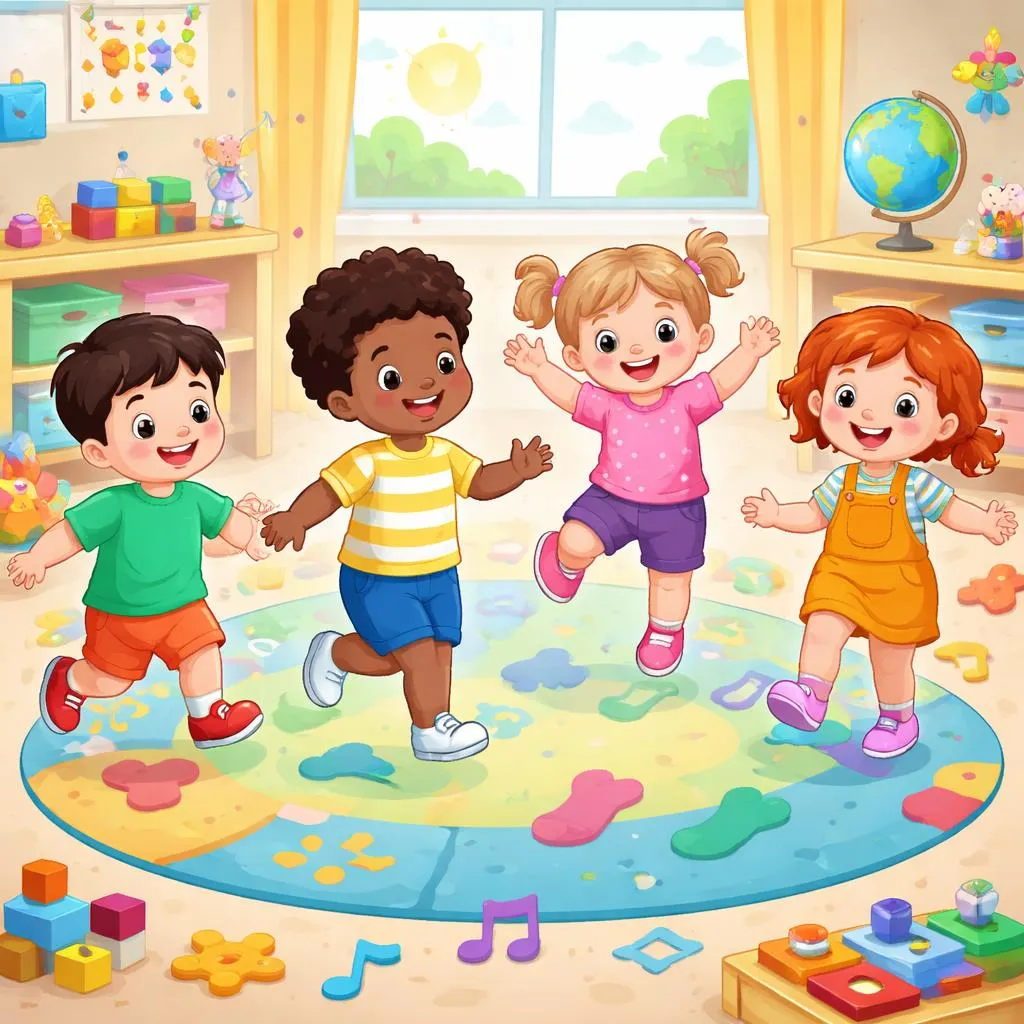

Hello, wonderful educators! Today we are exploring a beloved action song. The phrase "walking walking hop hop hop" appears in a popular children's movement song. This simple tune gets children moving while learning. It teaches action words and following directions. We will examine its structure and educational value. We will explore vocabulary, phonics, and grammar points. We will also share engaging classroom activities. This guide will help you maximize this song's potential. Let's discover together what this movement song can teach our students.
What Is the "Walking Walking" Action Song?
This is a popular children's movement song. It is often used in preschool and kindergarten classrooms. The song gives simple instructions for movements. Children walk, hop, jump, and stop. The actions match the words.
The song helps children develop gross motor skills. They practice different ways of moving. They learn to control their bodies. They also learn to listen and follow directions.
The repetitive structure makes it easy to learn. Children can join in quickly. The movements add a physical element. This helps kinesthetic learners remember the words.
The song also teaches self-regulation. The "stop" command teaches children to freeze. This builds impulse control. It is a valuable skill for classroom management.
The Lyrics of the Song
Let us review the complete traditional lyrics. The most common version goes like this:
Walking, walking, walking, walking,
Hop, hop, hop! Hop, hop, hop!
Walking, walking, walking, walking,
Hop, hop, hop! Hop, hop, hop!
Now we're running, now we're running,
Now we stop! Now we stop!
Now we're running, now we're running,
Now we stop! Now we stop!
Tiptoe, tiptoe, tiptoe, tiptoe,
Jump, jump, jump! Jump, jump, jump!
Tiptoe, tiptoe, tiptoe, tiptoe,
Jump, jump, jump! Jump, jump, jump!
Now we're swimming, now we're swimming,
Now we sleep! Now we sleep!
Now we're swimming, now we're swimming,
Now we wake up! Now we wake up!
Some versions include additional verses. Galloping, skipping, or other movements can be added. The pattern stays the same. Two lines of the movement, then two lines of the next action.
Vocabulary Learning from the Song
This song introduces several key action vocabulary words. Let us explore each one carefully.
Walking: This means moving on feet at a slow pace. One foot is always on the ground. This is the most basic way humans move.
Hopping: This means jumping on one foot. It requires balance and strength. Children practice this skill as they grow.
Running: This means moving quickly with both feet sometimes off the ground. It is faster than walking.
Stopping: This means ceasing movement. It requires body control. This is an important safety skill.
Tiptoeing: This means walking on the toes quietly. It requires balance. Children use this when trying to be quiet.
Jumping: This means pushing off the ground with both feet. Both feet leave and land together. This builds leg strength.
Swimming: This means moving through water. Children pretend to swim with arm movements. This builds imagination.
Sleeping: This means resting with eyes closed. The song uses this for quiet time. This teaches self-regulation.
Waking: This means opening eyes and becoming alert. The song uses this to end quiet time. This teaches transitions.
Phonics Points to Practice
The song offers excellent phonics opportunities. Let us focus on specific sounds.
The W Sound: Walking starts with W. We can practice the /w/ sound. We can feel our lips round. We can think of other W words. Water, window, and wagon are good examples.
The H Sound: Hop starts with H. We can practice the /h/ sound. We can feel the air from our throat. We can think of other H words. Hat, house, and horse are good examples.
The R Sound: Running starts with R. We can practice the /r/ sound. We can feel our tongue curl. We can think of other R words. Run, red, and rabbit are good examples.
The S Sound: Stop and swimming start with S. We can practice the /s/ sound. We can feel the air hiss out. We can think of other S words. Sun, soap, and sock are good examples.
The T Sound: Tiptoe starts with T. We can practice the /t/ sound. We can feel our tongue tap. We can think of other T words. Top, ten, and table are good examples.
The J Sound: Jump starts with J. We can practice the /j/ sound. We can feel our tongue position. We can think of other J words. Jet, jelly, and juggle are good examples.
The ING Ending: Walking, hopping, running, swimming all end with ING. This is a common suffix. We can practice other ING words. Playing, eating, and sleeping are good examples.
Grammar Patterns We Can Teach
The simple sentences in this song provide grammar lessons. Let us look at a few patterns.
Present Continuous Tense: The song uses "we're walking" which is the present continuous. It shows actions happening now. We can contrast with simple present. We walk every day. Now we are walking.
Imperative Sentences: The song gives commands. Walk! Hop! Stop! This is the imperative form. We use it for instructions and directions.
Repetition for Emphasis: The song repeats words for rhythm and emphasis. Walking walking. Hop hop hop. This pattern helps children remember.
Pronouns: The song uses "we're" which is a contraction of we are. This teaches the first person plural pronoun.
Action Verbs: All the main words are action verbs. This builds understanding of verb types.
Prepositions: Some versions include "on our tiptoes" which uses the preposition on. This teaches location words.
Learning Activities for the Classroom
Let us explore activities that bring this song to life. These ideas work for various learning styles.
Activity 1: Action Charades
Call out an action from the song. Students perform it without speaking. Walking, hopping, running, tiptoeing, jumping, swimming. This builds listening and movement skills.
Activity 2: Action Freeze Dance
Play the song. Students do the actions. When the music stops, they freeze. When it starts again, they continue. This builds listening and self-control.
Activity 3: Create New Verses
Challenge students to create new verses with different actions. Galloping, galloping. Skipping, skipping. Crawling, crawling. This builds creativity and vocabulary.
Activity 4: Action Simon Says
Play Simon Says using the actions from the song. "Simon says walk." "Simon says hop." "Stop." Students follow only when Simon Says is used.
Activity 5: Movement Pattern Cards
Create cards with pictures of each action. Arrange them in patterns. Walk, hop, walk, hop. Students follow the pattern. This builds sequencing and movement.
Printable Materials for Your Lessons
Visual supports enhance learning for young children. Here are some printable ideas.
Action Flashcards: Create cards with clear pictures of each action. Walking, hopping, running, stopping, tiptoeing, jumping, swimming, sleeping, waking. Use simple drawings on one side. Write the word on the other side.
Action Sequence Cards: Create cards showing the order of the song. Walking card. Hopping card. Running card. Stopping card. Tiptoeing card. Jumping card. Swimming card. Sleeping card. Waking card. Students arrange them in order.
Action Coloring Pages: Create coloring pages showing children doing each action. Students color while discussing the actions. This combines art with language exposure.
Action Word Strips: Create strips with the action words written clearly. Students can trace the words with fingers. They can match them to picture cards.
Movement Dice Template: Create a cube template with different actions on each face. Walk, hop, run, stop, tiptoe, jump. Students roll and do the action shown.
Educational Games to Reinforce Learning
Games make learning fun and memorable. Here are many game ideas.
Game 1: Action Freeze Tag
One student is "it." They try to tag others. When tagged, students freeze in an action pose. Others can unfreeze them by naming the action. This combines tag with vocabulary.
Game 2: Action Obstacle Course
Create an obstacle course with stations. At each station, students must do a specific action. Walk across the balance beam. Hop through the hoops. Jump over the pillows. Stop at the finish line.
Game 3: Action Memory Match
Create pairs of action cards. Place them face down. Students turn over two trying to find matches. They must name the action when they make a match.
Game 4: Action Bingo
Create bingo cards with action pictures. Call out action words. Students cover matching pictures. First to cover a row wins.
Game 5: Follow the Leader
One student is the leader. They do different actions. Others follow and name the actions. The leader can change actions frequently. This builds observation and imitation.
Game 6: Action Dice Game
Create a large die with actions on each face. Students take turns rolling. Everyone does the action shown. This adds randomness and excitement.
Game 7: Action Scavenger Hunt
Hide action cards around the room. Students find them and do the action shown. They can collect cards and perform for the class.
Game 8: Action Hot Potato
Play music while students pass a soft object. When music stops, the student holding it names and does an action. Everyone joins in.
Game 9: Action Story Time
Read a story that includes many actions. When an action word appears, students do the action. This builds listening and engagement.
Game 10: Action Parades
Have action parades around the room. Walk for one verse. Hop for the next. Run for another. Stop at the end. This builds sequencing and endurance.
Game 11: Action Mirror Game
Pair students up. One student does actions slowly. The other mirrors them exactly. Switch roles. This builds observation and cooperation.
Game 12: Action Sort
Create cards with different actions. Have students sort them by type. Fast actions vs slow actions. One-foot actions vs two-foot actions. Quiet actions vs loud actions.
Game 13: Action Interview
Students interview each other about favorite actions. "What is your favorite action?" "Why do you like jumping?" They share answers with the class.
Game 14: Action Pattern Copy
Create movement patterns and demonstrate. Walk, walk, hop. Walk, walk, hop. Students copy the pattern. They can create their own patterns.
Game 15: Action Song Remix
Change the song's tempo. Sing it very slowly. Do actions in slow motion. Sing it very fast. Try to keep up. This builds listening and adaptability.
Game 16: Action Alphabet
Go through the alphabet naming actions. A is for acting. B is for bending. C is for crawling. See how many the class can name.
Game 17: Action Charades Teams
Divide into teams. One student from each team acts out an action. Their team must guess correctly. First to guess wins a point.
Game 18: Action Freeze Sculpture
Play music. Students dance and move. When music stops, they freeze in an interesting action pose. Admire the frozen sculptures.
Game 19: Action Relay Race
Divide into teams. Set up a course. First student walks to the line. Second student hops back. Third student runs to the line. Continue with different actions.
Game 20: Action Feelings Discussion
Talk about how different actions make us feel. Running can make us feel happy and energetic. Sleeping makes us feel rested. Swimming can feel cool and refreshing. This builds emotional vocabulary.
We have explored the wonderful action song "walking walking hop hop hop." This simple tune gets children moving while learning. It teaches action vocabulary through physical experience. It builds gross motor skills and listening abilities. We looked at what the song means. We explored vocabulary and phonics. We learned grammar patterns. We shared engaging activities and games. We created printable materials for practice. This integrated approach makes learning natural and joyful. Use these strategies in your classroom. Adapt them to your students' needs. Watch as your learners move, sing, and grow. Their bodies and brains will work together. Every step, hop, and jump will build language and motor skills. The actions will become words they never forget.