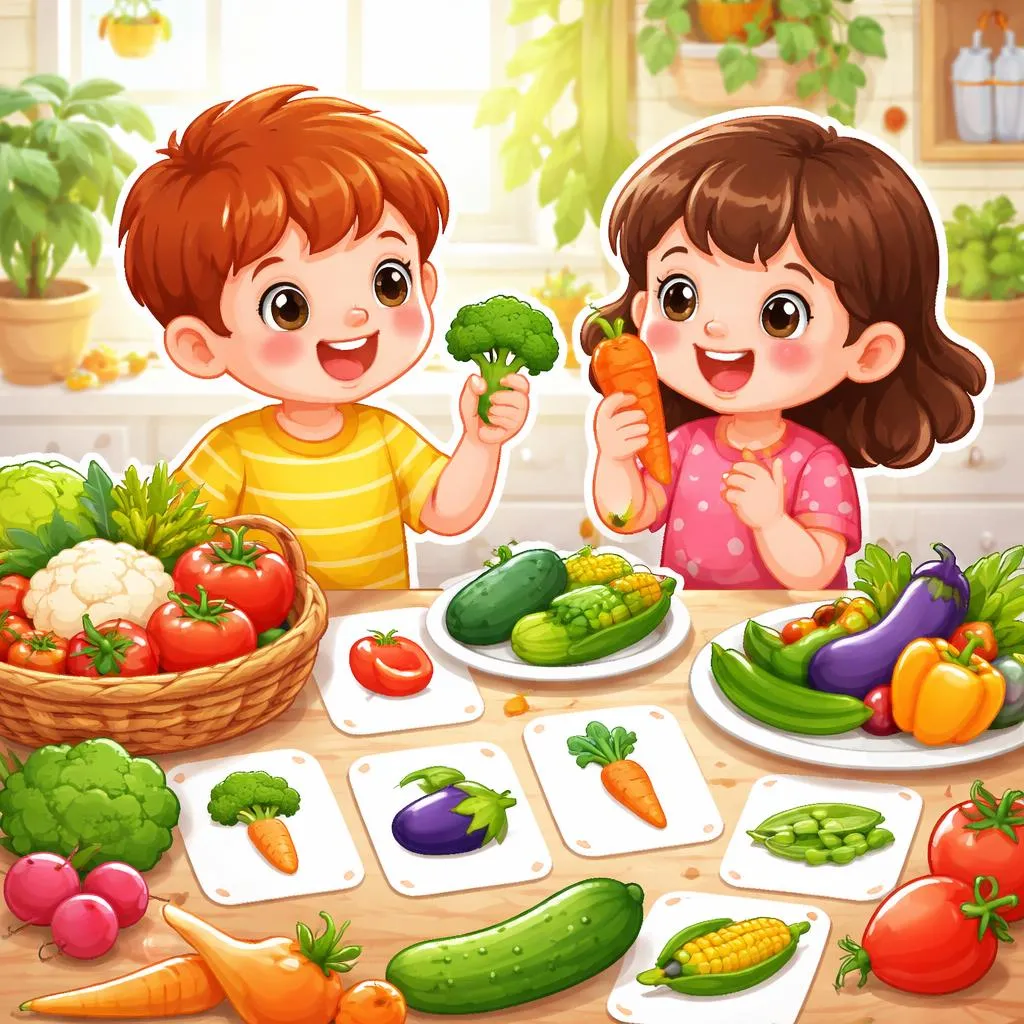

Hello, wonderful educators! Today we are exploring a vital topic for young learners. We will focus on "vegetables names." This vocabulary connects directly to health, food, and daily life. Children encounter vegetables at meals and in stores. Learning these names builds practical knowledge. We will examine what vegetables are. We will explore categories and examples. We will share practical teaching strategies. We will provide engaging classroom activities. This guide will help you teach vegetable vocabulary effectively. Let's begin this nutritious learning journey together.
What Are Vegetables Names?
Vegetables names are the words we use for edible plants. People grow vegetables for food. They come in many colors, shapes, and sizes. Each vegetable has a unique name. Carrot, broccoli, tomato, and potato are common examples.
Learning vegetable names helps children in many ways. They can talk about what they eat. They can express preferences at mealtime. They can learn about healthy food choices. This vocabulary supports nutrition education.
Vegetables grow in different ways. Some grow above ground. Some grow below ground. Some are leaves. Some are stems. Some are roots. Learning these differences builds science knowledge.
Vegetable names also appear in stories and songs. Building this vocabulary supports overall language development. Children can understand and enjoy food-themed books.
Meaning and Explanation of Vegetable Vocabulary
Let us explore the meaning behind vegetable words. Each vegetable has specific characteristics. Understanding these helps children identify and remember them.
Vegetables come from different plant parts. Root vegetables grow underground. Carrots, potatoes, and radishes are roots. They store energy for the plant.
Leaf vegetables are the leaves of plants. Lettuce, spinach, and cabbage are leaves. We eat these parts before the plant flowers.
Stem vegetables are the plant stems. Celery and asparagus are stems. They are crunchy and full of water.
Flower vegetables are the flower buds. Broccoli and cauliflower are flowers. We eat them before they bloom.
Fruit vegetables are botanically fruits but eaten as vegetables. Tomatoes, cucumbers, and peppers fall in this category. They contain seeds.
Vegetables provide vitamins and minerals. Different colors mean different nutrients. Green vegetables have different benefits than orange ones. This builds health awareness.
Categories or Lists of Common Vegetables Names
Organizing vegetables into categories helps learning. It creates mental folders for students. Let us look at helpful categories.
Root Vegetables: These grow underground. Carrot, potato, sweet potato, radish, beet, turnip, parsnip, yam. They are often harvested in fall.
Leafy Green Vegetables: These are the leaves we eat. Lettuce, spinach, kale, cabbage, Swiss chard, collard greens, arugula, romaine. They are rich in vitamins.
Cruciferous Vegetables: These are in the cabbage family. Broccoli, cauliflower, Brussels sprouts, cabbage, kale, bok choy. They have many health benefits.
Podded Vegetables: These grow in pods. Peas, green beans, snow peas, sugar snap peas, fava beans, edamame. We eat both the seeds and sometimes the pods.
Stem Vegetables: These are the plant stems. Celery, asparagus, fennel, bamboo shoots, rhubarb. They are often crunchy.
Bulb Vegetables: These grow underground from bulbs. Onion, garlic, leek, shallot, scallion. They add flavor to cooking.
Squash Family: These include many varieties. Pumpkin, zucchini, butternut squash, acorn squash, cucumber, summer squash. They come in many shapes.
Fruit Vegetables: Botanically fruits but eaten as vegetables. Tomato, bell pepper, chili pepper, eggplant, okra, avocado. They contain seeds.
Mushrooms: Technically fungi, but often grouped with vegetables. Button mushroom, portobello, shiitake, oyster mushroom. They add earthy flavors.
Corn: A grain but often eaten as a vegetable. Sweet corn, popcorn, corn on the cob. Children love it.
Daily Life Examples with Vegetables Names
We can weave vegetable names into everyday conversations. This makes learning natural and continuous.
During snack time, name the vegetables. "Today we have carrot sticks." "These are sweet pea pods." "Would you like some cucumber slices?" This builds real-world connections.
During lunch, discuss the vegetables on plates. "What green vegetable do you see?" "This is broccoli. It looks like little trees." "These are orange sweet potatoes."
During grocery store visits or discussions, name vegetables. "We need to buy lettuce for salad." "Let's find the tomatoes." "Look at all the colorful peppers."
During cooking activities, use vegetable names. "We will chop the onions." "Please wash the lettuce." "Add the corn to the soup." Children learn through participation.
During garden projects, name growing vegetables. "Our carrot tops are getting bigger." "Look at the tomato turning red." "Let's pick the green beans."
Printable Flashcards for Vegetables Names
Flashcards provide excellent visual support for vocabulary lessons. Here are some ideas for creating them.
Vegetable Picture Cards: Create cards with clear photographs of each vegetable on one side. Write the vegetable name on the other side. Include a wide variety.
Color-Coded Category Cards: Create cards grouped by color. Green vegetables together. Orange vegetables together. Red vegetables together. This helps with color learning too.
Vegetable Matching Cards: Create two sets of vegetable cards. Students play memory match by finding pairs. They name the vegetable when they make a match.
Where Do They Grow? Cards: Create cards showing how vegetables grow. Underground for carrots and potatoes. On vines for tomatoes and peas. On stalks for corn. Students match vegetables to growing methods.
Vegetable Alphabet Cards: Create cards for each letter showing a vegetable that starts with that letter. A for asparagus. B for broccoli. C for carrot. Display these around the room.
Learning Activities or Games for Vegetables Names
Games make vocabulary practice fun and memorable. Here are many engaging ideas.
Activity 1: Vegetable Tasting Party
Bring a variety of vegetables to class. Offer small tastes of each. Students name each vegetable before tasting. They can say if they like it or not. This engages multiple senses.
Activity 2: Vegetable Sorting
Provide a collection of real or plastic vegetables. Have students sort them by different categories. Color, size, where they grow, or how we eat them. This builds categorization skills.
Activity 3: Vegetable Basket Game
Place vegetable cards or toys in a basket. One student picks a vegetable without showing. Others ask questions to guess. "Is it green?" "Do we eat it raw?" "Does it grow underground?" This builds questioning skills.
Activity 4: Vegetable Garden Pretend
Create a pretend garden in the classroom. Use a box or designated area. Plant vegetable pictures or toys. Students harvest vegetables and name them. This builds imaginative play.
Activity 5: Vegetable Shop Role Play
Set up a pretend vegetable shop. Use real or play vegetables. Students take turns being shopkeepers and customers. Customers ask for specific vegetables. Shopkeepers find them and name prices.
Activity 6: Vegetable Bingo
Create bingo cards with vegetable pictures. Call out vegetable names. Students cover matching pictures. First to cover a row wins. This builds listening and recognition.
Activity 7: I Spy a Vegetable
Say, "I spy with my little eye, a green vegetable that looks like a tree." Students guess broccoli. "I spy an orange vegetable that rabbits love." Students guess carrot.
Activity 8: Vegetable Scavenger Hunt
Hide vegetable pictures or toys around the room. Give students a list of vegetables to find. They search and check off each one. This builds observation and reading.
Activity 9: Vegetable Stamping
Cut vegetables in half. Potatoes, peppers, and okra work well. Dip in paint and stamp on paper. Students name the vegetable that made each print.
Activity 10: Vegetable Song Creation
Create a simple song about vegetables using a familiar tune. "I like carrots, yes I do. I like carrots, how about you?" Add verses for different vegetables.
Activity 11: Vegetable Collage
Provide magazines with vegetable pictures. Students cut out vegetables and create a collage. They name each vegetable they include. Display the collages.
Activity 12: Vegetable Guess the Word
Write vegetable names on the board with missing letters. C_rr_t for carrot. Br_cc_l_ for broccoli. Students fill in missing letters. This builds spelling.
Activity 13: Vegetable Taste Test Graph
After tasting vegetables, create a class graph. Which vegetables did most children like? Which were least popular? Count and compare. This builds math skills.
Activity 14: Vegetable Color Hunt
Give each student a color. They must find vegetables of that color from pictures or toys. Red finds tomato and pepper. Green finds lettuce and broccoli. Orange finds carrot and pumpkin.
Activity 15: Vegetable Story Time
Read books about vegetables. "The Carrot Seed" by Ruth Krauss is a classic. "Growing Vegetable Soup" by Lois Ehlert is wonderful. Discuss the vegetables in the stories.
Activity 16: Vegetable Drawing
Give each student a vegetable name. They draw that vegetable without writing the word. Display drawings and guess which vegetable each shows.
Activity 17: Vegetable Memory Game
Place several vegetable cards on a tray. Students study them. Cover the tray. Students name as many vegetables as they remember. This builds memory and vocabulary.
Activity 18: Vegetable Interview
Students interview each other about favorite vegetables. "What is your favorite vegetable?" "How do you like to eat it?" They share answers with the class.
Activity 19: Vegetable Garden Planting
If possible, plant real vegetable seeds. Beans or peas grow quickly. Students care for them and watch them grow. They learn vegetable names through real experience.
Activity 20: Vegetable Soup Pretend
Pretend to make vegetable soup. Students take turns adding vegetable cards to a pot. They name each vegetable as they add it. Stir and pretend to eat.
We have explored the wonderful world of vegetables names together. This vocabulary connects children to healthy eating. It builds knowledge about where food comes from. It supports science learning about plants. We looked at what vegetables are. We explored helpful categories. We found examples in daily life. We created printable flashcards for practice. We shared engaging games and activities. This integrated approach makes learning natural and meaningful. Use these strategies in your classroom. Adapt them to your students' needs. Watch as your learners gain vocabulary and healthy awareness. They will name vegetables at meals. They will understand food choices better. Their language and health knowledge will grow together with every vegetable they learn.