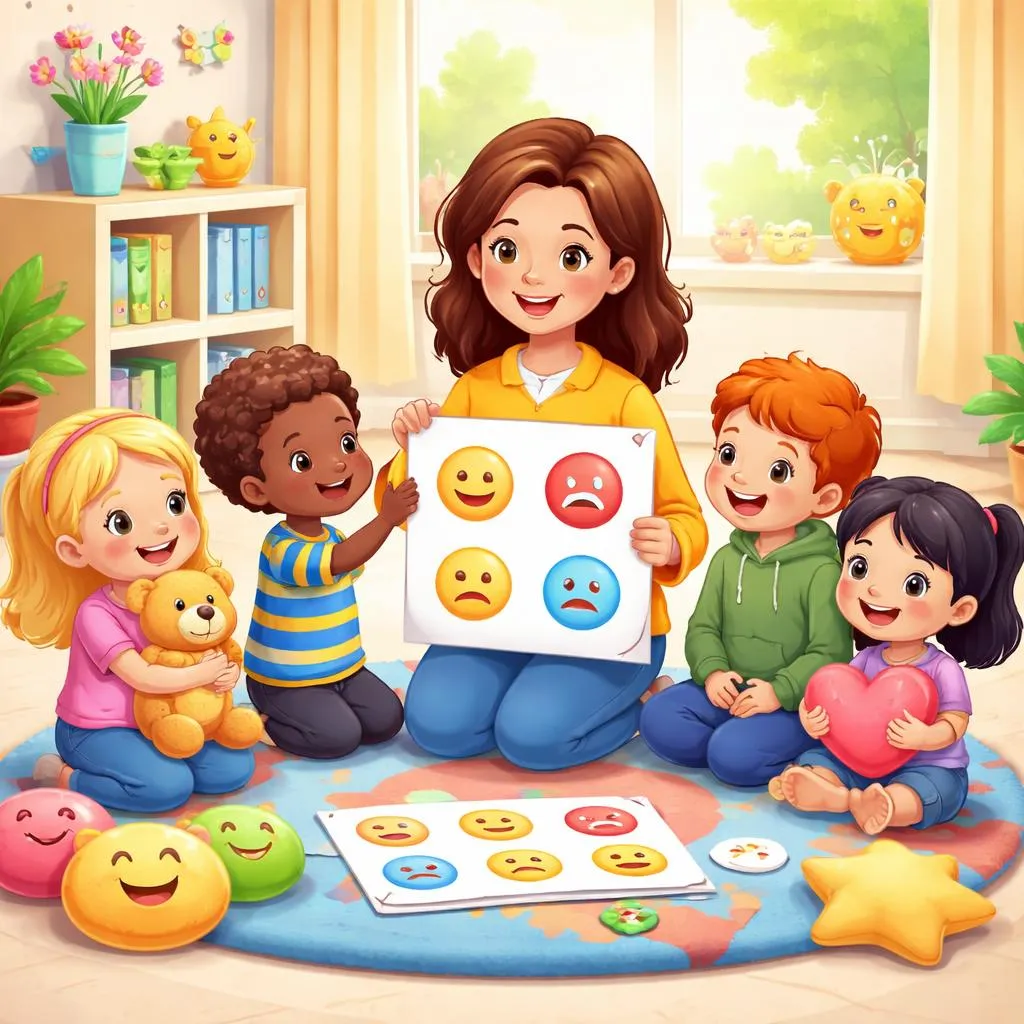

Hello, wonderful educators! Today we are exploring a vital aspect of early childhood development. We will focus on "emotions for kids." Understanding feelings is just as important as learning letters and numbers. Children need to recognize their own emotions. They need to understand how others feel. This builds empathy and social skills. We will examine what emotions are. We will explore different types of feelings. We will share practical teaching strategies. We will provide engaging classroom activities. This guide will help you teach emotional intelligence effectively. Let's begin this important journey together.
What Are Emotions for Kids?
Emotions are feelings that everyone experiences. They are natural responses to what happens around us. Happy, sad, angry, scared, and surprised are common emotions. Children feel these every day.
Learning about emotions helps children in many ways. They can name what they are feeling. This helps them express themselves instead of acting out. They can recognize feelings in others. This helps them make friends and get along.
Emotional intelligence is as important as academic learning. Children who understand emotions do better in school. They handle frustration better. They cooperate with others. They feel more confident.
Teaching emotions gives children words for their experiences. Instead of crying or hitting, they can say "I am angry" or "I feel sad." This is a huge step in self-regulation.
Meaning and Explanation of Basic Emotions
Let us explore the meaning behind common emotions. Understanding each one helps children identify them.
Happy: This is a feeling of joy and pleasure. We feel happy when good things happen. Playing with friends, getting a treat, or hearing a funny joke can make us happy. Happy feels warm and light.
Sad: This is a feeling of unhappiness. We feel sad when something disappointing happens. Losing a toy, saying goodbye, or getting hurt can make us sad. Sad feels heavy and quiet.
Angry: This is a strong feeling of displeasure. We feel angry when something unfair happens. When someone takes our toy, when we can't do something, or when we feel frustrated. Angry feels hot and tight.
Scared: This is a feeling of fear. We feel scared when we think something might hurt us. The dark, loud noises, or new situations can feel scary. Scared makes our heart beat fast.
Surprised: This is a feeling when something unexpected happens. A birthday surprise, a loud noise, or seeing something new can surprise us. Surprised can be good or bad.
Excited: This is a feeling of eager enthusiasm. We feel excited about upcoming events. A birthday party, a trip, or seeing a friend can make us excited. Excited feels bouncy and energetic.
Calm: This is a feeling of peace and relaxation. We feel calm when we are comfortable and safe. Reading a book, snuggling, or resting can feel calm. Calm feels still and quiet.
Loved: This is a feeling of being cared for. We feel loved when people show us kindness. Hugs, kind words, and help from others make us feel loved. Loved feels warm and safe.
Categories of Emotions
Emotions can be grouped into categories. This helps children understand the range of feelings.
Happy Emotions: Happy, joyful, excited, cheerful, delighted, proud, grateful, loved. These are positive feelings that feel good.
Sad Emotions: Sad, disappointed, lonely, hurt, gloomy, unhappy, upset, heartbroken. These are difficult feelings that need comfort.
Angry Emotions: Angry, mad, frustrated, annoyed, irritated, furious, grumpy, cross. These are strong feelings that need healthy release.
Scared Emotions: Scared, afraid, frightened, worried, nervous, anxious, terrified, shocked. These are feelings of fear that need reassurance.
Calm Emotions: Calm, relaxed, peaceful, content, comfortable, restful, quiet, still. These are feelings of peace and safety.
Surprising Emotions: Surprised, amazed, astonished, shocked, startled, wondering. These are responses to unexpected events.
Understanding these categories helps children see that all feelings are normal. Everyone experiences all kinds of emotions.
Daily Life Examples with Emotions
We can weave emotion words into everyday conversations. This makes learning natural and continuous.
During morning greetings, ask about feelings. "How are you feeling today?" "You look happy this morning!" "Is something making you sad?" This validates feelings.
During story time, discuss character emotions. "How do you think the bear feels?" "Why is the girl crying?" "Look at his smile. He must be happy." This builds empathy.
During conflicts, name the feelings. "I can see you are angry because she took your toy." "You feel sad because he wouldn't play with you." This helps children understand themselves.
During successes, celebrate feelings. "You finished the puzzle! You must feel so proud!" "You helped your friend. That feels good, doesn't it?" This reinforces positive emotions.
During calm moments, discuss feelings. "Let's think about times we felt scared." "What makes you feel loved?" "When do you feel most calm?" This builds emotional vocabulary.
Printable Flashcards for Emotions
Flashcards provide excellent visual support for emotion lessons. Here are many ideas for creating them.
Emotion Face Cards: Create cards with clear drawings or photos of faces showing different emotions. Happy, sad, angry, scared, surprised, excited, calm, loved. Children name the emotion.
Emotion Word Cards: Create cards with the emotion words written clearly. Match them to the face cards. This builds reading skills.
Emotion Situation Cards: Create cards describing situations. "You get a birthday present." "Your friend moves away." "Someone takes your toy." Children identify the emotion.
Emotion Color Cards: Associate colors with emotions. Yellow for happy. Blue for sad. Red for angry. Black for scared. Green for calm. This adds another layer.
Emotion Body Cards: Show how emotions feel in the body. Happy feels light. Angry feels tight. Scared makes heart beat fast. This builds body awareness.
Learning Activities or Games for Emotions
Games make emotional learning fun and memorable. Here are many engaging ideas.
Activity 1: Emotion Charades
Act out an emotion without speaking. Use face and body to show happy, sad, angry, scared, surprised. Children guess the emotion. Then discuss times they felt that way.
Activity 2: Mirror Emotions
Pair children up. One makes an emotion face. The other mirrors it back. Switch roles. This builds recognition and empathy.
Activity 3: Emotion Bingo
Create bingo cards with emotion faces. Call out situations. "You just got a new puppy." Students cover the matching emotion. First to cover a row wins.
Activity 4: Feelings Check-In Chart
Create a chart with emotion faces. Each day, children place their name or picture by how they feel. Discuss the results. This builds self-awareness.
Activity 5: Emotion Story Time
Read books about feelings. "The Way I Feel" by Janan Cain is wonderful. "When Sophie Gets Angry" by Molly Bang is excellent. Discuss the emotions in the story.
Activity 6: Emotion Puppets
Create simple puppets with different emotion faces. Children use them to act out feelings. They can have conversations between happy puppet and sad puppet.
Activity 7: Emotion Sorting
Provide situation cards. Students sort them into emotion categories. What makes us happy? What makes us sad? What makes us angry? This builds understanding.
Activity 8: Emotion Freeze Dance
Play music. Students dance. When music stops, call out an emotion. Students freeze with that emotion on their face. This combines movement with learning.
Activity 9: Emotion I Spy
Say, "I spy with my little eye, someone who looks happy." Students look around and guess. "Maria looks happy!" This builds observation.
Activity 10: Emotion Memory Match
Create pairs of emotion face cards. Place face down. Students turn over two trying to find matches. They name the emotion when they make a match.
Activity 11: Emotion Drawing
Give each child a paper with a blank face. Call out an emotion. Students draw that emotion on the face. Compare results. This builds art and emotion skills.
Activity 12: Emotion Temperature Check
Use a thermometer visual. At the bottom is calm. At the top is very angry. Students show where their emotion is. This teaches intensity.
Activity 13: Emotion Song Creation
Create simple songs about emotions using familiar tunes. "If you're happy and you know it, clap your hands." Add verses for other emotions.
Activity 14: Emotion Interview
Students interview each other about feelings. "What makes you happy?" "When do you feel scared?" "What do you do when you're angry?" They share answers.
Activity 15: Emotion Collage
Provide magazines. Students cut out faces showing different emotions. Create an emotion collage. Name each emotion found.
Activity 16: Emotion Role Play
Set up simple scenarios. "Your friend won't share." "You get a surprise." "You lose your favorite toy." Children act out the emotion and response.
Activity 17: Emotion Journal
Create simple journals. Each day, students draw or write about a feeling they had. This builds self-reflection.
Activity 18: Emotion Thermometer
Create a large thermometer. Label from calm to furious. When conflicts arise, discuss where on the thermometer the feeling is. This builds self-awareness.
Activity 19: Emotion Matching Game
Create cards with emotions on one set. Create cards with coping strategies on another. Match angry with "take deep breaths." Match sad with "ask for a hug."
Activity 20: Emotion Statues
Call out an emotion. Students freeze like a statue showing that emotion. Walk around and admire the statues. Discuss what each statue shows.
Activity 21: Emotion Guessing Game
Make an emotion face. Children guess what it is. Then they make the same face. This builds recognition and expression.
Activity 22: Emotion Parade
March around the room showing different emotions. Happy parade. Sad parade. Angry parade. Discuss how each feels.
Activity 23: Emotion Book Creation
Create a class book about emotions. Each page shows one emotion with student drawings and sentences. "Happy looks like this. Happy feels like sunshine."
Activity 24: Emotion Color Hunt
Associate colors with emotions. Go on a color hunt for things that remind us of emotions. Yellow for happy. Blue for sad. Red for angry.
Activity 25: Emotion Relaxation
Teach simple relaxation for big emotions. Deep breathing. Counting to ten. Squeezing and releasing muscles. Practice when calm.
Activity 26: Emotion Check-In During Transitions
Before transitions, check emotions. "How are we feeling before we go outside?" "How do we feel coming in from recess?" This builds awareness.
Activity 27: Emotion and Body Connection
Discuss where we feel emotions in our bodies. Happy feels light in chest. Angry feels hot in face. Scared feels fast heart. This builds body awareness.
Activity 28: Emotion Weather Report
Compare emotions to weather. Happy is sunny. Sad is rainy. Angry is stormy. Calm is peaceful. Give daily emotion weather reports.
Activity 29: Emotion Puppet Show
Create a puppet show about emotions. Puppets experience different feelings and learn to handle them. Children watch and discuss.
Activity 30: Emotion Celebration
Celebrate all emotions as normal and okay. Create a safe space where all feelings are accepted. This builds emotional safety.
Activity 31: Emotion Vocabulary Wall
Create a word wall of emotion words. Add new words as children learn them. Refer to it during discussions.
Activity 32: Emotion Reflection Time
At the end of each day, reflect on emotions. "What was your happiest moment?" "Was there a time you felt sad?" This builds reflection.
Activity 33: Emotion Role Models
Point out emotions in others. "Look, the teacher is happy because we are listening." "That child looks sad. Maybe we can help." This builds empathy.
Activity 34: Emotion and Music
Play different types of music. Discuss how each makes us feel. Happy music. Sad music. Calm music. Exciting music. This connects emotions to art.
Activity 35: Emotion and Art
Create art that expresses emotions. Happy paintings with bright colors. Sad paintings with darker colors. Discuss the choices.
Activity 36: Emotion Storytelling
Tell stories about emotions. "Once I felt very angry. This is what happened." Children share their own stories. This builds narrative skills.
Activity 37: Emotion and Animals
Discuss how animals might feel. "How does the dog feel when we pet him?" "How does the cat feel when scared?" This builds empathy.
Activity 38: Emotion and Friendship
Discuss how emotions affect friendships. "When we are angry, we might say unkind things." "When we are happy, we are fun to be with." This builds social skills.
Activity 39: Emotion Problem-Solving
Present emotional problems. "You feel sad. What can you do?" "Your friend is angry. How can you help?" Brainstorm solutions.
Activity 40: Emotion Graduation
Celebrate when children show emotional growth. "You handled your anger so well today!" "You noticed your friend was sad and helped!" This reinforces learning.
We have explored the essential topic of emotions for kids. Teaching children about feelings builds emotional intelligence. They learn to recognize their own emotions. They understand how others feel. They develop empathy and social skills. They gain words for their experiences. They learn healthy ways to cope. We looked at what emotions are. We explored different types of feelings. We found examples in daily life. We created printable flashcards for practice. We shared engaging games and activities. This integrated approach makes learning natural and meaningful. Use these strategies in your classroom. Adapt them to your students' needs. Watch as your learners become emotionally aware. They will handle feelings better. They will connect with others more deeply. Their emotional vocabulary will grow. Their hearts and minds will develop together.