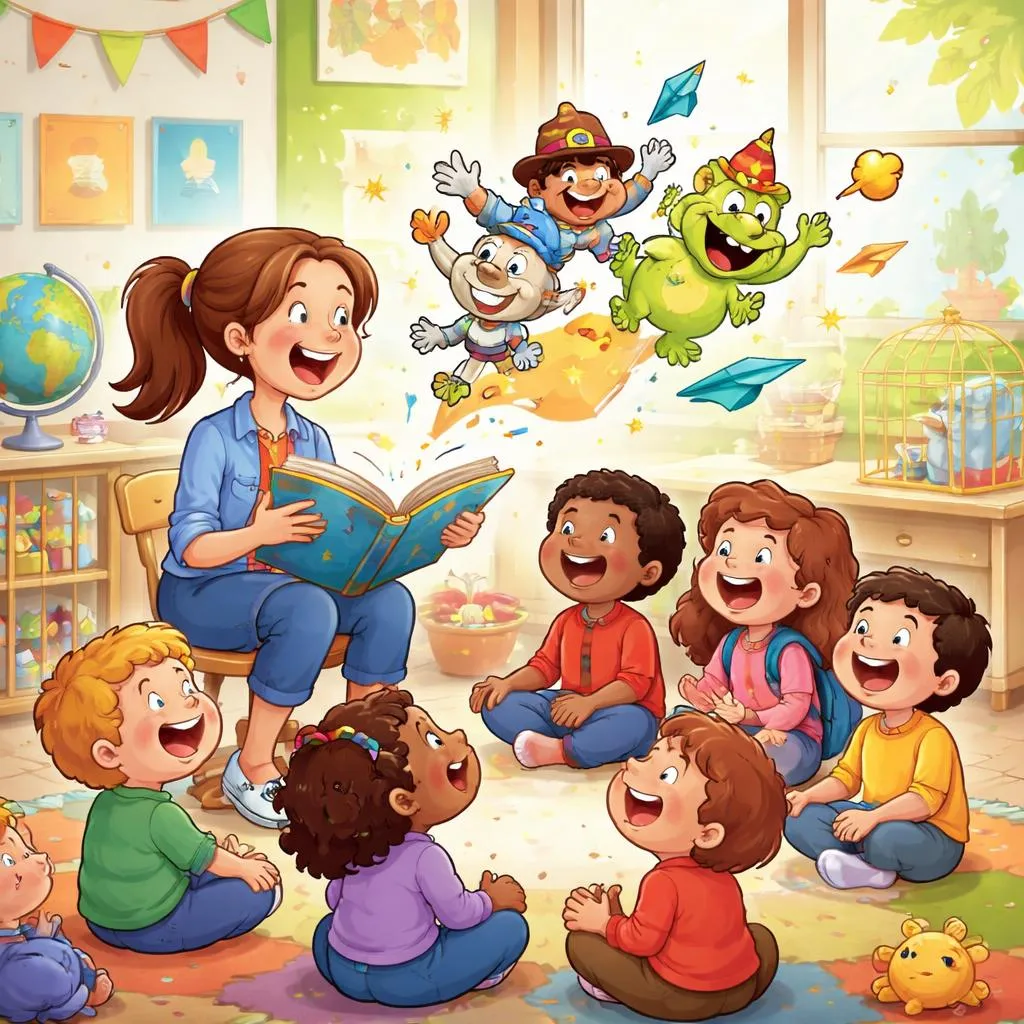

Laughter creates a powerful connection in the classroom. When children laugh, they relax. Their minds open wider to new information. Funny children's stories provide this magical entry point for language learning. These tales capture attention immediately. They make children want to know what happens next. The humor creates memorable moments that help language stick. This article explores how teachers can use funny stories to build vocabulary, improve comprehension, and create a positive learning environment where English feels like a joy rather than a chore.
What Are Funny Children's Stories? Funny children's stories are narratives designed specifically to amuse young readers. They use humor as their main tool for engagement. The comedy can come from many sources. Silly characters do ridiculous things. Ordinary situations take unexpected turns. Words create playful sounds and meanings. Pictures add visual jokes that enhance the text. These stories often feature animals acting like humans or children outsmarting adults. The plots move quickly and end happily. The humor is always age-appropriate and kind. These stories respect young readers while making them laugh out loud.
Meaning and Explanation Behind Funny Stories Funny stories carry important purposes beyond simple entertainment. They teach children that reading feels good. This positive association builds lifelong reading habits. The humor also develops cognitive flexibility. Understanding a joke requires seeing things from a different perspective. This mental stretch strengthens young minds. Funny stories also create social bonds in the classroom. Laughing together builds community. Children remember the shared experience. They want to talk about the story with each other. This natural desire to communicate provides authentic reasons to use English. The humor becomes a bridge to language production.
Categories or Lists of Funny Story Types Funny children's stories come in many forms. Understanding the categories helps teachers choose the right book for each lesson.
Silly Character Stories: These feature characters who do ridiculous things.
A pigeon who wants to drive a bus.
A frog who tries to fly.
A bear with absolutely no manners.
Word Play and Rhyme Stories: These use language itself as the source of humor.
Tongue twisters that tie tongues in knots.
Nonsense words that sound hilarious.
Rhymes that create unexpected and funny pairings.
Situational Humor Stories: These place characters in funny situations.
A bedtime routine that goes completely wrong.
A class pet who escapes during show and tell.
A family trip with endless complications.
Picture Humor Stories: These rely on illustrations for the comedy.
Pictures that show what the text does not say.
Visual jokes hidden in the background.
Characters making funny faces and expressions.
Daily Life Examples from Funny Stories Funny children's stories connect directly to experiences children already know. A story about someone losing a tooth connects to every child who has wiggled a loose tooth. A tale about a messy room connects to the daily reality of cleaning up. A book about picky eating connects to mealtime struggles everywhere. These connections make the humor land harder. Children think, "That happened to me too." The laughter comes from recognition as much as surprise. Teachers can build on these connections. After reading, ask about similar experiences. When did your room get that messy? What happened when you lost your first tooth? These discussions extend the language learning naturally.
Printable Flashcards for Funny Story Vocabulary Flashcards bring the vocabulary from funny children's stories into focus. Create cards featuring the funniest words and moments from each tale. On one side, place an image that captures the humor. On the other side, write the word or short phrase.
Silly Action Words: Tumble, wobble, splat, zoom, wiggle, giggle.
Funny Character Names: Pigeon, Elephant, Piggie, Cat, Bear, Duck.
Sound Words: Boom, zap, oops, whoops, haha, yikes.
Teachers can use these cards in multiple ways. Hold them up during the first reading to preview words. Use them after reading for recall games. Play charades where children act out the silly word. Match the word to the picture. The humor stays alive through these activities. Children practice language while smiling.
Learning Activities or Games for Funny Stories Games extend the joy of funny children's stories into active learning. Here are two activities that work particularly well.
Activity 1: Funny Voices Reading Assign different character voices to children in the class. Read the story aloud together. Each child speaks their character's lines using a funny voice. A deep voice for the bear. A squeaky voice for the mouse. A grumpy voice for the pigeon. This activity builds reading fluency through play. Children practice their lines repeatedly because it feels like fun. The laughter comes from hearing the voices come alive.
Activity 2: What Happens Next Stop reading at a suspenseful moment in a funny story. Ask children to predict what happens next. The funniest prediction gets celebrated. Then read the real ending. Compare the predictions to the actual story. This builds comprehension and imagination together. Children learn to think like storytellers. They also get invested in finding out what the author actually wrote.
The Structure of Funny Stories Funny children's stories follow patterns that teachers can point out to young readers. Most begin with an ordinary situation. A child wakes up. An animal goes for a walk. A family sits down to dinner. Then something unexpected happens. The ordinary becomes extraordinary. The problem grows funnier and more complicated. Finally, the story resolves in a satisfying way. The character learns something or the situation returns to normal, but changed by the adventure. Teaching this pattern helps children understand narrative structure. They begin to predict what might happen next. This prediction skill is essential for strong reading comprehension.
Vocabulary Learning from Funny Stories Funny children's stories introduce vocabulary in the best possible way. Words appear in context that makes their meaning clear. The humor creates an emotional hook that aids memory. Children remember the word because they remember laughing when they heard it.
Emotion Words: Silly, grumpy, delighted, frustrated, surprised, confused.
Action Words: Stumble, tumble, zoom, crash, bounce, wobble.
Descriptive Words: Enormous, tiny, ridiculous, wonderful, terrible, fabulous.
Teachers can create word collections from each funny story. Add them to a classroom wall. Use them in daily conversation. Challenge children to use the words in their own funny sentences. The vocabulary becomes active and alive, not just static on a page.
Phonics Points in Funny Stories The playful language in funny children's stories creates perfect opportunities for phonics instruction.
Onomatopoeia: Funny stories love sound words. Boom, crash, splat, zap. These words demonstrate the connection between letters and sounds in the most direct way. The word sounds like the thing it describes.
Alliteration: Peter Pigeon picked a purple pepper. Silly Sally sells seashells. The repetition of beginning sounds makes the language memorable. It also trains young ears to hear individual sounds in words.
Rhyming: Funny stories often rhyme because rhyme delights children. The rhyming pairs show how word families work. Cat, hat, bat, sat. When children recognize one word, they can decode the others.
Teachers can pause during reading to notice these patterns. A quick comment draws attention without breaking the flow. The phonics learning happens naturally within the joyful context.
Grammar Patterns in Funny Stories The simple sentences in funny children's stories provide clear models of English grammar.
Dialogue Patterns: Funny stories rely heavily on conversation between characters. "I am not tired," said the pigeon. "Yes you are," said the duck. These exchanges model question and answer patterns naturally.
Exclamations: Oh no! Wow! Oh dear! Yikes! Funny stories use many exclamations. These teach children how English expresses strong feelings.
Repetitive Structures: Many funny stories repeat phrases for comedic effect. "Not again!" said the bear. "Not again!" said the rabbit. This repetition reinforces grammatical patterns through enjoyable repetition.
Teachers can point out these patterns during rereading. The second or third reading provides space for noticing language structures. The humor remains enjoyable while the learning deepens.
Learning Activities for Deeper Comprehension Beyond initial reading, funny children's stories support deeper learning activities.
Activity: Story Theater Divide children into small groups. Assign each group a scene from a funny story. They plan a short performance. They make simple props and practice their lines. Then they perform for the class. This activity builds comprehension because children must understand the scene deeply to perform it. It also builds speaking confidence and teamwork.
Activity: Comic Strip Creation Give children blank comic strip templates with three or four panels. Ask them to retell the funny story in pictures and speech bubbles. This activity checks comprehension in a creative way. The limited space requires choosing the most important moments. Children practice summarizing skills while having fun.
Activity: Alternative Ending Ask children to imagine a different ending for a funny story. What if the pigeon actually got to drive the bus? What if the bear said please? Writing alternative endings builds creativity and understanding of story structure. Children must understand the original to change it successfully.
Printable Materials for Funny Stories Printable resources extend the learning from any funny children's story.
Character Masks: Create simple masks of the main characters. Children wear them during story theater or rereading. The masks make the story physical and memorable.
Story Maps: Create a simple visual showing the story structure. Beginning, problem, funny moments, solution. Children fill in details from the story they read.
Comprehension Questions: Create simple questions at different levels. Literal questions check basic understanding. Inferential questions require thinking. Creative questions invite personal response.
Word Searches: Create word searches using vocabulary from the story. This provides quiet independent practice with important words.
These materials turn one story into many learning opportunities. Children engage with the language repeatedly in different ways.
Educational Games for Funny Story Review Games provide the perfect way to review funny children's stories while maintaining the joyful spirit.
Game: Story Charades Write story events on slips of paper. Children draw a slip and act out the event without speaking. The class guesses which part of the story they are performing. This game requires recalling specific story details. It also gets children moving and laughing together.
Game: Who Said That Read lines of dialogue from the story. Children guess which character spoke each line. For extra fun, they say the line again using the character's voice. This game builds attention to character and story details.
Game: Funny Story Bingo Create bingo cards with words and images from the story. Read definitions or descriptions. Children cover the matching square. The first to complete a row wins. This game provides vocabulary review in a familiar and enjoyable format.
Game: Story Memory Match Create pairs of cards. One card shows a story moment. The matching card shows the text describing that moment. Children play memory match by turning over two cards at a time, looking for pairs. This builds connections between text and meaning.
Connecting Funny Stories to Writing Funny children's stories naturally inspire young writers. After laughing at a professional author's humor, children feel ready to try creating their own.
Shared Writing: Write a class story together. Start with a funny situation. A dog who wants to be a cat. A pencil that refuses to write. Take suggestions from the class. Write the story on the board. This demonstrates the writing process while creating something funny together.
Individual Writing: After shared writing, children write their own funny stories. Provide sentence starters for those who need support. "One day my __ started to __." "I could not believe it when __." Celebrate all attempts at humor.
Illustration: Funny stories need funny pictures. Provide art supplies and encourage children to illustrate their stories. The pictures add another layer of expression. They also help children who struggle with writing to participate fully in storytelling.
The goal throughout is to maintain the connection between reading and joy. Funny children's stories teach this lesson better than any other tool. They show children that books contain pleasure. They demonstrate that language creates laughter. They prove that reading feels good. This foundation matters more than any specific vocabulary word or grammar rule. A child who loves reading will learn all the rest along the way. Funny stories start that journey on the right foot, with smiles and laughter lighting the path forward.