
原詩:
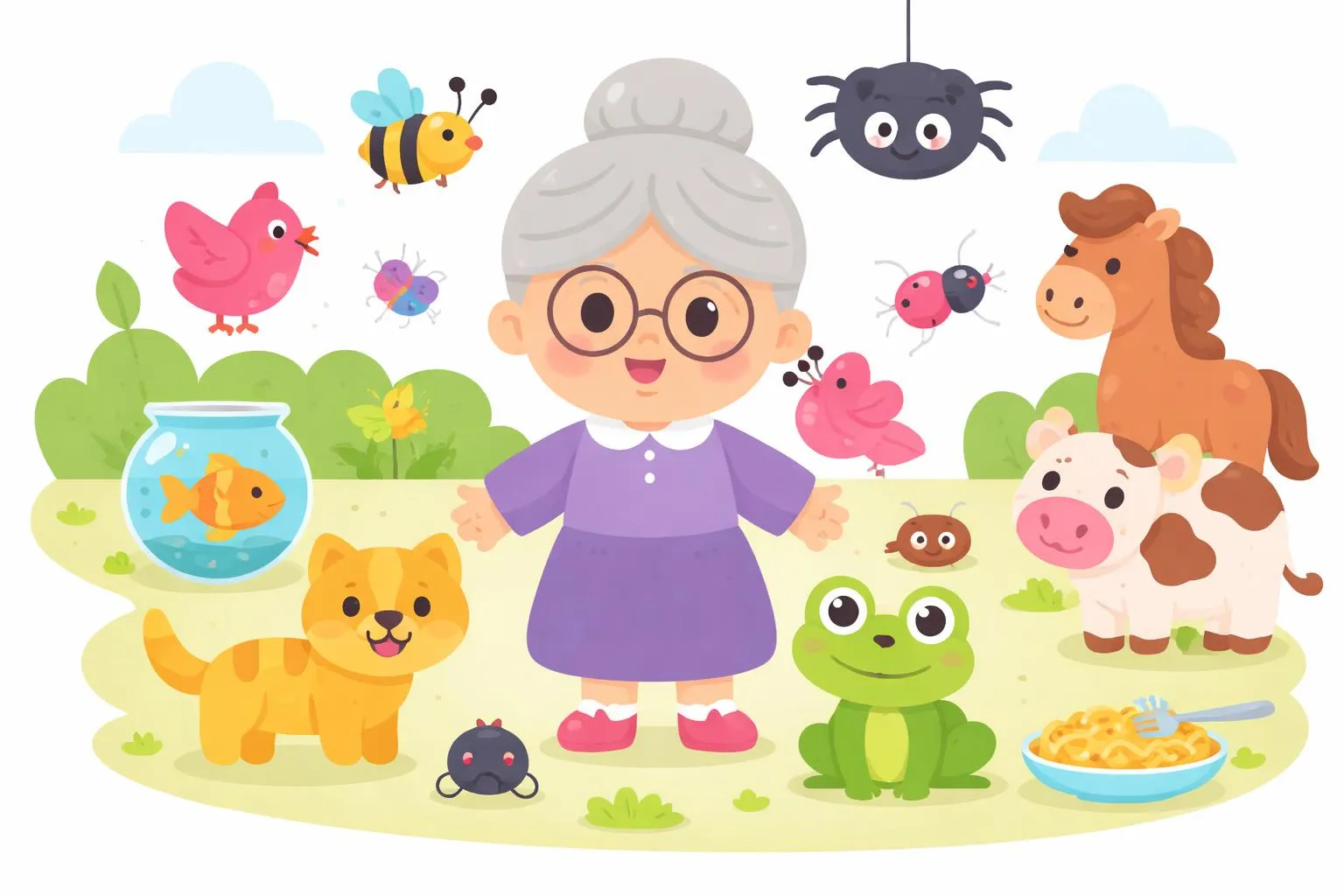
Poor old lady, she swallowed a fly.
I don't know why she swallowed a fly.
Poor old lady, I think she'll die.
Poor old lady, she swallowed a spider.
It squirmed and wriggled and turned inside her.
She swallowed the spider to catch the fly.
I don't know why she swallowed a fly.
Poor old lady, I think she'll die.
Poor old lady, she swallowed a bird.
How absurd!???She swallowed a bird.
She swallowed the bird to catch the spider,
She swallowed the spider to catch the fly,
I don't know why she swallowed a fly.
Poor old lady, I think she'll die.
Poor old lady, she swallowed a cat.
Thank of that!???She swallowed a cat.
She swallowed the cat to catch the bird.
She swallowed the bird to catch the spider.
She swallowed the spider to catch the fly,
I don't know why she swallowed a fly.
Poor old lady, I think she'll die.
Poor old lady, she swallowed a dog.
She went the whole hog when she swallowed the dog.
She swallowed the dog to catch the cat,
She swallowed the cat to catch the bird,
She swallowed the bird to catch the spider.
She swallowed the spider to catch the fly,
I don't know why she swallowed a fly.
Poor old lady, I think she'll die.
Poor old lady, she swallowed a cow.
I don't know how she swallowed a cow.
She swallowed the cow to catch the dog,
She swallowed the dog to catch the cat,
She swallowed the cat to catch the bird,
She swallowed the bird to catch the spider,
She swallowed the spider to catch the fly,
I don't know why she swallowed a fly.
Poor old lady, I think she'll die.
Poor old lady, she swallowed a horse.
She died, of course.
詩的分析與解釋
這首經典的童謠講述了一位可憐的老太太吞下了一系列越來越大的動物,從一隻蒼蠅開始,最終以一匹馬作結。這首詩重複且累積,每一節都在前一節的基礎上增加一種新的動物,老太太吞下它以捕捉前一個動物。這首詩結合了幽默、荒謬和逐漸升級的混亂感。
詩的主要主題圍繞著老太太行為的荒謬性——吞下動物試圖解決問題,卻只導致更多的複雜情況。重複的句子「我不知道她為什麼吞下蒼蠅」強調了她最初行為的神秘和愚蠢,而最後一句「她當然死了」則帶來了一個黑暗幽默的結局。
意義與詮釋
從根本上說,這首詩是一個累積故事,通過重複教導孩子們有關順序、因果關係和記憶。老太太吞下動物象徵著一種連鎖反應,其中一個行動導致另一個行動,通常伴隨著意想不到的後果。詩的幽默和節奏使其對年輕觀眾來說既難忘又引人入勝。
背景與作者
這首詩傳統上被認為源於美國民間故事,最早的印刷版本可追溯到20世紀中期。它由羅斯瑪麗·威爾斯推廣,她寫了一個著名的插圖版本,但這首詩本身是口頭傳統的一部分,並已以多種形式改編。
這種累積韻文在兒童文學中很常見,作為一種有趣的方式來發展語言技能、記憶和排序能力。詩的持久受歡迎源於其朗朗上口的節奏、重複性和滑稽的荒謬故事情節。
教育價值與學習重點
孩子們和學生們可以從這首詩中學到幾個重要的課程和技能:
- 排序與記憶: 重複的結構幫助孩子們記住事件的順序並練習回憶信息。
- 因果關係: 這首詩說明了一個行動如何導致另一個行動,鼓勵邏輯思維。
- 詞彙建設: 介紹動物的名稱和描述性動詞,如「扭動」、「蠕動」和「荒謬」,豐富孩子們的詞彙。
- 節奏與韻律: 詩的節奏模式支持語音意識,這是早期閱讀的重要技能。
- 幽默與創造力: 荒謬性鼓勵孩子們使用想像力並理解有趣的語言。
生活與學習中的實際應用
- 課堂活動: 教師可以利用這首詩進行排序遊戲,讓學生按順序重述故事或表演。
- 語言發展: 家長和教育者可以強調押韻的單詞,並鼓勵孩子創作自己的累積故事。
- 問題解決討論: 這首詩可以引發關於行動後果的對話,促進批判性思維。
- 記憶練習: 重複有助於提高記憶技能,對所有學習領域都有用。
理解問題與答案
-
為什麼老太太吞下了蜘蛛?
答案: 她吞下蜘蛛是為了捕捉蒼蠅。 -
老太太在貓之後吞下了什麼動物?
答案: 她吞下了一隻狗。 -
老太太吞下的最後一種動物是什麼?
答案: 她吞下了一匹馬。 -
為什麼這首詩有趣?
答案: 因為老太太以滑稽和荒謬的方式吞下越來越大的動物。 -
詩的結尾老太太發生了什麼?
答案: 她當然死了。 -
這首詩通過其重複結構幫助孩子們練習什麼技能?
答案: 它幫助孩子們練習記憶和排序。
結論
這首童謠不僅僅是一首簡單的兒童詩;它是一個有價值的教育工具,結合了幽默、節奏和故事講述來吸引年輕學習者。通過其重複和累積的結構,它教導重要的認知技能,如排序、記憶和因果關係。它還豐富了詞彙並鼓勵創造力。理解詩的背景和有趣的特性有助於教育者和家長有效地使用它來教學語言和批判性思維技能。