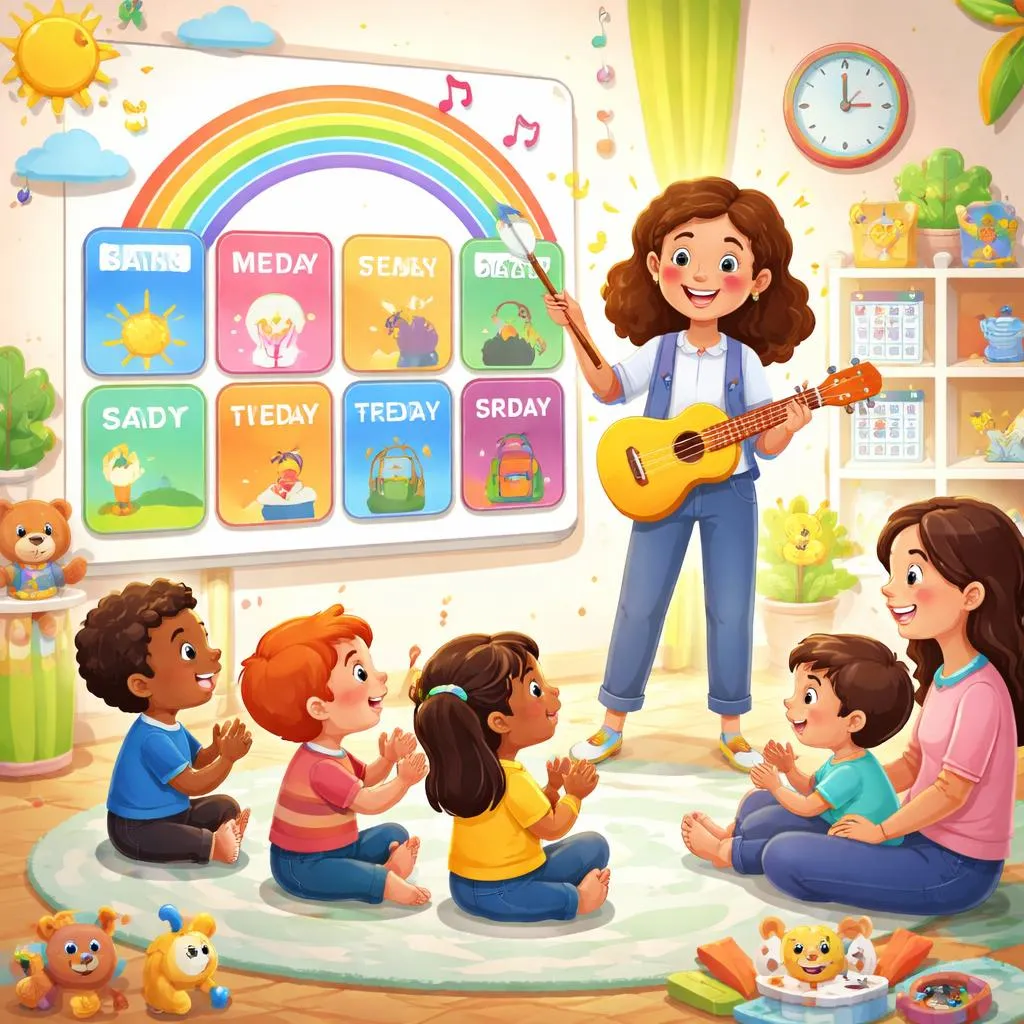

What Is the Days of the Week Song?
A days of the week song is a simple learning song that names the seven days in order. The song uses rhythm, repetition, and melody to make time concepts clear and memorable. In many classrooms, this song becomes part of the daily routine. Singing it each day helps time words feel familiar and friendly.
Songs work well because music supports memory. Rhythm guides attention. Repetition builds confidence. When days appear in a song, abstract ideas turn into something children can hear and enjoy.
Why Songs Help Teach Days of the Week
Days of the week can feel confusing at first. They are not objects that can be touched. A song gives these words structure. The order becomes clear. The flow makes sense.
Music also creates emotional safety. A calm and cheerful melody prepares the mind for learning. Singing together builds focus and connection.
The Story Behind the Days of the Week Song
Many versions of a days of the week song exist. Some use familiar tunes. Others use original melodies. All versions share the same goal. They introduce the names of the days in order.
Some songs add actions. Some add clapping. Others include simple stories about school days or weekend fun. These additions help meaning grow naturally.
The Lyrics of a Days of the Week Song
Lyrics often follow a clear pattern. Each day appears once. The order stays the same every time.
Sunday, Monday, Tuesday, Wednesday Thursday, Friday, Saturday
Some versions repeat the list. Others slow down or speed up. This repetition supports memory and pronunciation.
Clear pronunciation helps listeners hear each word. A steady beat keeps attention strong.
Vocabulary Learning Through the Song
The song introduces key time vocabulary. Words like day, week, today, and tomorrow often appear in classroom talk around the song.
Each day name becomes a vocabulary item. These words later appear in schedules, stories, and conversations.
Hearing them daily helps recognition. Singing them supports recall.
Phonics Points in the Days of the Week Song
Day names include helpful phonics patterns. Monday starts with an M sound. Tuesday uses a long U sound. Wednesday includes blended sounds.
Singing stretches vowel sounds. This makes them easier to hear. Stress patterns become clear through melody.
Listening to these sounds supports early reading skills.
Grammar Patterns Connected to Days of the Week
Days of the week often appear with simple grammar patterns. Phrases like on Monday or every Friday come up naturally.
These patterns show how time words work in sentences. Hearing them in context builds understanding.
No direct explanation feels necessary. Exposure does the work.
Daily Routine and the Days of the Week Song
The song fits well into daily routines. Singing it during morning circle time sets the tone for the day. It signals structure and predictability.
Routine builds security. Familiar songs create comfort. Learning feels safe and steady.
Understanding Time Through Music
Time concepts grow slowly. Music supports this growth. The order of days stays consistent in the song. This consistency helps understanding develop.
Over time, connections form between days and activities. Monday feels different from Saturday. The song becomes a guide.
Classroom Activities Using the Days of the Week Song
Activities grow easily from the song. Singing comes first. Movement follows. Pointing to a calendar adds a visual layer.
Drawing activities connect days to events. Talking about school days and home days builds meaning.
Each activity reinforces the same core vocabulary.
Listening Skills and the Song
Listening skills strengthen through repeated singing. The melody cues attention. The predictable order supports focus.
Listening carefully helps with turn-taking and following directions.
These skills transfer to other learning areas.
Speaking Practice Through Singing
Singing supports speaking development. Pronunciation improves with repetition. Intonation becomes natural.
Group singing reduces pressure. Voices blend together. Confidence grows.
Clear modeling helps sounds form correctly.
Social Learning Through Group Songs
Group songs build community. Singing together creates shared experience. Rhythm keeps everyone connected.
Social skills develop naturally. Waiting, listening, and joining at the right moment all matter.
Music supports cooperation.
Cultural Awareness and Days of the Week
Days of the week appear in many cultures. Songs vary across languages. Learning a days of the week song opens the door to cultural comparison.
This awareness supports global understanding.
Connecting the Song to Daily Life
Daily life offers many chances to use day names. Talking about today’s plans connects words to experience.
Saying yesterday or tomorrow adds meaning. The song supports these conversations.
Language becomes useful and real.
Printable Materials for Days of the Week Learning
Printable calendars support the song. Coloring pages with day names add visual interest.
Word cards help match spoken and written forms. These materials extend learning beyond singing.
Short activities keep engagement high.
Educational Games Based on the Song
Games add fun and movement. Matching games connect days to activities. Ordering games reinforce sequence.
Clapping games follow the rhythm of the song. These games support memory and coordination.
Learning feels playful.
Using the Song With Different Age Groups
Younger learners benefit from slower tempos. Older learners enjoy challenges like faster singing or missing-day games.
Adding questions keeps interest strong. Which day comes next? Which day comes before?
Adaptation keeps the song useful over time.
Supporting Different Learning Styles
Auditory learners enjoy melody. Visual learners benefit from calendars. Kinesthetic learners enjoy movement.
The days of the week song supports all styles together.
Inclusive learning feels natural.
Building Confidence Through Repetition
Repetition builds mastery. Each day brings another chance to sing. Familiarity reduces effort.
Confidence grows with success. The song becomes a trusted tool.
Extending Learning Beyond the Song
The song supports reading readiness. Day names appear in books and schedules.
Writing activities use day words. Simple sentences grow from familiar vocabulary.
The song lays the foundation.
Classroom Management and Transition Support
Songs help manage transitions. Singing signals a change in activity. Calm melodies settle energy.
The days of the week song provides structure without stress.
Encouraging Creativity With the Song
Creativity grows through variation. Adding actions, instruments, or new verses invites imagination.
Creative expression deepens engagement.
Observing Learning Progress
Progress appears in confident singing. Correct order shows understanding. Clear pronunciation shows growth.
Observation guides next steps.
Emotional Connection Through Music
Music supports emotion. Familiar songs bring comfort. Joyful singing lifts mood.
Positive emotions support learning and memory.
Home and School Connections
Families often sing the same song at home. Shared routines strengthen learning.
Consistency supports retention.
Repetition and Long-Term Memory
Daily repetition strengthens memory. The brain recognizes patterns. Order becomes automatic.
Long-term understanding develops naturally.
Using Play to Teach Time Concepts
Play and learning work together. Songs blend both. Enjoyment supports focus.
Time concepts grow without pressure.
Encouraging Participation Gently
Participation grows at a comfortable pace. Listening comes first. Singing follows naturally.
Every learner engages differently.
Adding Art and Movement
Art activities deepen understanding. Drawing calendars reinforces order. Movement adds energy.
Multi-sensory learning strengthens memory.
Using the Song in Different Settings
The song works indoors and outdoors. Small groups or large groups both benefit.
Flexibility increases usefulness.
Long-Term Value of Time Songs
Time awareness supports independence. Understanding days helps planning and organization.
Songs make this learning accessible and enjoyable.
A days of the week song brings structure, rhythm, and clarity into everyday learning. Through music, time words gain meaning. Order becomes familiar. Daily routines feel secure. Singing together builds confidence, language skills, and a sense of shared progress. Each repetition strengthens understanding, and each joyful moment with music supports a strong foundation for lifelong learning.