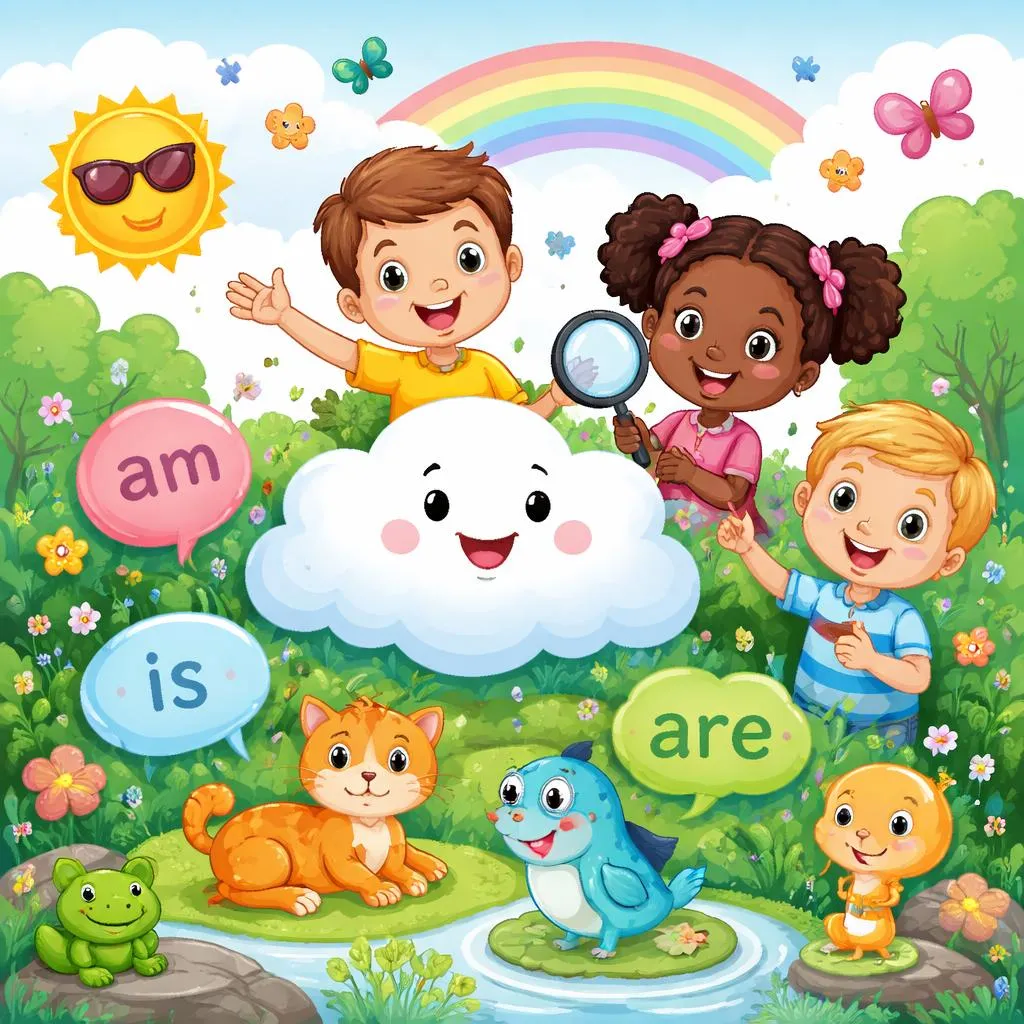

Meaning of “to be as a verb”
The phrase to be as a verb refers to one of the most important verbs in English. It helps describe identity, feelings, age, and states. It connects a subject with information about that subject. It does not show action like run or jump. It shows being, existing, or feeling.
In early language learning, this verb forms the foundation of many sentences. It helps express who someone is, what something is, and how someone feels. Understanding this verb opens the door to many basic conversations.
Conjugation of “to be as a verb”
The verb to be changes its form more than most English verbs. These changes depend on the subject and the tense. This makes it unique and important in grammar study.
The base form is be. Other forms include am, is, are, was, were, and will be. Each form matches a subject and time.
Learning these forms helps build correct sentences. It also helps develop strong grammar patterns in early language development.
Present tense of “to be as a verb”
The present tense forms of to be as a verb are am, is, and are. These forms describe what exists now.
“Am” connects with I. “Is” connects with he, she, it, and singular nouns. “Are” connects with you, we, they, and plural nouns.
Examples show how this works in simple sentences.
I am happy. She is a student. They are friends.
These sentences show identity and feelings. The verb links the subject to information. This pattern helps learners express simple ideas clearly.
Past tense of “to be as a verb”
The past tense forms are was and were. These forms describe what happened before now.
“Was” connects with I, he, she, it, and singular nouns. “Were” connects with you, we, they, and plural nouns.
Examples help show the meaning.
I was tired. He was at school. They were excited.
These sentences talk about past states and conditions. They do not show actions. They describe situations in the past.
Future tense of “to be as a verb”
The future tense uses will be. This form describes what will happen later.
Examples include:
I will be a teacher. She will be happy. They will be ready.
The future tense helps talk about plans, dreams, and predictions. It allows learners to express hopes and expectations.
Questions with “to be as a verb”
Questions with to be as a verb use inversion. The verb comes before the subject. This pattern is common in English.
Examples include:
Am I late? Is he your friend? Are they at home? Was she sick? Were you happy? Will we be there?
These questions help start conversations. They help check information. They help express curiosity.
Other uses of “to be as a verb”
The verb to be has many special uses in English. It appears in descriptions, locations, ages, and professions.
It describes identity. She is a doctor.
It describes age. He is ten years old.
It describes feelings. They are excited.
It describes location. The book is on the table.
It also helps form continuous tenses and passive forms. For early learners, the focus stays on simple sentences and clear meanings.
Learning tips for mastering “to be as a verb”
Frequent exposure helps build understanding. Short sentences help reinforce patterns. Songs, stories, and dialogues support memory. Visual cues help connect meaning with form.
Using gestures can help show meaning. Pointing to oneself for “I am” and pointing to others for “you are” builds understanding. Acting out feelings like happy or sad helps connect words to emotions.
Repetition plays a key role. Repeating simple patterns strengthens grammar recognition. Short practice sessions keep learning engaging and effective.
Educational games for “to be as a verb”
Games help make grammar learning fun and interactive. A sentence-building game works well. Provide cards with subjects and forms of to be. Learners match them to form correct sentences.
Another activity uses pictures and emotion cards. Learners say sentences like “He is happy” or “They are tired.” This connects grammar with real-world meaning.
Role-play also supports learning. One learner asks a question, and another answers using to be as a verb. This builds speaking confidence and grammar accuracy.
Daily language examples using “to be as a verb”
In everyday English, to be as a verb appears in greetings, descriptions, and introductions.
Hello, I am Anna. This is my friend. We are in the classroom.
These sentences appear in basic conversations. They help build communication skills early.
Why “to be as a verb” matters in early English learning
This verb forms the backbone of English sentence structure. It connects subjects with descriptions and information. It supports identity, emotion, and state descriptions.
Mastery of to be as a verb helps learners build longer sentences. It also supports reading and listening comprehension. Understanding this verb makes it easier to learn other grammar structures later.
It also helps develop confidence in speaking. Simple sentences with to be allow learners to express ideas clearly. This builds motivation and curiosity in language learning.
Classroom-friendly practice ideas
Short dialogues help reinforce the verb. One person asks, “Who are you?” Another answers, “I am a student.” This reinforces identity sentences.
Picture description tasks also help. Show a picture and ask for sentences like “The dog is big” or “The children are happy.” This builds vocabulary and grammar together.
Sentence transformation activities also work well. Change “She is happy” to “She was happy” or “She will be happy.” This helps understand tense changes.
Printable learning materials for “to be as a verb”
Flashcards with subjects and verb forms help practice conjugation. Sentence strips help arrange words into correct order. Picture worksheets help connect meaning with grammar.
Simple fill-in-the-blank exercises also help. For example: She ___ my friend. They ___ in the park.
These materials support practice at home and in classrooms.
Building confidence with “to be as a verb”
Confidence grows when learners use grammar in real communication. Short conversations help build this confidence. Encouraging correct usage in everyday speech helps reinforce patterns.
Praise for correct sentences motivates continued practice. Mistakes provide learning opportunities. Gentle correction helps maintain a positive learning environment.
Connecting “to be as a verb” with storytelling
Stories help contextualize grammar. Simple stories using to be as a verb allow learners to see grammar in action. For example:
“The cat is small. The cat is hungry. The cat is in the kitchen.”
These sentences show description and location. Stories make grammar meaningful and memorable.
Integrating music and rhythm in grammar learning
Songs and chants help reinforce verb forms. Repetition with rhythm strengthens memory. A chant like “I am, you are, he is, we are” helps internalize conjugation.
Music also creates a joyful learning environment. It reduces anxiety and increases engagement.
Extending learning beyond the classroom
Daily conversations offer many opportunities to use to be as a verb. Simple introductions, descriptions, and feelings can include this verb naturally.
Encouraging regular use builds fluency. Connecting grammar with real-life communication ensures deeper understanding.
Supporting comprehension through visuals
Visual aids help clarify meaning. Pictures showing emotions, objects, and people help connect sentences with reality. For example, a smiling face next to “She is happy” reinforces meaning.
Charts showing verb forms help visualize conjugation. These tools support memory and comprehension.
Common challenges with “to be as a verb”
Learners sometimes mix forms like “I is” or “She are.” Clear modeling helps prevent confusion. Repetition of correct forms helps build accuracy.
Another challenge is tense confusion. Practicing present, past, and future forms with clear examples helps clarify time references.
Encouraging independent practice
Short daily practice sessions support mastery. Writing simple sentences and reading them aloud helps reinforce grammar. Matching games and mini-quizzes also help.
Encouraging creative sentences builds engagement. For example, describing imaginary characters or favorite animals using to be as a verb.
Linking “to be as a verb” to broader grammar concepts
This verb connects to adjectives, nouns, and prepositional phrases. For example, “The sky is blue,” “She is a teacher,” “They are in the garden.” These structures show how grammar pieces connect.
Understanding this verb supports later learning of continuous tenses like “is running” and passive forms like “is made.”
Developing speaking and listening skills with “to be as a verb”
Listening to simple dialogues helps identify verb forms. Repeating sentences helps build speaking fluency. Pair practice supports interactive learning.
Listening activities with short stories and songs also reinforce comprehension.
Encouraging curiosity and exploration
Curiosity drives learning. Asking questions like “Who is this?” or “Where is the book?” encourages use of to be as a verb.
Exploration through pictures, stories, and role-play keeps learning dynamic and engaging.
Building a strong foundation for future English learning
A strong grasp of to be as a verb supports all future grammar learning. It helps build confidence in communication. It provides structure for sentence building.
This foundation supports reading, writing, speaking, and listening. It helps learners move from simple sentences to complex ideas with ease.
Learning to be as a verb opens the door to expressing identity, feelings, and experiences in English. It creates a solid base for lifelong language learning and joyful communication.