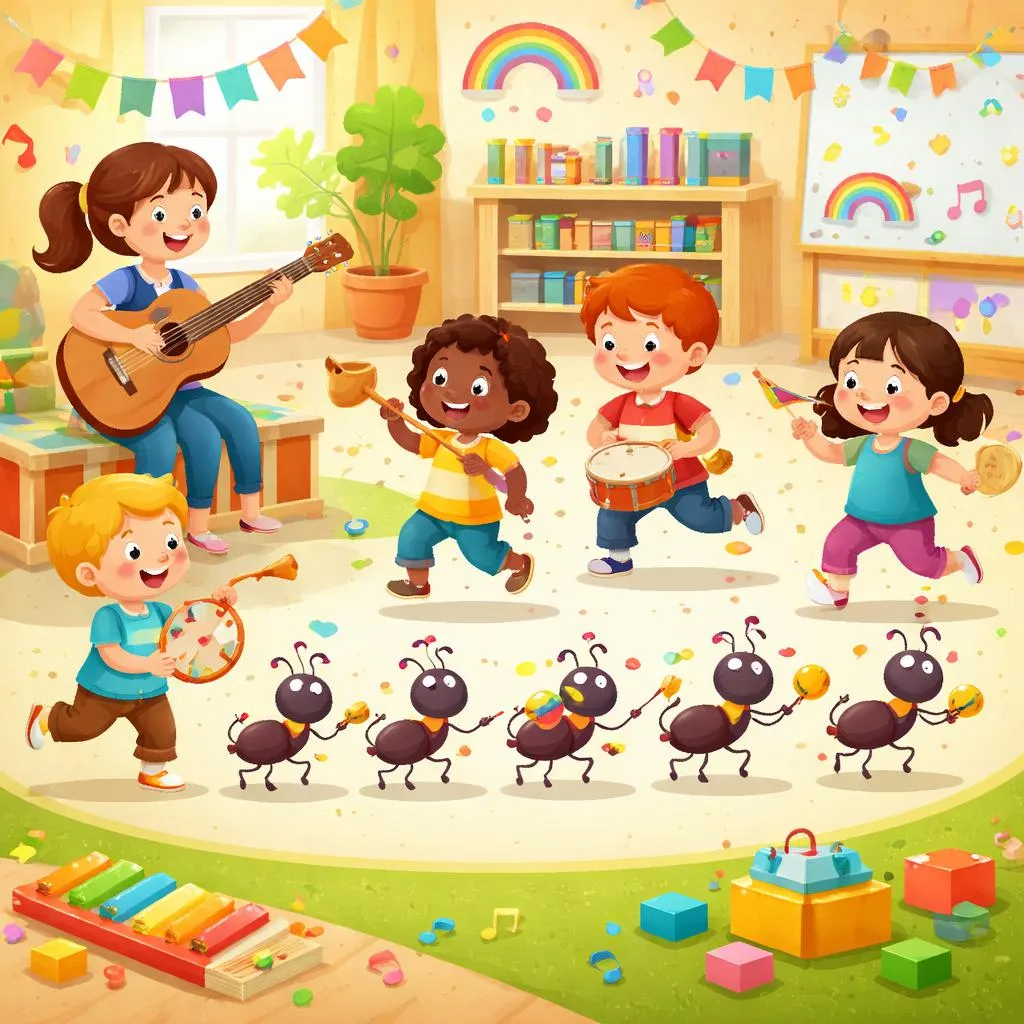

What Is Ants Go Marching?
Ants go marching is a well-known nursery rhyme and counting song used in early childhood learning. The song tells a simple story about ants marching one by one, two by two, and so on. Each verse adds a new number and a small action. This structure makes the song easy to follow and enjoyable to repeat.
In learning spaces, ants go marching often appears during music time or circle time. The steady rhythm and predictable pattern support understanding and memory. The song feels playful, yet it carries strong educational value.
Why Ants Go Marching Works So Well for Learning
Songs help language feel natural. Ants go marching combines rhythm, repetition, and counting. These elements support focus and engagement.
The melody creates structure. The repeated lines offer security. The changing numbers invite curiosity. Learning happens through enjoyment rather than pressure.
Music also supports emotional comfort. A familiar song helps learners feel ready and calm.
The Story Behind Ants Go Marching
Ants go marching has roots in folk traditions. Over time, many versions appeared. Some versions include more verses. Some include playful endings.
Despite these changes, the core idea stays the same. Ants march together. Numbers increase. Simple actions appear in each verse.
This clear structure makes the song timeless and adaptable.
The Lyrics of Ants Go Marching
Lyrics follow a repeated pattern. Each verse starts with ants marching by a certain number. The number changes with each verse.
One by one, two by two, three by three. The repetition helps the pattern become clear.
Short phrases and simple words support understanding. Rhythm guides pronunciation.
Vocabulary Learning Through Ants Go Marching
The song introduces useful vocabulary. Words like ant, march, down, up, stop, and run appear naturally.
Number words form the core vocabulary focus. Hearing numbers in order supports counting skills.
Action words add meaning. These verbs connect language to movement.
Counting Skills in the Song
Counting appears clearly and consistently. Numbers increase step by step. This sequence supports number recognition.
The repeated structure allows focus on one number at a time. Each verse reinforces the idea of order.
Counting feels meaningful because it connects to a story.
Phonics Points in Ants Go Marching
The song supports phonics awareness. Repeated sounds become easy to hear. Words like marching and ants highlight consonant blends.
Rhythm stretches sounds. This helps listeners notice how words are built.
Clear pronunciation in songs supports sound recognition.
Grammar Patterns in the Song
Simple grammar patterns appear throughout ants go marching. Present tense verbs appear often. The structure remains consistent.
Patterns like “the ants go marching” repeat in every verse. This repetition builds sentence familiarity.
Grammar learning happens through exposure rather than explanation.
Movement and Actions in Ants Go Marching
Many versions of the song include actions. Marching in place fits naturally with the lyrics. Stopping and starting add excitement.
Movement supports learning. Physical actions connect words to meaning.
Kinesthetic learning strengthens memory and engagement.
Classroom Use of Ants Go Marching
The song fits easily into classroom routines. Singing it during music time builds energy. Singing it during transitions helps focus.
The predictable pattern makes classroom management smoother. Learners know what comes next.
Consistency builds confidence.
Social Learning Through Group Singing
Group singing creates connection. Everyone shares the same rhythm. Voices blend together.
Turn-taking and listening skills develop naturally. Group participation builds a sense of belonging.
Music supports cooperation.
Emotional Benefits of Singing Together
Songs create positive emotions. Ants go marching feels cheerful and playful.
Positive feelings support attention and memory. Enjoyment encourages participation.
Learning becomes a shared joy.
Daily Life Connections to Ants Go Marching
Ants appear in nature. Observing ants outside connects the song to real life.
Counting objects at home or school mirrors the counting in the song. These connections deepen understanding.
Language becomes relevant and meaningful.
Printable Materials for Ants Go Marching
Printable number cards support the song. Ant-themed worksheets add visual interest.
Coloring pages connect creativity with vocabulary. Matching numbers to pictures reinforces counting.
Printables extend learning beyond singing.
Learning Activities Based on Ants Go Marching
Art activities work well with the song. Drawing ants in groups supports counting skills.
Role-play activities bring the story to life. Marching lines create fun movement games.
Each activity reinforces the same learning goals.
Educational Games Using the Song
Games based on ants go marching encourage interaction. Number order games reinforce sequence.
Movement games build coordination. Listening games support attention.
Games make repetition enjoyable.
Supporting Different Learning Styles
Auditory learners enjoy the melody. Visual learners benefit from pictures and number cards. Kinesthetic learners enjoy marching and actions.
The song supports multiple learning styles at once.
Inclusive learning feels natural.
Using Ants Go Marching With Different Age Groups
Younger learners benefit from fewer verses. Older learners enjoy higher numbers and faster tempos.
Adaptation keeps the song useful over time.
Flexibility supports long-term value.
Language Development Through Repetition
Repetition strengthens language skills. Hearing the same structure builds familiarity.
Confidence grows with each repetition. Words become easier to say.
Language flows naturally.
Building Listening Skills With Music
Listening skills develop through songs. Following the pattern requires attention.
Recognizing changes in verses strengthens auditory discrimination.
These skills support broader learning.
Encouraging Participation Gently
Participation grows naturally. Listening comes first. Singing follows.
No pressure feels necessary. Comfort supports engagement.
Each voice joins when ready.
Using Ants Go Marching for Transitions
Songs help manage transitions. Singing while moving from one activity to another maintains focus.
Ants go marching provides energy and structure at the same time.
Classroom flow improves.
Creativity and Imagination in the Song
Creativity grows through variation. Adding new actions invites imagination.
Making up new verses encourages language play.
Creative engagement deepens learning.
Cultural and Traditional Value
Ants go marching connects to musical traditions. Many cultures use songs to teach counting and rhythm.
Understanding this tradition supports cultural awareness.
Music becomes a bridge across generations.
Observation and Assessment Through Singing
Progress appears through confident singing. Correct number order shows understanding.
Clear pronunciation shows language growth.
Observation guides teaching choices.
Extending Learning Beyond Music Time
The song supports early math skills. Number recognition improves through repetition.
Language skills transfer to reading and speaking.
Learning continues beyond the song.
Supporting Focus and Attention
Music supports attention. Rhythm guides focus.
Predictable patterns reduce cognitive load. Attention stays strong.
Learning feels manageable.
Home and School Learning Connections
Families often sing ants go marching at home. Shared songs strengthen learning consistency.
Consistency supports retention.
Learning feels continuous.
Long-Term Learning Benefits
Early exposure to counting songs supports future math learning.
Language patterns learned through songs support reading readiness.
The benefits extend beyond early childhood.
Using Ants Go Marching in Outdoor Learning
Outdoor spaces invite movement. Singing while marching outside connects music to nature.
Observing real ants adds curiosity.
Outdoor learning feels engaging and memorable.
Emotional Safety and Familiar Songs
Familiar songs create comfort. Comfort supports learning.
Ants go marching becomes a trusted routine.
Trust supports confidence.
Building Routine With Music
Routine builds security. Singing the same song daily creates predictability.
Predictability supports emotional well-being.
Learning thrives in safe routines.
Encouraging Expression Through Music
Music invites expression. Singing allows voices to explore sound.
Expression supports communication skills.
Confidence grows with each song.
The Role of Rhythm in Early Learning
Rhythm supports timing and coordination. Marching to a beat builds motor skills.
These skills support writing and reading later.
Music builds foundational abilities.
Ants Go Marching as a Learning Tool
The song combines language, math, and movement. Few tools offer such integration.
Learning feels whole rather than separate.
Integration supports deeper understanding.
Ants go marching remains a powerful learning song because it blends simplicity with structure. Through rhythm, repetition, and playful storytelling, language and counting skills grow naturally. Each verse builds confidence. Each march builds coordination. Music transforms abstract concepts into joyful experiences. In classrooms and homes, ants go marching continues to support early learning through connection, consistency, and creativity.