
What Are the 12 Months of the Year?
The phrase 12 months of the year refers to the names of the months in a calendar year. These months organize time into clear parts. They help describe dates, seasons, and daily routines.
Learning the months supports basic time awareness. Songs, stories, and visual calendars make the months easy to remember.
Meaning and Explanation of the 12 Months of the Year
A year has twelve months. Each month has its own name and number of days. Months follow a fixed order.
The months are: January, February, March, April, May, June, July, August, September, October, November, December.
These names appear in calendars, books, and daily conversations. Understanding them supports reading schedules, holidays, and school activities.
Categories and Lists of the Months
The 12 months of the year belong to four seasons in many countries.
Spring includes March, April, and May. Summer includes June, July, and August. Autumn includes September, October, and November. Winter includes December, January, and February.
Seasons may change by location. Some regions have wet and dry seasons instead.
Daily Life Examples Using the Months
Months appear in many daily situations. Birthdays, holidays, and school terms use month names.
A simple sentence can say, “My birthday is in May.” Another sentence can say, “School starts in September.”
Weather also connects with months. January often feels cold in many places. July often feels warm.
These examples link vocabulary with real experiences.
Vocabulary Learning with the 12 Months of the Year
Month names build time vocabulary. Additional words connect with months and seasons.
Words like spring, summer, autumn, winter add meaning. Words like holiday, festival, birthday, and vacation also connect.
Ordinal numbers help with dates. First, second, third, and fourth describe days in a month.
Short sentences help practice. “March is the third month.” “December is the twelfth month.”
Phonics Points in the 12 Months of the Year
Month names include many phonics patterns. January has the long “a” sound in the first syllable. February shows the “bru” sound in the middle. March has the “ar” sound.
April shows the long “a” sound again. August shows the “aw” sound. October includes the “ber” sound in many month names.
Listening and repeating each month supports pronunciation. Clapping syllables helps rhythm. Jan-u-ar-y has four syllables. May has one syllable.
Grammar Patterns with the 12 Months of the Year
The months help with basic grammar patterns. The preposition “in” is used with months.
“In January” and “in December” are common phrases. Questions can use months. “When is the holiday?” “It is in April.”
Sentences can describe routines. “We have school in September.” “We celebrate in December.”
These patterns support early sentence building.
What Is a Year?
A year is a long time unit. A year has 12 months. A year has 365 days in most cases.
Leap years have 366 days. February has one extra day in leap years.
Understanding the year supports calendar reading and planning.
Printable Flashcards for the 12 Months of the Year
Flashcards help with visual learning. Each card can show a month name and a picture.
January can show snow or winter clothes. July can show the sun or the beach.
Flashcards can also include seasons. Color coding helps memory. Spring cards can be green. Winter cards can be blue.
Learning Activities for the 12 Months of the Year
Songs about the months support memorization. Singing the months in order builds rhythm and recall.
A classroom calendar can mark the current month. Changing the month card each month builds routine awareness.
Drawing activities can show favorite months. Writing short sentences about favorite months builds writing skills.
Sorting activities can match months to seasons. This activity strengthens categorization skills.
Educational Games with the 12 Months of the Year
Games make time vocabulary engaging.
A matching game can pair months with pictures. A sequencing game can place months in order.
A dice game can move through months on a board. Questions can appear on each square. “What comes after April?”
A memory game can use month names and season pictures. These games support recall and attention.
Printable Materials for Classroom and Home
Worksheets can include month tracing. Spelling practice can include filling missing letters.
Reading passages can describe a year in a story format. Coloring pages can show seasonal scenes for each month.
A mini book can show one month per page. This book supports reading and creativity.
Storytelling with the 12 Months of the Year
Stories can follow a character through the year. January can show winter activities. June can show summer trips.
A story map can show events in each month. This structure supports sequencing and comprehension.
Creative storytelling builds imagination and language skills.
Reading Practice with the 12 Months of the Year
Reading month names aloud builds fluency. Short sentences support confidence.
Choral reading can involve the whole class. Echo reading can repeat after a model.
Repeated reading strengthens recognition and speed.
Writing Practice with the 12 Months of the Year
Writing activities can include a year journal. One sentence per month builds consistency.
A paragraph about a favorite month builds descriptive skills. A calendar story can describe activities in each season.
Creative writing can invent a special holiday in a month.
Listening and Speaking Practice
Listening to month songs and chants supports pronunciation. Speaking activities can include answering questions about dates.
“When is your birthday?” “My birthday is in March.”
Role-play activities can include planning a year calendar. This practice builds conversational skills.
Cultural Notes About the 12 Months of the Year
Many cultures celebrate special events in specific months. January often marks the New Year. December often includes winter holidays.
Some countries start the school year in September. Others start in January or April.
Discussing cultural events expands global awareness.
Cross-Curricular Connections
Months connect with math through counting days. They connect with science through seasons and weather. They connect with social studies through holidays and traditions.
Art projects can show seasonal scenes. Music projects can include month songs.
This integrated approach supports holistic learning.
Visual Learning Tools for the 12 Months of the Year
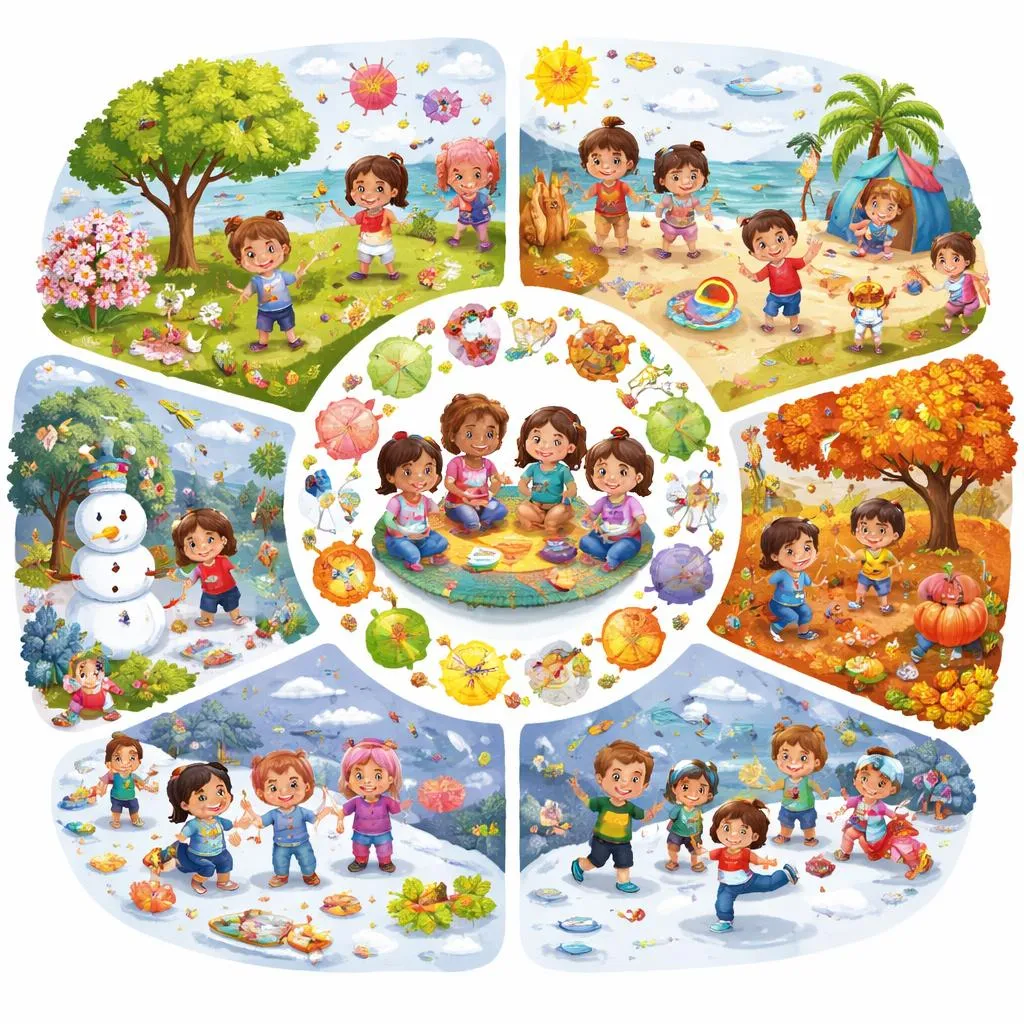
Charts and posters show the months in order. A wheel chart can show months and seasons together.
Videos and animations show seasonal changes across the year. Picture books show months with stories and illustrations.
Visual tools support memory and comprehension.
Creative Classroom Projects
A classroom mural can show all months in a circle. Each student can decorate one month.
A seasonal corner can change every three months. Craft projects can include snowflakes, flowers, suns, and leaves.
These projects connect language with creativity.
Common Mistakes with Month Vocabulary
Some learners confuse June and July. Pronunciation practice helps.
Spelling errors can occur with February and September. Spelling games support accuracy.
Using “on” instead of “in” with months is common. Clear modeling helps.
Advanced Language Use with the 12 Months of the Year
Advanced learners can explore idioms and expressions. “April showers bring May flowers” is a common saying.
Poems about seasons and months introduce literary language. Comparing calendars from different cultures deepens understanding.
Digital Learning Resources
Online calendars, songs, and games support engagement. Interactive quizzes test month order and spelling.
Apps can track daily routines with month labels. Digital flashcards support independent practice.
Encouraging Positive Learning with Time Concepts
Time vocabulary builds structure and confidence. The 12 months of the year provide a framework for understanding the world.
Songs, stories, visuals, and games make months meaningful. A strong foundation in month names supports reading, writing, and daily communication.
Learning the rhythm of the year brings language, nature, and culture together in a simple and inspiring way.