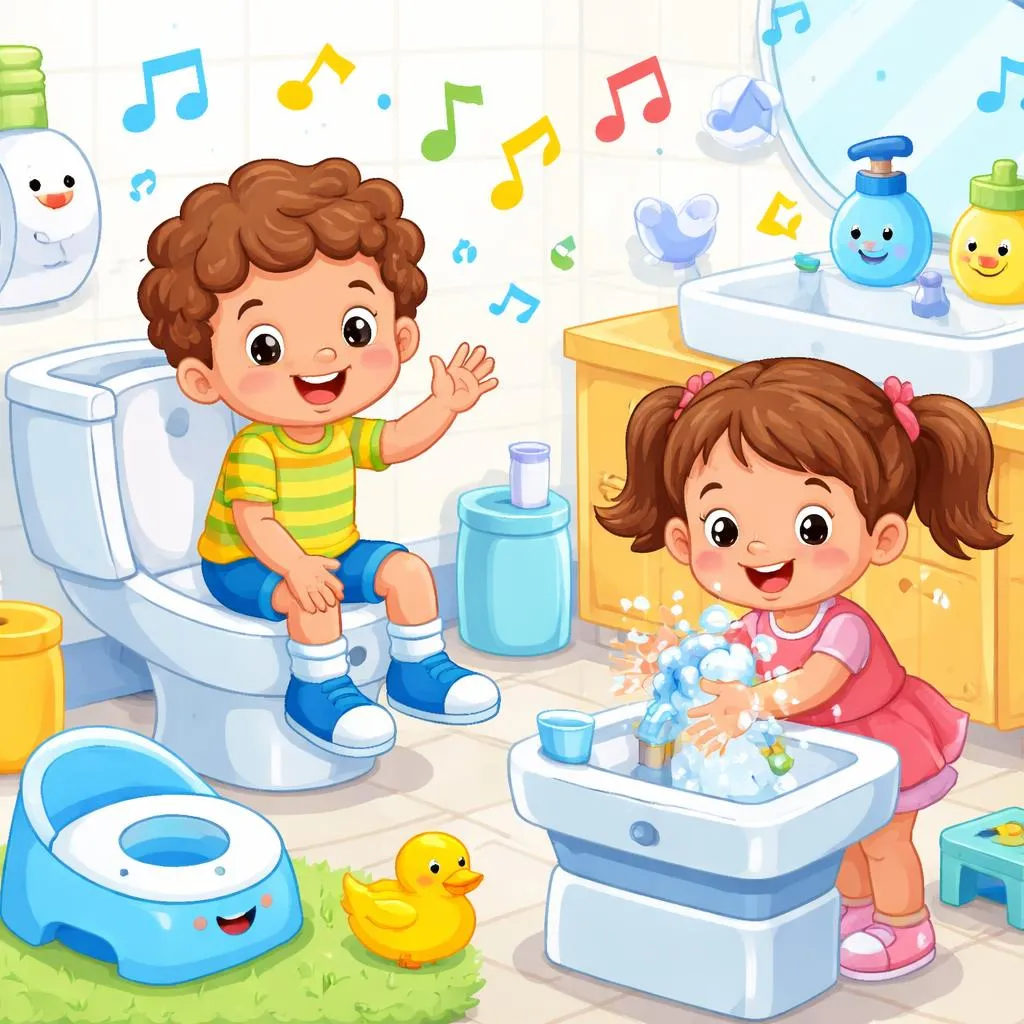

What is the toilet song?
The toilet song is a simple and playful children’s song. It supports bathroom routines in a positive way. It often includes lyrics about going to the toilet, washing hands, and feeling proud. Music helps make daily habits fun and less stressful. Rhythm and repetition help language development and memory.
This type of song appears in early learning programs, preschools, and family routines. The melody stays catchy and easy to sing. Words stay simple and clear. The theme connects language learning with real-life actions.
The lyrics of the toilet song
Many versions of the toilet song exist. Here is a common educational version used in early learning:
“Time to go, time to go, To the toilet, here we go. Sit down, relax, and take your time, Flush the toilet when you’re done.
Wash, wash, wash your hands, Soap and water, nice and clean. Dry them well and smile so bright, Great job, now you’re feeling right.”
This version uses short lines and repeated patterns. It supports understanding and pronunciation. It also builds confidence around daily routines.
Vocabulary learning with the toilet song
The toilet song introduces useful everyday words. These words connect language with real actions. Common vocabulary includes toilet, wash, hands, soap, water, clean, dry, and flush. These words appear in daily conversations.
Repeating these words in a song helps with retention. Music creates emotional engagement. This strengthens memory and comprehension.
Sentences in the song also show simple commands and actions. For example, “Wash your hands” and “Flush the toilet.” These phrases help build practical communication skills.
Phonics points in the toilet song
Phonics learning becomes natural through singing. The toilet song includes clear vowel and consonant sounds. Words like wash, hands, clean, and dry offer phonetic practice.
Short vowel sounds appear in sit, wash, and hand. Long vowel sounds appear in time and clean. Rhyming patterns like go and so help recognize sound relationships.
Singing slowly and clearly supports sound recognition. Rhythm helps segment words into syllables. This supports early reading skills and pronunciation accuracy.
Grammar patterns in the toilet song
The toilet song includes simple grammar structures. Imperative sentences appear, such as “Wash your hands” and “Flush the toilet.” These forms express instructions clearly.
Present tense verbs also appear. For example, “Here we go” and “You’re done.” These structures help build basic sentence patterns.
The song also uses pronouns like you and we. This supports understanding of basic pronoun use in English.
Learning activities with the toilet song
Singing with actions enhances learning. Gestures like pretending to wash hands or flush the toilet support comprehension. Movement connects language with meaning.
Role-play also works well. One person sings, and another acts out the steps. This creates a playful learning environment.
Drawing activities can follow the song. For example, drawing a bathroom routine scene and labeling items like soap and sink. This reinforces vocabulary visually.
Printable materials for the toilet song
Printable flashcards with bathroom vocabulary support review. Pictures of toilet, sink, soap, and towel help connect words with objects.
Simple worksheets can include fill-in-the-blank sentences such as “Wash your ____” or “Flush the ____.” These activities reinforce comprehension and spelling.
Song lyric sheets with large fonts help with reading practice. Adding pictures next to lines supports understanding.
Educational games using the toilet song
A sequencing game works well. Print pictures of the bathroom routine. Arrange them in order while singing the toilet song. This builds logical thinking and narrative skills.
A matching game also helps. Match words like soap, towel, and sink with their pictures. Singing the song during the game keeps engagement high.
A rhythm clapping game adds fun. Clap to the beat of the song and repeat key words. This supports listening skills and rhythm awareness.
Daily life examples connected to the toilet song
The toilet song connects directly to daily routines. Singing before and after bathroom time creates a predictable structure. Predictable routines reduce anxiety and support independence.
In classrooms, the song can signal transitions. Singing before bathroom breaks creates a calm and organized environment. At home, it can make routines playful and positive.
The vocabulary from the song appears in real conversations. For example, “Let’s wash hands” or “Time to flush.” This reinforces language in real contexts.
Building confidence through music and routine
Music supports emotional development. The toilet song turns a private routine into a positive learning moment. Singing reduces stress and encourages a relaxed attitude toward hygiene.
Confidence grows when routines feel familiar and enjoyable. Positive language and music encourage pride in self-care habits.
Integrating the toilet song into early English lessons
The toilet song fits well into themed lessons about health and hygiene. It supports vocabulary lessons on body care and daily routines.
It also integrates with science topics about germs and cleanliness. Simple explanations paired with the song reinforce why washing hands matters.
Storytelling with the toilet song theme
Short stories can extend learning. For example, a story about a friendly frog who learns to wash hands after using the toilet. Storytelling adds context and reinforces vocabulary.
Stories can include repeated phrases from the song. This reinforces grammar patterns and vocabulary through narrative repetition.
Using visuals with the toilet song
Visual aids enhance comprehension. Posters showing steps like sit, flush, wash, and dry help connect song lyrics with actions.
Charts with the song lyrics and pictures support reading skills. Visual cues help memory and understanding.
Common challenges and gentle guidance
Some learners may feel shy about bathroom topics. Music helps normalize the topic in a respectful way. Using friendly language and playful melodies reduces discomfort.
Pronunciation challenges may appear with words like toilet and wash. Slow repetition and clear modeling help improve accuracy.
Encouraging language practice beyond singing
After singing, simple dialogues can reinforce language. For example: “It is time to go.” “Wash your hands.” “They are clean.”
These sentences connect the song with real communication.
Connecting the toilet song with broader language learning
The toilet song connects with verbs, nouns, and routines. It supports learning of action verbs like wash, flush, and dry. It introduces nouns like toilet, soap, and towel.
This connection helps build a functional vocabulary set for daily life. It also builds awareness of routines and responsibility.
Creative extensions with art and crafts
Art projects can extend learning. Drawing bathroom routines or creating mini posters with lyrics adds creativity. Crafts help reinforce memory through hands-on learning.
Decorating lyric sheets with stickers and drawings makes the song more engaging. Creativity strengthens emotional connection to learning.
Using the toilet song in digital learning environments
Animated videos and interactive apps often include the toilet song. These tools combine visuals, sound, and text. This multi-sensory input supports comprehension and retention.
Interactive games in apps can include matching words to actions or sequencing routines. Digital tools complement traditional teaching methods.
Supporting hygiene education through language
The toilet song supports hygiene education in a gentle way. It encourages handwashing and cleanliness through positive language.
Teaching hygiene through music helps embed habits naturally. Language and health education blend seamlessly in this context.
Cultural and social aspects of the toilet song
Songs about daily routines appear in many cultures. The toilet song represents a universal theme of self-care and cleanliness. Using music creates a shared learning experience.
Group singing builds social connection. Shared routines strengthen community and cooperation in classrooms and families.
Encouraging repetition and routine
Repetition strengthens learning. Singing the toilet song daily reinforces vocabulary, pronunciation, and routine. Consistent use helps internalize both language and habits.
Routine singing creates predictability. Predictability supports emotional security and learning stability.
Language development through rhythm and melody
Rhythm helps segment language into units. Melody aids memory and pronunciation. The toilet song combines both elements effectively.
Chants and songs improve listening skills and speech patterns. Musical language input supports natural acquisition.
Connecting with other daily routine songs
The toilet song fits into a set of daily routine songs. Handwashing songs, brushing teeth songs, and bedtime songs create a musical structure for the day.
This structure supports language learning across many contexts. It also builds a consistent learning rhythm.
Encouraging expressive language through singing
Singing encourages expressive language. Learners can add gestures, facial expressions, and variations. This builds expressive communication skills.
Creating new verses also encourages creativity. For example, adding lines about towels or mirrors extends vocabulary and grammar practice.
Long-term benefits of using the toilet song in language education
Using the toilet song supports language, hygiene, emotional comfort, and routine building. It provides a multi-functional learning tool.
It builds vocabulary, reinforces grammar, improves pronunciation, and supports life skills. Music-based learning creates joyful and meaningful experiences.
The toilet song transforms a daily routine into a positive learning moment. It integrates language, music, and life skills in a natural and engaging way.