
What Is the Rhyme Mary Had a Little Lamb?
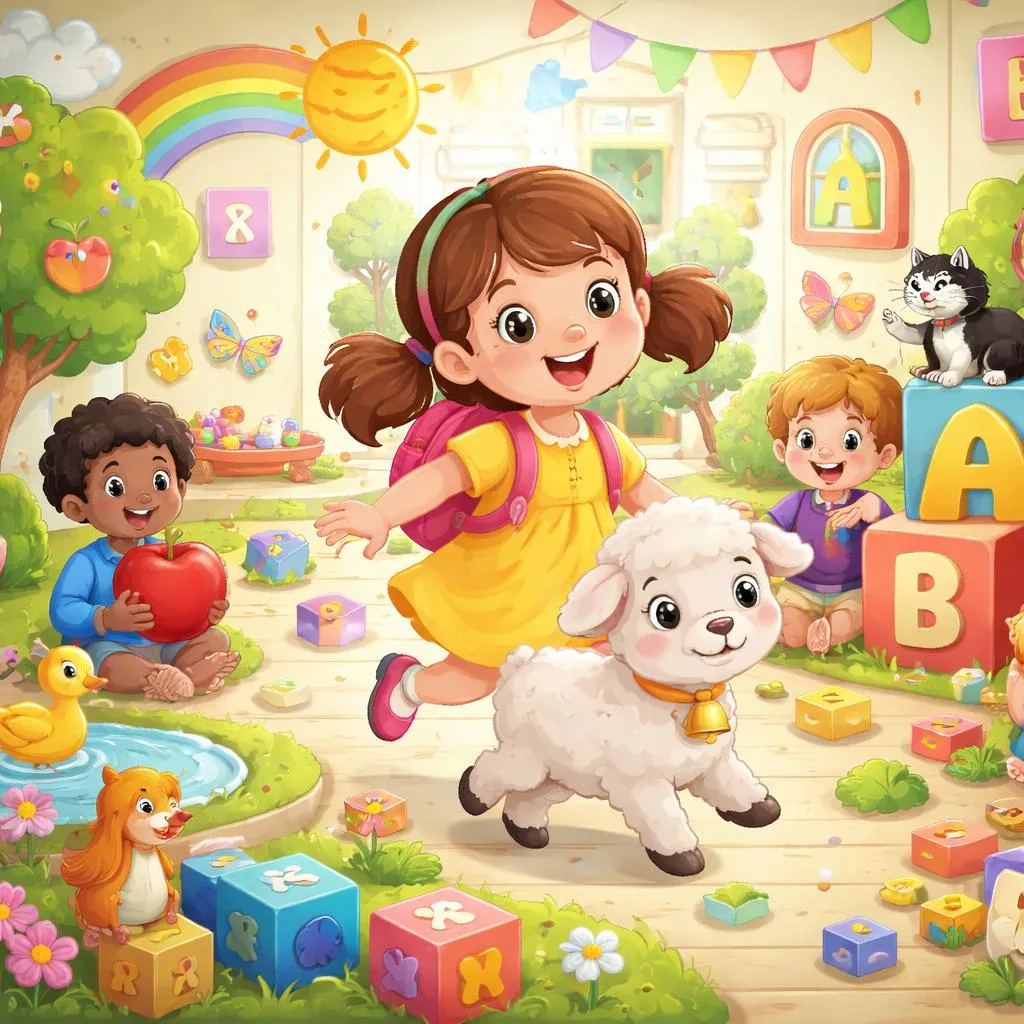
The classic rhyme mary had a little lamb nursery rhyme lyrics tells a gentle story about a girl named Mary and her lamb. The lamb follows Mary to school and surprises everyone.
This rhyme has a calm melody and simple words. It appears in classrooms, books, and songs around the world. The repetition makes it easy to remember. The story feels warm and friendly.
Songs like this support listening, speaking, and early reading. They also introduce storytelling through music.
The Lyrics of Nursery Rhymes: Mary Had a Little Lamb
The traditional version of the rhyme uses short and clear lines. These lines repeat with rhythm and rhyme.
Mary had a little lamb, Its fleece was white as snow. And everywhere that Mary went, The lamb was sure to go.
It followed her to school one day, That was against the rule. It made the children laugh and play, To see a lamb at school.
This simple structure helps with memory and pronunciation.
Vocabulary Learning with Mary Had a Little Lamb Nursery Rhyme Lyrics
The rhyme introduces useful everyday words. Mary, lamb, school, children, laugh, and snow appear clearly.
The word lamb refers to a baby sheep. The word fleece refers to wool on a sheep. The word school refers to a place for learning.
The phrase “everywhere that Mary went” shows movement. The phrase “was sure to go” shows certainty.
These words support early vocabulary development. They also appear in many daily conversations and stories.
Phonics Points in Mary Had a Little Lamb
The rhyme includes strong phonics patterns. The word Mary includes the long “a” sound. The word lamb includes the short “a” sound. The word snow includes the long “o” sound.
Rhyming words like snow and go support rhyme awareness. The repeated sounds help with phonemic recognition.
Syllables in Ma-ry and lamb build syllable awareness. Clapping syllables adds movement and rhythm.
Grammar Patterns in the Rhyme
The rhyme uses simple past tense. “Mary had a little lamb” uses the verb had. “It followed her to school” uses the verb followed.
The sentence “That was against the rule” uses the verb was. These forms introduce past tense in a natural way.
Pronouns like her and it appear often. These pronouns help with reference and sentence flow.
The structure “everywhere that Mary went” shows a relative clause. This pattern supports storytelling and sentence expansion.
Storytelling Elements in Mary Had a Little Lamb
The rhyme tells a short story. It has a main character, a setting, and an event.
Mary is the main character. The lamb is a companion character. The school is the main setting.
The event happens when the lamb follows Mary to school. The children laugh and play. This creates a joyful scene.
Storytelling through songs builds narrative skills. It also builds imagination and comprehension.
Daily Life Examples Connected to the Rhyme
The rhyme connects to animals, school life, and friendship. A visit to a farm connects with the idea of a lamb. School experiences connect with the school scene in the song.
Naming pets connects with Mary and her lamb. Drawing a lamb or a school scene builds visual understanding.
Talking about rules connects with “against the rule.” This phrase supports social understanding.
Learning Activities with Mary Had a Little Lamb Nursery Rhyme Lyrics
Singing the rhyme together builds group rhythm. Acting out the story with simple gestures adds movement.
A role-play activity can assign roles like Mary, lamb, and children. A storytelling activity can retell the rhyme in simple sentences.
Drawing and coloring Mary and the lamb builds creativity. Labeling pictures with words builds writing practice.
Sequencing activities can place story events in order. This strengthens comprehension and memory.
Printable Materials for the Rhyme
Printable lyric sheets support reading practice. Coloring pages with Mary and the lamb add creative expression.
Flashcards can show key words like lamb, school, and snow. Tracing worksheets can support letter formation.
A mini storybook can retell the rhyme in short sentences. Picture cards can support retelling activities.
Educational Games with Mary Had a Little Lamb
A rhyme matching game can pair snow with go. A memory game can match pictures with words.
A movement game can follow Mary around the room like the lamb. A spelling game can arrange words from the rhyme.
Board games can include story scenes and simple tasks. Music games can change tempo and volume for listening practice.
Listening and Speaking Practice
Listening to the song builds pronunciation and rhythm. Repeating lines builds fluency and confidence.
Echo speaking can repeat short phrases. Choral reading can read the lyrics together.
Question prompts can support speaking. “Who had a lamb?” “Where did the lamb go?”
These questions support comprehension and conversation.
Reading Practice with the Rhyme
Reading the lyrics aloud builds early reading skills. Large print posters support shared reading.
Pointing to each word supports word tracking. Repetition supports sight word recognition.
Short reading passages can retell the story in prose form. Picture books based on the rhyme support reading comprehension.
Writing Practice Inspired by the Rhyme
Writing a new verse builds creativity. “Jack had a little dog.” “It followed him to town.”
Writing a short story about a pet builds narrative skills. Writing a diary entry about a school day builds personal expression.
Labeling pictures with sentences builds sentence structure.
Phonemic Awareness Activities
Clapping syllables in Ma-ry and lamb supports syllable awareness. Segmenting sounds in lamb supports decoding skills.
Rhyming activities can find words that rhyme with go. Sound blending activities can build words like s-n-o-w.
These activities support early literacy foundations.
Cross-Curricular Connections
The rhyme connects with science through animals and wool. It connects with social studies through school life and rules.
Math activities can count words and syllables. Art activities can draw farm scenes and classrooms. Music activities can explore tempo and pitch.
This integration supports holistic learning.
Visual Learning Tools
Pictures of lambs, farms, and schools support comprehension. Charts showing key words support vocabulary recall.
Animated videos show the story in motion. Interactive slides highlight words as they are sung.
Visual tools support memory and engagement.
Creative Classroom Projects
A classroom mural can show Mary and the lamb traveling to school. Each participant can add a character or object.
A puppet show can retell the rhyme. A songbook can include illustrated verses.
A classroom play can act out the story with simple costumes.
Common Language Challenges in the Rhyme
The pronunciation of fleece may be difficult. Clear modeling supports accuracy.
Understanding past tense forms like had and followed may need repetition. Contextual examples support comprehension.
The phrase “against the rule” may need explanation. Simple examples clarify meaning.
Extending Language with the Rhyme
The rhyme introduces past tense storytelling. This structure can lead to new stories.
“There was a boy.” “He had a cat.” “It followed him to the park.”
This pattern builds narrative and grammar skills.
Cultural and Social Themes
The rhyme shows kindness and companionship. The lamb follows Mary because of connection and affection.
The school setting shows community and shared learning. The laughter of children shows joy and surprise.
Songs like this often appear in early childhood traditions. They promote shared singing and group activities.
Digital Resources for Mary Had a Little Lamb
Interactive videos support listening and pronunciation. Online quizzes test vocabulary and comprehension.
Digital flashcards support independent practice. Animated storybooks retell the rhyme with visuals.
These resources support blended and remote learning.
Encouraging Engagement Through Music and Movement
Music supports memory and motivation. Movement supports coordination and attention.
Gestures for lamb, school, and snow add meaning to words. Singing with actions creates multisensory learning.
Songs like mary had a little lamb nursery rhyme lyrics connect sound, meaning, and story. They create a warm environment for language growth. They support vocabulary, phonics, grammar, and storytelling in a joyful and memorable way.