
What Is the Bingo Song?
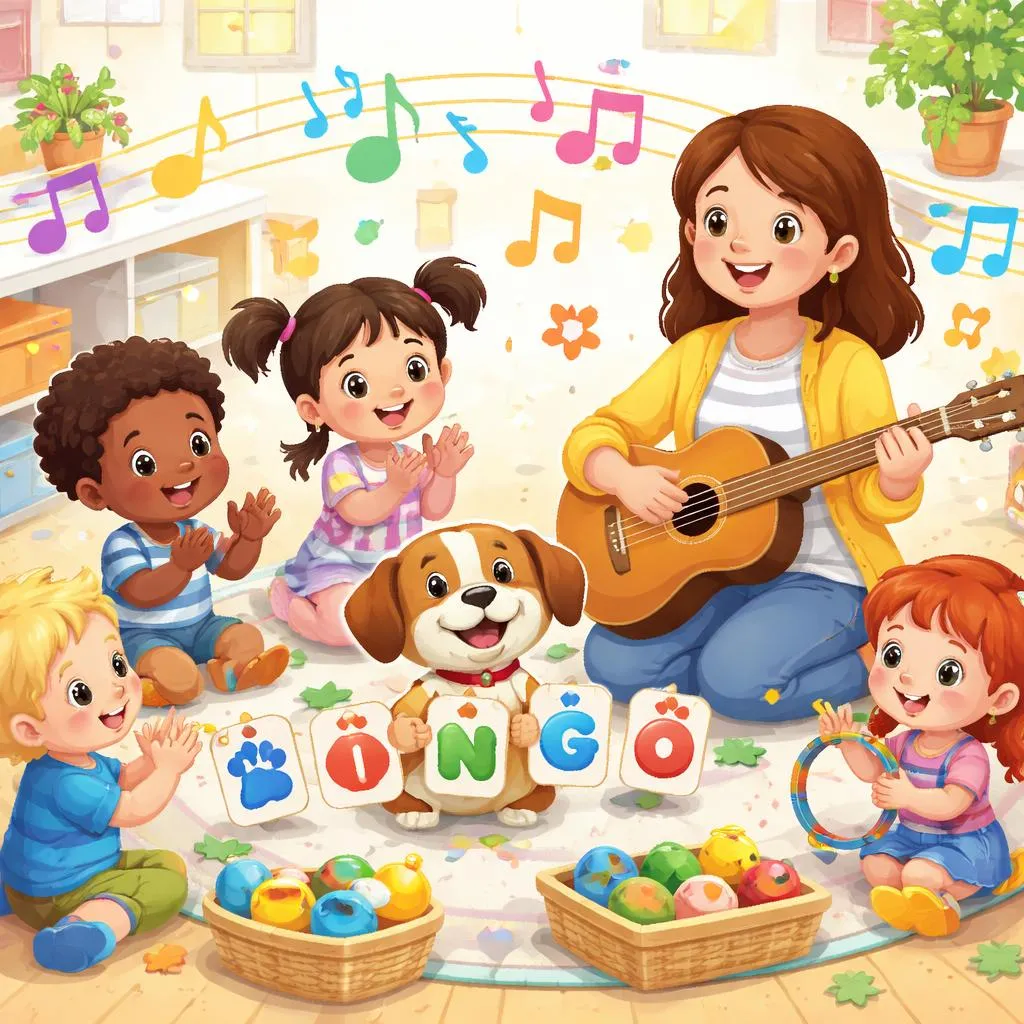
The Bingo song is a traditional English nursery rhyme. It tells a simple story about a farmer and a dog named Bingo. The song repeats the dog’s name in a playful way. Each verse removes one letter and replaces it with claps.
Because of repetition and rhythm, this song feels natural in early English lessons. The lyrics to Bingo song support listening, speaking, and sound awareness in a gentle way.
Understanding the Meaning of the Bingo Song
The meaning of the song stays simple and clear. A farmer owns a dog. The dog’s name is spelled out in the song. The focus stays on the letters B I N G O.
This simplicity allows attention to stay on sounds, letters, and rhythm. The story does not distract from language learning. Instead, it creates a friendly setting for English practice.
The Lyrics to Bingo Song
The traditional lyrics to Bingo song follow a repeated pattern. The song begins with full spelling. Each new verse replaces one letter with a clap.
There was a farmer who had a dog And Bingo was his name-o B I N G O B I N G O B I N G O And Bingo was his name-o
In later verses, the letters slowly disappear. Claps take their place. This structure supports memory and sound awareness.
Why the Lyrics to Bingo Song Work So Well for Learning
Repetition plays a key role in language learning. The lyrics repeat the same lines many times. This helps new sounds feel familiar.
The clapping adds movement. Movement supports focus and memory. Children hear, see, and feel the rhythm at the same time.
Songs like this turn practice into play.
Vocabulary Learning Through the Bingo Song
The vocabulary stays simple. Words such as farmer, dog, and name appear clearly. These words connect to everyday concepts.
The song also introduces spelling in a natural way. Letters become part of music instead of a separate task.
This makes vocabulary learning feel light and enjoyable.
Letter Recognition in the Bingo Song
The letters B I N G O appear in every verse. Seeing and hearing these letters together supports recognition.
When letters turn into claps, learners still remember which letter is missing. This strengthens memory and sequencing skills.
Letter recognition improves through repetition and fun.
Phonics Points in the Bingo Song
Phonics learning happens naturally in the song. Each letter sound stays clear and isolated.
The long “ee” sound in B and the short vowel sounds add listening practice. The rhythm supports correct pronunciation.
Songs like this prepare ears for reading.
Sound Awareness and Listening Skills
Listening skills grow through music. The Bingo song encourages careful listening to follow the pattern.
When a letter disappears, attention increases. Anticipation keeps focus strong.
Sound awareness grows without pressure.
Rhythm and Stress in English Through Song
English has stress and rhythm. Songs highlight these features clearly.
The steady beat of the Bingo song supports natural speech rhythm. Stress falls on important words.
This exposure supports smoother speaking later.
Grammar Patterns in the Bingo Song
The song uses simple sentence structures. “There was a farmer who had a dog” introduces past tense in a natural way.
The phrase “was his name-o” repeats across verses. Repetition supports grammar awareness without explanation.
Patterns become familiar through use.
Using the Bingo Song in the Classroom
The Bingo song fits well into group lessons. Singing together builds confidence.
Clapping together encourages cooperation. Everyone participates at the same pace.
Group singing creates a positive learning environment.
Learning Activities Based on the Lyrics to Bingo Song
Many activities grow from this song. Singing with actions keeps energy high.
Letter cards can be shown while singing. Removing a card when clapping supports visual learning.
Activities stay simple and engaging.
Movement and Total Physical Response
Movement supports memory. Clapping, tapping, or marching adds physical response.
Total Physical Response connects language with action. This benefits young learners strongly.
The Bingo song works well with movement-based learning.
Using the Song to Support Spelling Skills
Spelling feels playful in this song. Letters appear in order. Order matters.
Removing letters tests recall in a gentle way. No pressure exists.
Spelling practice feels like a game.
Printable Materials for the Bingo Song
Printable materials support structured practice. Letter cards, lyric sheets, and coloring pages work well.
Printables allow review outside singing time. Visual support reinforces learning.
These materials extend the lesson naturally.
Flashcards and Visual Aids
Flashcards showing letters B I N G O support recognition. Cards with a dog or farmer add meaning.
Visual aids help connect words to images. This supports comprehension.
Visual learning strengthens memory.
Using the Bingo Song at Home
The song works well at home too. Singing together builds shared learning moments.
Clapping games fit into short routines. Repetition happens naturally.
Home practice supports classroom learning.
Encouraging Confidence Through Familiar Songs
Familiar songs reduce anxiety. Knowing what comes next builds confidence.
Confidence encourages participation. Participation supports learning.
Songs provide a safe space for language use.
Differentiating Learning With the Bingo Song
Different levels can use the same song. Beginners enjoy singing and clapping.
More advanced learners can focus on spelling and sentence structure.
One song meets many needs.
Creative Extensions of the Bingo Song
Creativity adds depth. New verses can be created with other names.
Changing the animal or name adds fun. Creativity supports language flexibility.
Imagination keeps learning fresh.
Cultural Value of Traditional Nursery Rhymes
Traditional rhymes connect learners to English-speaking culture. The Bingo song has a long history.
Sharing cultural songs builds understanding and curiosity.
Language and culture grow together.
Observation and Learning Progress
Progress appears through participation. Faster clapping shows understanding.
Clear singing shows pronunciation growth.
Observation replaces formal testing.
Supporting Teachers and Parents With Songs
Songs provide reliable tools. No special materials are required.
Teachers and parents can use the same song in different settings.
Consistency supports learning.
Building Listening and Speaking Together
The Bingo song supports listening first. Singing follows naturally.
Listening and speaking develop together.
Balance supports fluency.
Emotional Engagement Through Music
Music connects to emotion. Joy and laughter appear during singing.
Positive emotion supports memory.
Happy learning lasts longer.
Adapting the Bingo Song for Different Ages
Younger learners focus on clapping and sounds. Older learners focus on letters and spelling.
The song adapts easily.
Flexibility supports inclusive teaching.
Connecting the Bingo Song to Other Lessons
The song connects to lessons about animals, farms, and names.
Connections deepen understanding.
Integrated learning feels meaningful.
Using Repetition Without Boredom
Repetition appears often, but clapping changes keep interest.
Each verse feels slightly new.
Variation prevents boredom.
The Lasting Learning Value of the Lyrics to Bingo Song
The lyrics to Bingo song offer more than music. They support phonics, vocabulary, rhythm, and confidence.
Through repetition, movement, and joy, English becomes friendly and approachable.
Songs like Bingo create strong foundations for language learning that continue well beyond the classroom.