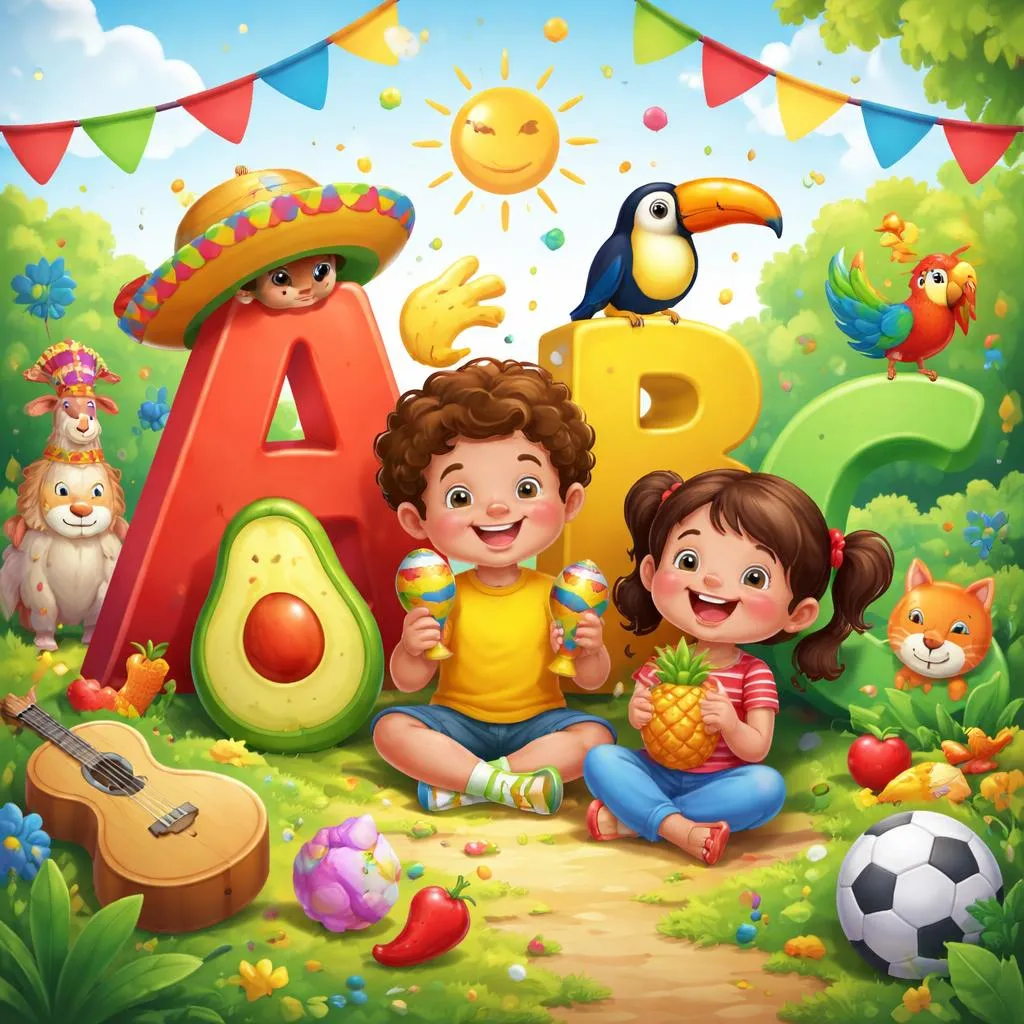

Learning letters is an important step.
Letters help children read. Letters help children write.
The abc in Spanish opens the door to a new language.
Children often start with the alphabet.
They sing it. They repeat it.
The abc in Spanish feels new but friendly.
The Spanish alphabet looks familiar at first.
Many letters look the same as English. This helps beginners feel safe.
Learning feels less scary.
The abc in Spanish includes vowels.
A E I O U
These vowels sound clear. Each vowel has one main sound.
Children enjoy clear sounds.
They can hear them easily. They can repeat them easily.
This supports early pronunciation.
The letter A sounds open.
It sounds like ah. It feels relaxed.
Children enjoy saying it.
The letter E sounds like eh.
It is short. It is gentle.
This sound appears in many words.
The letter I sounds like ee.
It is bright. It is sharp.
Children often smile when saying it.
The letter O sounds round.
It feels full. It feels smooth.
This sound is easy to remember.
The letter U sounds like oo.
It is soft. It is calm.
Children like its quiet sound.
Consonants come next.
They add shape to words. They add rhythm.
The abc in Spanish uses familiar letters.
B sounds similar to English B.
But it feels softer in Spanish. Children hear the difference over time.
C changes its sound.
Before A, O, and U it sounds hard. Before E and I it sounds softer.
Children learn this by listening.
D sounds gentle.
The tongue touches lightly. The sound flows.
Listening helps more than rules.
F sounds familiar.
It feels the same as English. This builds confidence.
G changes too.
Sometimes it sounds strong. Sometimes it sounds soft.
Children learn through examples.
H is special.
It is silent. It does not make a sound.
Children find this interesting.
J sounds strong.
It comes from the throat. It feels new.
This sound takes practice.
K is rare.
It appears in few words. Children notice this later.
L sounds smooth.
It flows easily. It feels musical.
Spanish words often sound musical.
M and N feel familiar.
They sound like English. Children feel comfortable using them.
Ñ is special in the abc in Spanish.
It has its own sound. It feels unique.
Children enjoy learning new letters.
P sounds light.
It is not strong like English P. It feels soft.
Q works with U.
They appear together. Children learn them as a pair.
R has two sounds.
A soft sound. A strong rolling sound.
Children start with the soft one.
S sounds clear.
It stays the same. It feels easy.
T sounds gentle.
It touches the teeth. It feels neat.
V sounds close to B.
Children may not hear the difference at first. This is normal.
W appears in borrowed words.
It is not common. Children see it sometimes.
X sounds different in different words.
Sometimes it sounds like ks. Sometimes it sounds like h.
Exposure helps learning.
Y can be a vowel or consonant.
It changes roles. Children hear it often.
Z sounds soft in many regions.
It sounds like S. Accents vary.
Children do not need to master every sound at once.
They learn step by step. They listen.
Songs help remember the abc in Spanish.
Songs repeat letters. Songs add rhythm.
Music supports memory.
Singing feels fun.
Children move. Children clap.
Language feels playful.
Teachers often introduce letters slowly.
One group at a time. With clear sounds.
This avoids overload.
Flashcards support learning.
A letter appears. A sound follows.
Visual and sound connect.
Pictures help too.
A is for árbol. B is for barco.
Words bring letters to life.
Children enjoy matching games.
They match letters and pictures. They repeat sounds.
Learning becomes a game.
Writing letters helps memory.
Children trace shapes. They say sounds aloud.
Movement supports learning.
The abc in Spanish also supports reading.
Children recognize letters in books. They feel proud.
Recognition builds confidence.
Mistakes are normal.
Children may mix sounds. This is part of learning.
Correction comes gently.
Listening is important.
Children hear native speech. They hear real words.
The alphabet becomes meaningful.
The abc in Spanish appears in daily words.
Names. Places.
Children notice letters everywhere.
Repetition matters.
Hearing again. Saying again.
Learning grows slowly.
Teachers often use short phrases.
Listen. Repeat.
Simple instructions help focus.
Children learn better when relaxed.
No pressure. No rush.
Language grows naturally.
The abc in Spanish builds a foundation.
It supports vocabulary. It supports pronunciation.
Everything starts with letters.
As children grow, sounds feel familiar.
They do not stop to think. They just speak.
This shows progress.
The alphabet connects to stories.
Stories include words. Words include letters.
Learning feels connected.
Children enjoy spotting letters.
On signs. In books.
Curiosity grows.
The abc in Spanish supports confidence.
Children feel capable. They feel curious.
This supports future learning.
Learning letters is not about speed.
It is about comfort. It is about joy.
Each letter becomes a friend.
Each sound becomes familiar.
Language feels welcoming.
The abc in Spanish stays with learners.
In reading. In writing.
It supports every step forward.
Children continue learning with ease.
One letter at a time. One sound at a time.
Language opens gently.
And little by little, the abc in Spanish becomes part of everyday learning.
Children often enjoy repeating letters out loud.
They hear a sound. They say it again.
This repetition builds confidence.
Teachers may pause between letters.
They give time to listen. They give time to speak.
Slow learning feels safe.
The abc in Spanish sounds clear when spoken slowly.
Each letter stands alone. Each sound feels complete.
Children can follow easily.
Classroom routines often include alphabet time.
Letters appear on the board. Children point and repeat.
Routine supports memory.
Some children like to move while learning.
They jump for each letter. They clap for each sound.
Movement helps focus.
The abc in Spanish can be learned through stories.
A story introduces a letter. A word follows.
The letter feels alive.
Children like guessing games.
The teacher says a sound. Children guess the letter.
This keeps attention strong.
Listening games also help.
Children close their eyes. They listen for a sound.
Sound awareness grows.
Parents often join learning at home.
They repeat letters together. They sing songs.
Learning feels shared.
Everyday objects support learning.
A table. A chair.
Children listen for starting sounds.
The abc in Spanish helps with spelling later.
Children remember letter sounds. They match sound to shape.
This builds a strong base.
Teachers often review letters gently.
No rush. No pressure.
Review builds comfort.
Children may have favorite letters.
Some like loud sounds. Some like soft sounds.
Interest supports learning.
The alphabet appears in children’s names.
They spot familiar letters. They feel excited.
Learning becomes personal.
The abc in Spanish supports early reading skills.
Letters connect to words. Words connect to meaning.
Progress feels natural.
Children may mix English and Spanish sounds.
This is normal. It shows exploration.
Exposure brings clarity.
Visual charts help many learners.
Bright colors. Clear shapes.
Attention stays strong.
Teachers may repeat the same letter on different days.
Repetition deepens learning. Memory grows stronger.
The abc in Spanish is not learned in one day.
It grows over time. It grows with use.
Patience matters.
Children feel proud when they recognize letters.
They point them out. They name them.
Confidence grows.
Learning letters supports later language goals.
Reading. Writing.
Everything begins here.
Each letter becomes familiar.
Each sound feels friendly.
Language learning continues smoothly.