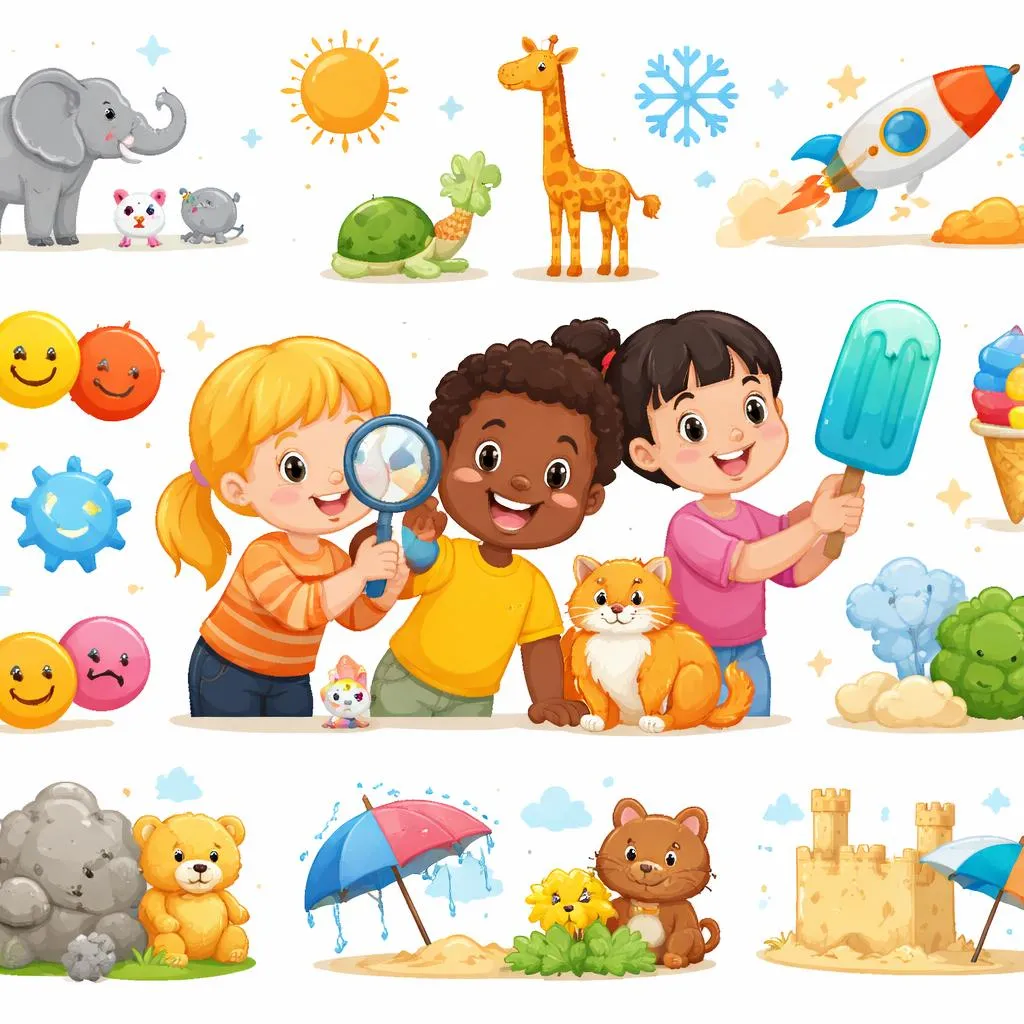

Words help us talk about the world.
Some words name things. Some words name actions.
Adjectives help describe.
When children learn adjectives, their language becomes richer.
They do not just say cat. They say big cat.
The idea of adjectives and adjectives sounds simple.
It means using more than one adjective. It means adding more detail.
Children do this naturally.
A child may say a red ball.
Later, the child may say a big red ball. Both words describe the noun.
These are adjectives and adjectives together.
Adjectives answer simple questions.
What kind. How many. Which one.
Children enjoy answering these questions.
Color adjectives come first.
Red. Blue. Yellow.
Children see colors everywhere.
A blue sky feels easy to say.
A green tree feels natural. Color helps language feel alive.
Size adjectives are also common.
Big. Small. Tall.
Children compare objects easily.
A big dog and a small dog create a clear picture.
Adjectives help listeners imagine.
When two adjectives appear together, they work as a team.
They give more information. They add clarity.
Children often use feeling adjectives.
Happy. Sad. Excited.
These words help express emotion.
A happy child feels warm.
A tired child feels quiet. Language reflects feeling.
Adjectives and adjectives appear in daily speech.
A cold morning. A sunny day.
Children hear these phrases often.
Weather words are easy to learn.
Hot sun. Cold wind.
Children connect words to experience.
Texture adjectives add detail.
Soft. Hard.
A soft pillow feels comforting. A hard chair feels different.
Children touch objects.
They feel texture. They describe it.
Language connects to senses.
Sound adjectives also appear.
Loud music. Quiet room.
Children react to sound easily.
Two adjectives can describe sound too.
A loud happy song. A soft slow voice.
Meaning becomes clearer.
Adjectives and adjectives also describe people.
A kind teacher. A funny friend.
Children like to talk about people.
Adding another adjective adds depth.
A kind young teacher. A funny loud friend.
Descriptions grow.
Order matters in English.
Some adjectives come before others. Children learn this by hearing.
They hear big red ball, not red big ball.
Listening helps more than rules.
Teachers model natural phrases.
They repeat common patterns. Children copy.
Animals are a fun topic.
A fast horse. A small bird.
Children imagine movement.
Two adjectives make animals vivid.
A fast brown horse. A small yellow bird.
Pictures form in the mind.
Food is another favorite topic.
Sweet apple. Hot soup.
Children talk about taste.
Taste adjectives are powerful.
Sweet. Salty.
Children remember flavors.
Combining adjectives adds interest.
A sweet red apple. A hot tasty soup.
Language feels rich.
Clothing words also use adjectives.
Warm coat. Blue hat.
Children see clothes every day.
Two adjectives help choose items.
A warm winter coat. A blue soft hat.
Details matter.
Adjectives and adjectives help with storytelling.
Stories need description. They need color.
Children listen longer when details appear.
A story about a house changes with adjectives.
A house is simple. A small white house feels real.
Adding more adjectives builds a scene.
A small white quiet house. The image grows.
Children enjoy describing pictures.
They look carefully. They speak slowly.
Adjectives support observation.
Picture books are full of adjectives.
Bright pages. Funny characters.
Children hear descriptive language.
Teachers often ask guiding questions.
What color. What size.
Children answer with adjectives.
Using two adjectives feels like a step forward.
Language becomes flexible. Expression grows.
Mistakes are normal.
Children may mix order. This is part of learning.
Hearing correct phrases helps.
Big blue truck. Small green frog.
Patterns settle in.
Adjectives and adjectives also appear in routines.
Morning quiet time. Busy school day.
Children feel these moments.
Time words can act like adjectives too.
Early morning light. Late night sky.
Descriptions feel gentle.
Children begin to enjoy choosing words.
They try different adjectives. They experiment.
Language becomes playful.
Teachers encourage exploration.
They accept attempts. They repeat correct forms.
Confidence grows.
Adjectives help children compare.
This toy is bigger. That room is brighter.
Thinking skills develop.
Using more than one adjective supports clarity.
Listeners understand better. Stories feel stronger.
Children learn adjectives through repetition.
Hearing again. Saying again.
Learning grows slowly.
Adjectives and adjectives support writing.
Children write short sentences. They add details.
Writing feels meaningful.
A simple sentence changes with adjectives.
The dog runs. The happy brown dog runs.
Interest increases.
Reading supports adjective learning.
Books repeat patterns. Children notice descriptions.
Exposure matters.
Adjectives also help with questions.
Which book. What kind.
Answers use adjectives naturally.
Children feel proud when they describe well.
They feel understood. They feel expressive.
Language supports confidence.
Adjectives connect words and imagination.
They paint pictures. They build scenes.
Children enjoy this power.
As vocabulary grows, children use more adjectives.
They choose carefully.
Adjectives and adjectives stay useful.
In speech. In writing.
They grow with the learner.
Language learning feels gentle this way.
No pressure. No rush.
Words arrive naturally.
Each new adjective adds color.
Each pair adds depth.
Expression becomes richer.
Children continue describing their world.
People. Places. Things.
Language follows curiosity.
And little by little, adjectives and adjectives become part of everyday English.
Children often use adjectives while playing.
They talk about toys. They talk about games.
A big new toy sounds exciting. Words add feeling.
Playgrounds offer many chances to describe.
A tall slide. A fast swing.
Children observe and speak at the same time.
Two adjectives help children be clear.
They choose words carefully. They notice differences.
A small blue ball is not the same as a big blue ball.
Art time is full of adjectives.
Children draw shapes. They choose colors.
A bright yellow sun. A long green line.
Language follows creativity.
Adjectives and adjectives also appear in daily routines.
A quiet morning classroom. A busy lunch room.
Children feel these moments and name them.
Teachers often encourage describing objects.
They ask simple questions. They wait for answers.
Children respond with growing confidence.
Nature gives many examples.
A tall green tree. A small brown leaf.
Children enjoy naming what they see.
Seasonal changes bring new adjectives.
A cold winter day. A warm sunny afternoon.
Two adjectives describe the moment well.
Adjectives help children explain choices.
Why do you like this book. Why do you choose that toy.
A funny colorful book feels inviting.
Feelings can also use more than one adjective.
A very happy child. A little tired student.
Children learn to express emotion clearly.
Adjectives and adjectives appear in simple conversations.
A nice old house. A sweet little dog.
These phrases sound natural.
Children learn order by listening.
They hear phrases again and again. Patterns settle slowly.
This learning feels calm.
Mistakes still happen.
Children may switch words. This is part of growth.
Gentle correction helps.
Teachers repeat correct phrases naturally.
They model language. They do not interrupt flow.
Children listen and adjust.
Books remain an important source.
Stories describe places. Stories describe characters.
Children absorb adjectives without effort.
Picture descriptions help focus.
Children look closely. They speak carefully.
Observation improves.
Adjectives and adjectives support imagination.
Children invent characters. They invent places.
A brave young hero feels real.
Writing short sentences also helps.
Children write about pictures. They add details.
Writing slows thinking and supports accuracy.
As children grow, they enjoy choosing words.
They test combinations. They experiment.
Language becomes playful.
Using two adjectives feels like progress.
Children notice this. They feel proud.
Confidence increases.
Adjectives support clear communication.
Listeners understand more. Stories feel complete.
This motivates speaking.
Children carry this skill forward.
They use it in reading. They use it in writing.
Language grows naturally.
Little by little, adjectives and adjectives become easy to use.
They blend into everyday speech.