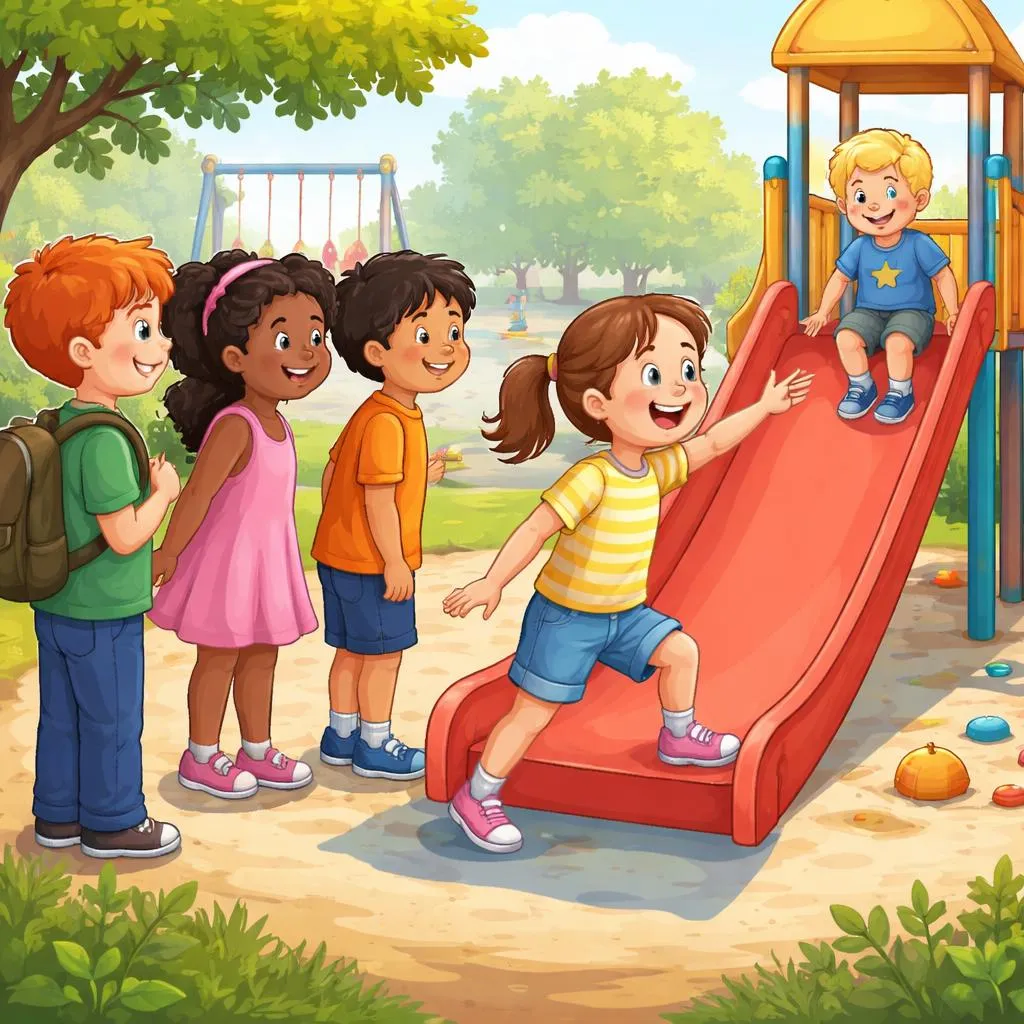

What Do These Expressions Mean? “It's my turn” and “my go now” both announce that a child has the right to use something next. They tell others that waiting is over and participation is beginning. Children say these words on swings, in games, or with toys. Both claim a turn.
“It's my turn” means the right to use something has passed to me. It is clear and common. A child says it when the timer goes off. It is direct and fair.
“My go now” means I am the next person to play or do something. It is more casual and often used in games. A child says it when a friend finishes their turn. It is quick and friendly.
These expressions seem similar. Both announce “I am next.” Both prevent being skipped. But one is for general turns while one is for game play.
What's the Difference? One is for all turn-taking. One is specifically for games. “It's my turn” works for everything. Swing, computer, speaking, toy, game. It is the universal phrase.
“My go now” is mostly for games or rounds. It sounds more playful. You say it in board games, video games, or races. It is less common for things like a swing.
Think of a child on a playground. The swing stops. “It's my turn” is right. “My go now” sounds a little odd for a swing. One is for any turn. One is for game turns.
One is for serious fairness. The other is for fun play. “It's my turn” is what you say when you have been waiting. “My go now” is what you say in a game. Use the first for fairness. Use the second for fun.
Also, “my go now” is shorter and faster. Children say it when they are excited. “It's my turn” is a bit more serious. Choose based on the situation.
When Do We Use Each One? Use “it's my turn” for most turn-taking situations. Use it for swings, toys, computers, and talking. Use it to claim what is fair. It fits all turn-taking.
Examples at home: “It's my turn on the computer now.” “You had five minutes. It's my turn.” “It's my turn to choose the movie.”
Use “my go now” for games and playful activities. Use it in board games, video games, or races. Use it to be quick and friendly. It fits game time.
Examples for games: “My go now. I'm going to roll the dice.” “You finished your turn. My go now.” “My go now. Watch me do this level.”
Children can use both. “It's my turn” for fairness. “My go now” for game fun. Both claim a turn politely.
Example Sentences for Kids It's my turn: “It's my turn on the swing. You had ten minutes.” “It's my turn to talk. Please let me finish.” “It's my turn with the red crayon.”
My go now: “My go now. I'll roll the dice.” “My go now in the game. Watch this.” “My go now. You had your turn.”
Notice “it's my turn” is about fairness and waiting. “My go now” is about excitement and games. Children learn both. One for rules. One for fun.
Parents can use both. Playground: “say it's my turn.” Board game: “say my go now.” Children learn different turn-taking language.
Common Mistakes to Avoid Some children shout “it's my turn” before the other child is done. That is rude. Wait for the turn to actually be over. Then announce your turn. Patience first, then words.
Wrong: “It's my turn!” (other child still playing). Right: (waits until turn ends) “Now it's my turn.”
Another mistake: saying “my go now” for everything. For a swing, say “it's my turn.” For a game, say “my go now.” Match the phrase to the activity.
Wrong: “My go now on the slide.” Right: “It's my turn on the slide.”
Some learners forget to use a polite tone. “It's my turn” can sound demanding. Add “please” or say it with a smile. Politeness gets better results.
Also avoid arguing about turns. If there is a dispute, call an adult. Do not fight. Two wrongs do not make a right.
Easy Memory Tips Think of “it's my turn” as a waiting line. You stand in line. When you get to the front, you say it. Fair and patient. For all turn-taking.
Think of “my go now” as a game controller. You grab the controller and shout “my go.” Excited and quick. For game rounds.
Another trick: remember the activity. “Turn” for anything. “Go” for games. Anything gets “turn.” Games get “go.”
Parents can say: “Turn for the swing. Go for the dice thing.” That means playground and toys get “it's my turn.” Games get “my go now.”
Practice at home. Swing: “it's my turn.” Board game: “my go now.” Two different turn-taking phrases.
Quick Practice Time Let us try a small exercise. Choose the better phrase for each situation.
A child is waiting for a turn on the tire swing. The other child gets off. a) “My go now.” b) “It's my turn on the swing.”
A child is playing a card game. The other player finishes their play. a) “It's my turn.” b) “My go now. I'll lay down a card.”
Answers: 1 – b. A playground swing fits the general “it's my turn.” 2 – b. A card game fits the playful “my go now.”
Fill in the blank: “When my sibling finishes their turn on the video game, I say ______.” (“My go now” fits the game context perfectly.)
One more: “When I have been waiting for the slide, I say ______.” (“It's my turn” fits the playground fairness moment.)
Knowing when it is your turn is a skill. “It's my turn” claims fairness. “My go now” claims game time. Teach your child both. A child who knows their turn will not be left out.
Wrap-up “It's my turn” announces a rightful claim to any shared item or activity after waiting. “My go now” is a quicker, more playful phrase for games and rounds. Use “it's my turn” for swings, toys, and talking. Use “my go now” for board games, video games, and races. Both phrases help children navigate sharing. A child who can say what they need gets what they deserve.