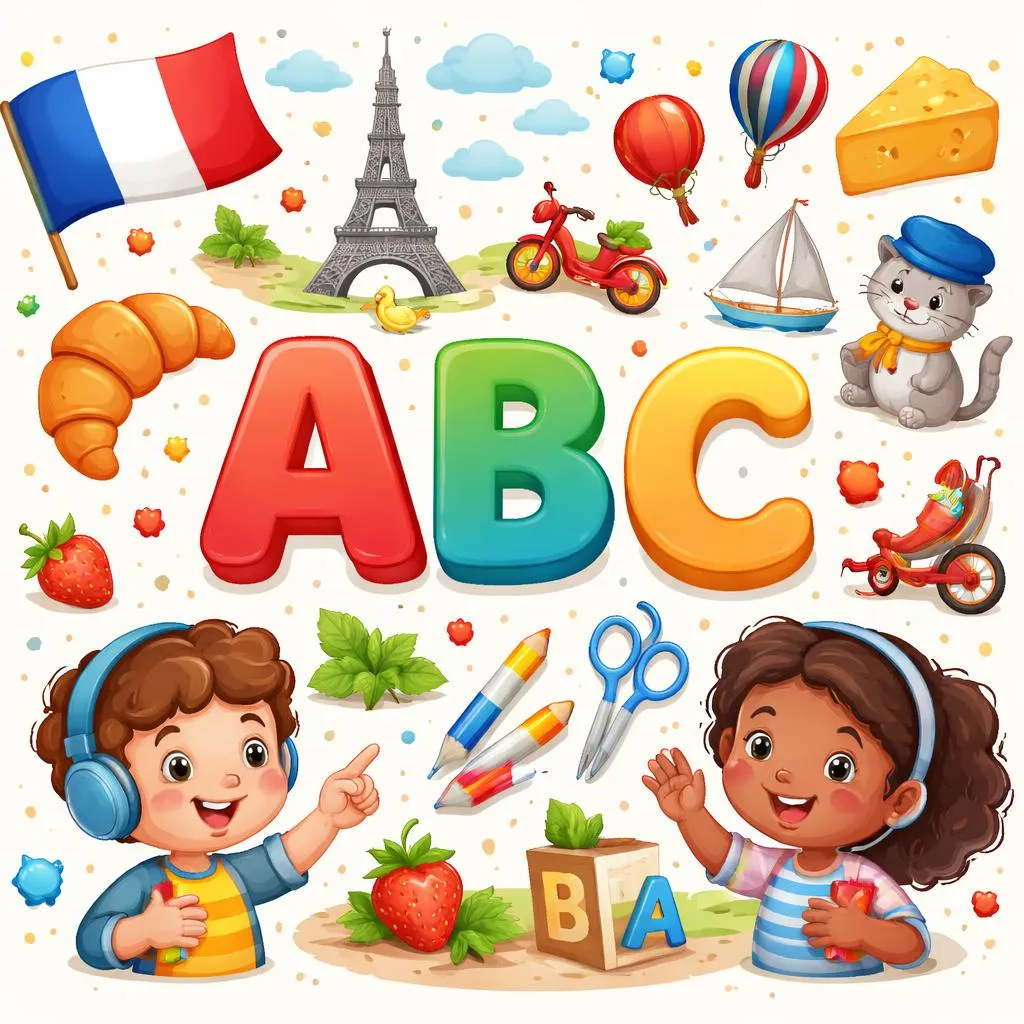

What is the French Alphabet? The French alphabet consists of 26 letters, just like the English alphabet. But the way letters are pronounced in French can be different from English. Learning the French alphabet is the first step to speaking and writing in French.
The French alphabet has 26 letters.
The Letters of the French Alphabet Here are the letters in the French alphabet: A, B, C, D, E, F, G, H, I, J, K, L, M, N, O, P, Q, R, S, T, U, V, W, X, Y, Z. These letters are used to form words in French, just like in English.
The letters are the same as in English.
Pronunciation of Letters in French Each letter in the French alphabet has its own pronunciation. For example, the letter “A” is pronounced like “ah,” and the letter “E” is pronounced like “uh.” Some letters in French are pronounced differently from English.
French pronunciation can be different from English.
Vowels in French There are five vowels in the French alphabet: A, E, I, O, and U. These vowels can be pronounced in different ways depending on the word. For example, “A” is pronounced like “ah,” and “E” can be pronounced as “uh” or “ay.”
Vowels are important in French pronunciation.
Consonants in French The French alphabet also has 21 consonants. For example, “B” is pronounced like “bay,” and “C” is pronounced like “say.” Some consonants are silent in French, like the “H” in “heure” (hour).
Consonants make words sound different in French.
Accents in the French Alphabet In French, some letters have accents. For example, “é” has an accent called “accent aigu,” and “è” has an accent called “accent grave.” Accents change the pronunciation of a letter.
Accents are important in French writing and speaking.
Special French Letters In French, there are some special letters and combinations, like “ç” (called “c cedilla”) and “œ” (used in words like “cœur” meaning “heart”). These letters help make French words easier to pronounce.
Special letters are used in French words.
Learning French Sounds Learning how to say the letters is important for pronouncing French words. For example, the letter “R” is pronounced with a throat sound in French, which is different from English. Listening to native speakers can help with learning pronunciation.
French pronunciation takes practice.
Spelling Words in French To spell a word in French, you say each letter one by one. For example, to spell “chat” (cat), you would say: “C-H-A-T.” French spelling is important for writing correctly.
Spelling words correctly is important in French.
Common Words to Practice the Alphabet Here are some simple French words to practice the alphabet: “A” for “ami” (friend), “B” for “banane” (banana), “C” for “chat” (cat). These words will help you get familiar with the alphabet and pronunciation.
Practice with simple French words.
The Importance of the French Alphabet Learning the French alphabet is the foundation of learning French. Once you know the letters and their sounds, you can start reading and writing in French. It also helps with listening and speaking.
The alphabet is the first step in learning French.
Fun with the French Alphabet You can practice the French alphabet by singing songs or using flashcards. You can also try writing your name and simple words in French. This makes learning the alphabet more fun and interactive.
Make learning the alphabet fun!
: Mastering the French Alphabet Mastering the French alphabet is essential for learning the language. By knowing the letters and their sounds, you can improve your reading, writing, and speaking skills. It’s the first step to becoming fluent in French.
Mastering the French alphabet helps you learn French.
French Alphabet and its Sounds Each letter in the French alphabet has its own distinct sound. For example, “B” is pronounced like “bay” in French, and “C” can be pronounced like “say” or “ka” depending on the word. Learning the sounds of each letter is important for pronunciation.
Each letter in French has a specific sound.
The French Vowel “E” The vowel “E” in French can be pronounced in different ways. For example, in “le” (the), it is pronounced like “uh,” and in “été” (summer), it is pronounced like “ay.” The vowel “E” can change its sound based on accents and word placement.
The vowel “E” changes in different words.
French Silent Letters In French, some letters are silent. For example, in the word “hôtel” (hotel), the “h” is silent. There are many words in French where the last letter or even the middle letters are not pronounced.
French has many silent letters.
The Letter “R” in French The letter “R” is pronounced very differently in French compared to English. It is a guttural sound made in the back of the throat. For example, in “rue” (street), the “R” is pronounced with a deep, throaty sound.
“R” in French is pronounced with a throat sound.
Learning Accents in French Accents are used in French to change the pronunciation of vowels. For example, “é” (accent aigu) sounds like “ay” in “café,” and “è” (accent grave) sounds like “eh” in “père” (father). Accents are important in understanding the meaning of words.
Accents change how words are spoken in French.
The Importance of the Letter “C” The letter “C” in French can be pronounced in different ways. For example, “café” (coffee) has the “k” sound, but “cercle” (circle) has the “s” sound. The pronunciation of “C” can depend on the following vowel.
The letter “C” has different sounds in French.
The Letter “G” in French The letter “G” can also have multiple sounds in French. When it is followed by “e,” “i,” or “y,” it is pronounced like “zh” as in “génial” (great). When it’s followed by “a,” “o,” or “u,” it has a hard “g” sound like in “gâteau” (cake).
The letter “G” has a soft and hard pronunciation.
The French Letter “H” The letter “H” in French is usually silent. For example, in the word “homme” (man), the “H” is not pronounced. However, in some borrowed words, the “H” may be pronounced, like in “hobby.”
The letter “H” is usually silent in French.
The Letter “L” and its Sound The letter “L” in French is pronounced similarly to how it is in English. For example, in “lire” (to read), the “L” is pronounced clearly. Unlike some other languages, the “L” sound is not modified.
The letter “L” is pronounced clearly in French.
Understanding the Letter “S” in French The letter “S” in French is pronounced like “s” in English, but it can also be silent. For example, in “salut” (hello), the “S” is pronounced, but in “hors” (outside), the “S” is silent. Pay attention to the word context to understand the pronunciation.
“S” can be silent or pronounced in French.
French Consonant Combinations Some consonant combinations in French have unique sounds. For example, “ch” is pronounced like “sh” in “chat” (cat), and “th” is pronounced like “t” in “thé” (tea). Learning these combinations will help you read and speak French more fluently.
Consonant combinations in French have special sounds.
The French Letters “U” and “V” The letter “U” in French is pronounced differently than in English. For example, in “une” (one), it sounds like “ew,” and in “lune” (moon), it sounds like “oo.” The letter “V” is pronounced the same as in English, like in “voiture” (car).
The letter “U” has a different sound in French.
Learning French Syllables In French, syllables are often used to break up words. For example, “banane” (banana) can be divided into “ba” and “nane.” Knowing how to break up words into syllables will make reading and speaking easier.
Syllables help break up words in French.
French Alphabet Songs One way to learn the French alphabet is by singing alphabet songs. Singing helps you remember the letters and their sounds. Try singing the French alphabet song to help with pronunciation.
Singing songs helps you learn the French alphabet.
Practicing the French Alphabet Practice makes perfect when learning the French alphabet. Start by saying each letter aloud, then try to spell words in French. You can also practice writing the letters to improve your handwriting.
Practice helps you master the French alphabet.
: Mastering the French Alphabet The French alphabet is the foundation of the language. By learning the alphabet and its sounds, you can start reading, writing, and speaking in French. Practice with words, sounds, and songs to improve your skills.
Mastering the French alphabet is key to learning French.