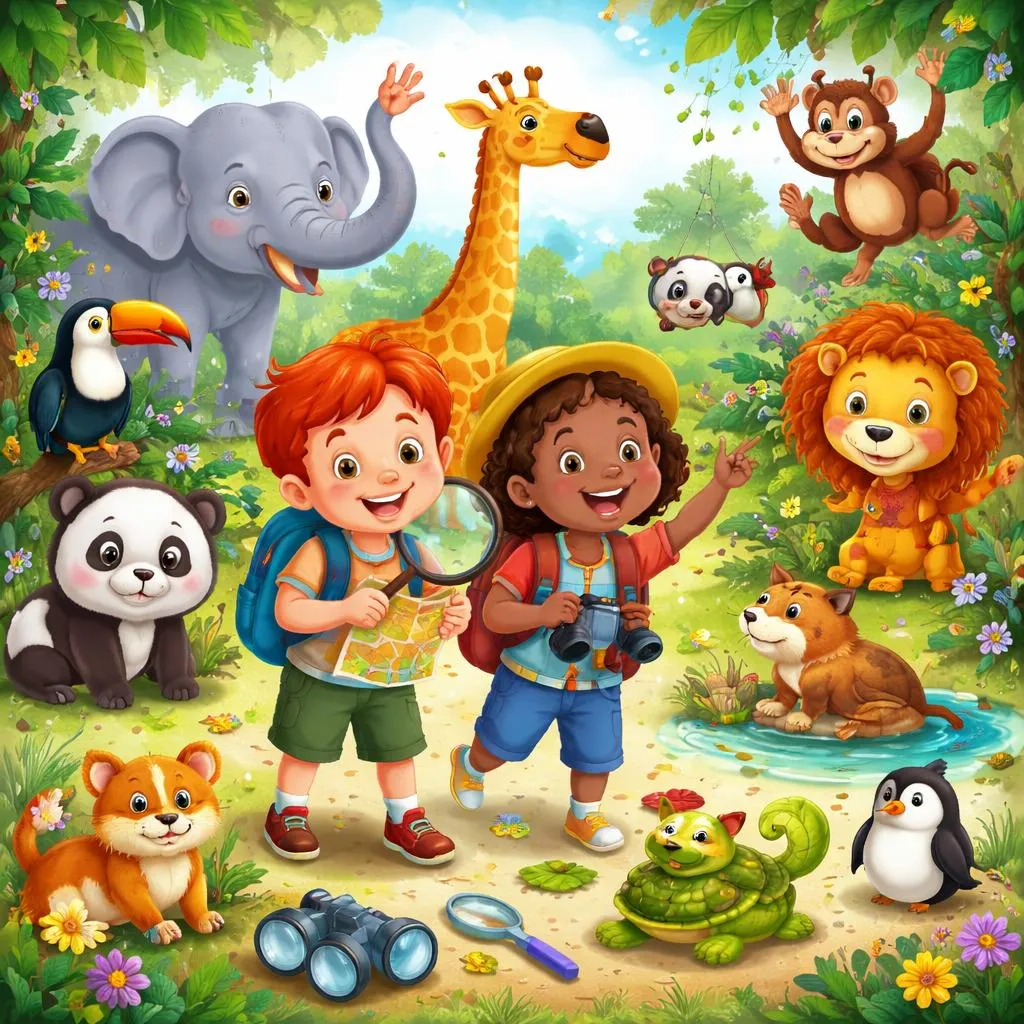

What Are Animals for Kids?
Animals for kids refer to creatures that children can learn about, see, and interact with. These include pets, farm animals, wild animals, and sea creatures. Learning about animals helps build curiosity, observation skills, and vocabulary. Children can explore the animal world through stories, games, and everyday life.
Meaning and Explanation
The phrase “animals for kids” emphasizes animals suitable for children to learn about. It includes their names, sounds, movements, and habits. Understanding animals develops empathy, awareness of nature, and descriptive language skills. For example: “The dog barks loudly” or “The elephant has a long trunk.”
Categories of Animals
Animals can be grouped into categories for easier learning:
Pets – dog, cat, rabbit, hamster
Farm Animals – cow, pig, chicken, horse
Wild Animals – lion, tiger, elephant, giraffe
Sea Animals – dolphin, shark, octopus, fish
Birds – parrot, eagle, sparrow, penguin
Reptiles and Amphibians – snake, turtle, frog, lizard
Each category has unique characteristics, sounds, and habitats.
Daily Life Examples
Animals appear in everyday life and media:
Pets at home: dogs, cats, hamsters Farm visits: seeing cows, pigs, and chickens Zoo trips: spotting lions, giraffes, and monkeys Aquariums: observing fish, turtles, and octopuses
Using familiar examples makes learning relatable and fun.
Vocabulary Learning
Children learn key words connected to animals:
Names of animals Animal sounds: bark, meow, roar, chirp Actions: run, fly, swim, crawl Body parts: tail, wings, trunk, claws
Short sentences help children remember words: “The cat climbs the tree.”
Printable Flashcards for Animals
Flashcards help practice recognition and speaking:
Picture of the animal Name of the animal Action or sound: “The cow moos.” Interactive games: match picture to name, or sound to animal
Flashcards strengthen memory and support early reading skills.
Learning Activities and Games
Animal sounds game: Make the sound, guess the animal Role-play: Pretend to be different animals moving and speaking Sorting game: Group animals by pets, farm, wild, or sea Storytelling: Make a story including multiple animals
Activities combine imagination, movement, and English practice.
Phonics and Pronunciation Points
Animal names help children practice English sounds:
Initial sounds: /d/ in dog, /c/ in cat Ending sounds: /g/ in frog, /k/ in duck Vowel sounds: /a/ in cat, /i/ in fish
Singing animal songs reinforces pronunciation naturally.
Grammar Patterns
Using animals in sentences teaches grammar patterns:
Verbs: is, are, has, can – “The bird can fly.” Adjectives: big, small, fast, slow – “The elephant is big.” Prepositions: in, on, under – “The cat is on the chair.” Questions: “What does the dog do?” “Where is the fish?”
Practicing these patterns builds sentence structure understanding.
Creative Activities
Children can create their own animal book: draw animals, write names, and describe actions. Make animal crafts using paper, clay, or colors. Invent imaginary animals and describe them. Use animal puppets to tell short stories or act out scenes.
Creative activities boost writing, speaking, and imagination.
Educational Games for Animals
Animal hunt: Find pictures or toys and describe them Memory game: Match animal pictures to names Guess the animal: Make sounds or describe features for others to guess Sentence scramble: Arrange words to form correct sentences about animals
Games help reinforce vocabulary, listening, and communication.
Tips for Learning About Animals
Use real animals when possible or images, videos, and toys. Encourage children to speak sentences aloud. Mix drawing, acting, and singing for interactive learning. Ask questions to spark observation: “What sound does this animal make?” “Where does it live?” Combine animals with other subjects: science, geography, or art.
Learning about animals for kids builds curiosity, language, and understanding of nature. Exploring the animal world through stories, games, and real-life experiences makes learning enjoyable and memorable.