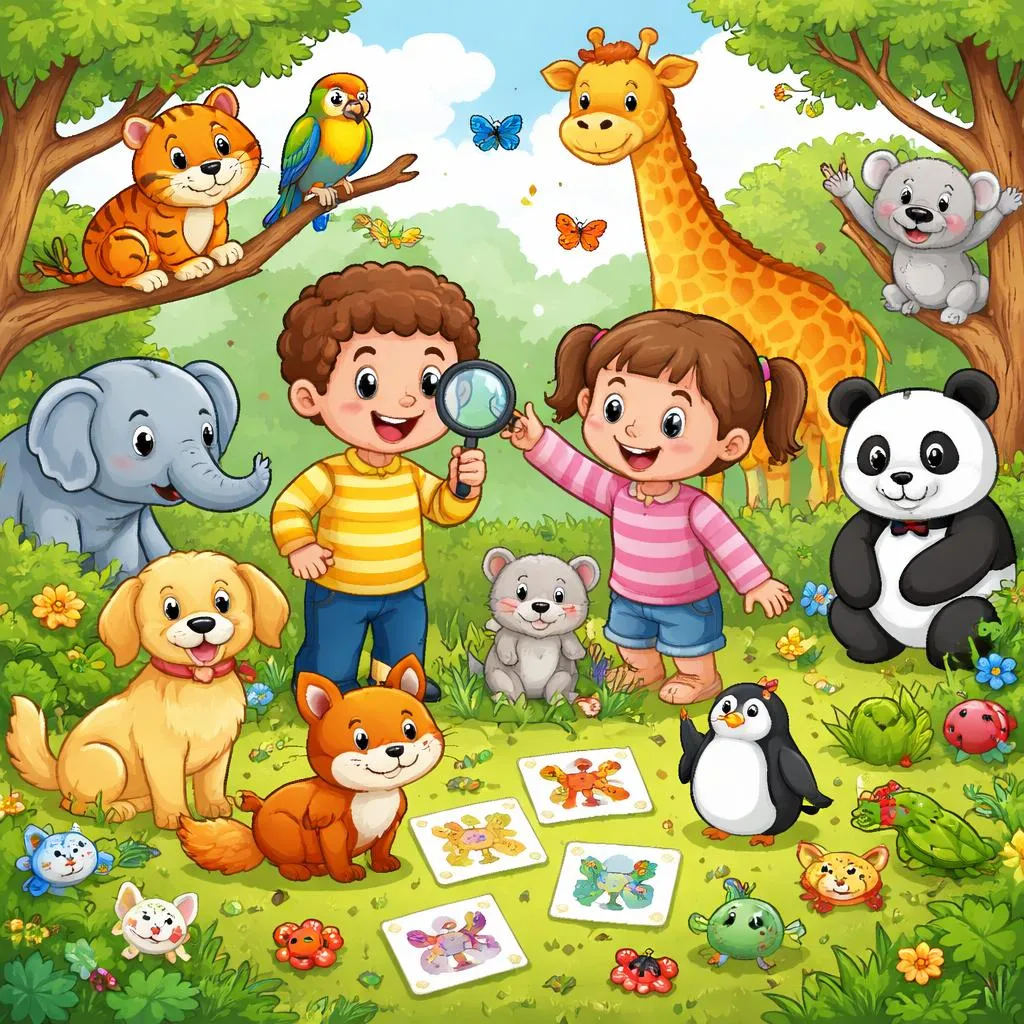

What Are Animals? Animals are living creatures that move and breathe. They can be big or small, fast or slow. Some animals live on land, and others live in the water.
Animals are part of the world we live in.
Common Animals Here are some common animals you might know: Dog, cat, elephant, lion, and bird. These are animals we see every day.
Some animals are pets, and some are wild.
Pets and Domestic Animals Many people have pets at home. Common pets include dogs, cats, fish, and rabbits. These animals live with people and are cared for as family members.
Pets make great companions.
Wild Animals Wild animals live in nature. They don’t live with people but in forests, jungles, and oceans. Examples of wild animals are lions, tigers, elephants, and bears.
Wild animals live in their natural habitats.
Farm Animals Farm animals are animals that live on farms. They are raised by people for food, work, and companionship. Examples of farm animals are cows, pigs, chickens, and horses.
Farm animals help people with many tasks.
Animals That Live in the Water Some animals live in water, like oceans, rivers, and lakes. For example, fish, dolphins, whales, and turtles. These animals swim to find food and live in watery environments.
Water animals are adapted to their environment.
Animals That Live in the Sky Some animals live in the sky. Birds are the most common animals that fly. Examples are eagles, sparrows, and penguins.
Birds can soar high above the ground.
Insects and Small Animals Insects are tiny animals with six legs. Examples of insects are ants, bees, and butterflies. Other small animals include frogs, mice, and snails.
Insects and small animals are important to nature.
Reptiles and Amphibians Reptiles are animals with scales and cold blood. Examples of reptiles are snakes, lizards, and turtles. Amphibians, like frogs, can live both on land and in water.
Reptiles and amphibians have special ways of living.
Animal Sounds Different animals make different sounds. For example, a dog barks, a cat meows, and a cow moos. Animal sounds are how animals communicate.
Animal sounds help them express themselves.
Carnivores, Herbivores, and Omnivores Carnivores are animals that eat meat. For example, lions, tigers, and wolves are carnivores. Herbivores eat plants, like cows, giraffes, and rabbits. Omnivores eat both meat and plants, like bears and humans.
Animals have different diets.
Endangered Animals Some animals are endangered, which means they are at risk of disappearing. Examples of endangered animals are tigers, pandas, and rhinos. We need to protect these animals so they don’t vanish.
Endangered animals need our help.
Animal Habitats Animals live in different places called habitats. For example, a tiger lives in the jungle, and a polar bear lives in the Arctic. The habitat is the place where an animal finds food, shelter, and water.
Habitats are important for animal survival.
Interesting Animal Facts Did you know that elephants are the largest land animals? Or that hummingbirds can fly backwards? Animals have fascinating facts about them.
Learning animal facts is fun and interesting.
Learning Animal Names in Other Languages It’s fun to learn the names of animals in different languages. For example, “dog” in Spanish is “perro,” and “cat” is “gato.” In French, “dog” is “chien,” and “cat” is “chat.”
Learning animal names in other languages is exciting.
Animal Classification Animals are classified into different groups. For example, mammals are animals that have hair or fur and give birth to live babies. Birds have feathers and lay eggs.
Classifying animals helps us understand them better.
Animals and the Environment Animals are an important part of the environment. They help balance nature by spreading seeds, pollinating flowers, and keeping pests in check. Protecting animals is important for the health of our planet.
Animals help maintain the balance of nature.
Animal Behavior Animals have unique behaviors. Some animals, like ants, work together in colonies. Other animals, like wolves, live in packs and work together to hunt.
Animal behavior shows how they survive.
Animal Adaptations Animals have special features that help them survive in their environment. For example, a giraffe’s long neck helps it reach high leaves. A chameleon can change color to hide from predators.
Adaptations help animals live and thrive.
Learning About Animals Learning about animals is important for understanding nature. By observing animals, we learn about their needs, behaviors, and habitats. This helps us take care of animals and their environments.
Studying animals helps protect them.
: The Wonderful World of Animals Animals are all around us, from pets to wild creatures. Each animal has unique characteristics that make them special. By learning more about animals, we can protect them and appreciate the beauty of nature.
Animals make our world more interesting and diverse.
Learning Animal Names with Pictures It’s helpful to learn animal names by looking at pictures. For example, look at a picture of a dog and say “dog.” Then, look at a picture of a cat and say “cat.”
Pictures make learning animal names easier.
Using Animal Names in Sentences Using animal names in sentences helps you practice. For example, “The cat is sleeping” or “The dog is barking.” Try using different animals in sentences to get better at speaking.
Practice using animal names in sentences.
Animals in Different Environments Animals can live in many different environments. For example, polar bears live in the Arctic, and kangaroos live in Australia. Some animals live in the forest, while others live in the ocean.
Animals adapt to their environment.
Learning About Farm Animals Farm animals are common and easy to learn. For example, “The cow gives milk,” or “The pig is dirty.” Farm animals like chickens, cows, and pigs are raised on farms.
Farm animals are important to our daily life.
Animals and Their Babies Many animals have babies, and each baby has a special name. For example, a baby dog is called a puppy, and a baby cat is called a kitten. A baby cow is a calf, and a baby sheep is a lamb.
Animal babies are adorable and special.
Birds and Their Nests Birds build nests to lay their eggs and raise their babies. For example, a sparrow builds a small nest in trees. An eagle builds a large nest high in the mountains.
Birds make nests to protect their young.
Learning About Wild Animals Wild animals live in the wild, not in homes or farms. For example, lions live in the jungle, and elephants live in the savanna. These animals live in their natural habitats and need protection.
Wild animals play an important role in nature.
Endangered Animals Around the World Some animals are endangered, which means they are at risk of disappearing. For example, pandas and tigers are endangered species. We need to protect them to keep them from going extinct.
Endangered animals need special care and protection.
Insects and Their Important Roles Insects are tiny creatures, but they play an important role in nature. For example, bees pollinate flowers, and ants help break down food waste. Some insects are pests, but many are helpful to the environment.
Insects are small but mighty.
Sea Animals Sea animals live in the ocean. For example, fish, dolphins, and sharks live in the sea. Sea turtles and whales are also part of the ocean’s ecosystem.
The ocean is home to many fascinating animals.
The Fastest and Slowest Animals Some animals are very fast, and some are very slow. For example, the cheetah is the fastest animal on land, while the tortoise is one of the slowest. It’s interesting to compare the speed of different animals.
Speed is a fun way to compare animals.
Animal Communication Animals communicate with each other in many ways. For example, dogs bark to communicate with their owners, and birds chirp to talk to each other. Dolphins use sounds to communicate underwater.
Animal communication is an important way for animals to interact.
How Animals Help Humans Many animals help humans in different ways. For example, dogs are often used as service animals to help people. Horses help people with transportation, and bees help with pollination.
Animals are helpful in many ways.
The Diversity of Animal Species There are many different species of animals around the world. Some animals are mammals, while others are reptiles or birds. Each species has its own unique traits and abilities.
There are thousands of species of animals to learn about.
Animal Migration Some animals migrate, meaning they move from one place to another. For example, birds migrate to warmer places during the winter. Monarch butterflies also migrate long distances.
Migration helps animals survive.
Animal Tracks You can learn about animals by looking at their tracks. For example, a bear leaves large paw prints, while a rabbit leaves small footprints. Tracking animals helps scientists understand their behavior.
Animal tracks are clues about where animals go.
Animal Sounds and Their Meanings Different animals make different sounds to express themselves. For example, a dog barks when it’s excited or wants attention. A cat purrs when it’s happy, and a rooster crows to greet the morning.
Animal sounds tell us how they feel.
How Animals Protect Themselves Many animals have ways of protecting themselves from danger. For example, porcupines use sharp quills to protect themselves from predators. Chameleons change color to blend in with their surroundings.
Protection helps animals stay safe.
Animal Adaptations for Survival Animals have special traits that help them survive. For example, camels have humps to store water, and cheetahs have long legs to run fast. These adaptations help animals live in their environments.
Adaptations help animals thrive in nature.
Learning Animal Names Through Stories You can learn animal names by reading stories or watching movies. For example, in the story “The Lion King,” you learn about lions, hyenas, and meerkats. Stories make learning about animals fun.
Stories help make animals come to life.
Animal Habitats and Ecosystems Animals live in different habitats, like forests, deserts, or oceans. Each habitat has its own ecosystem with animals, plants, and weather. For example, a rainforest habitat is full of trees, monkeys, and birds.
Animals live in balanced ecosystems.
: Discovering the World of Animals Animals are all around us, and each one is unique. From the pets we keep at home to the wild animals we see in nature, animals are fascinating. Learning about animals helps us appreciate the world we live in.
Animals make our world interesting and beautiful.