
Opening Introduction
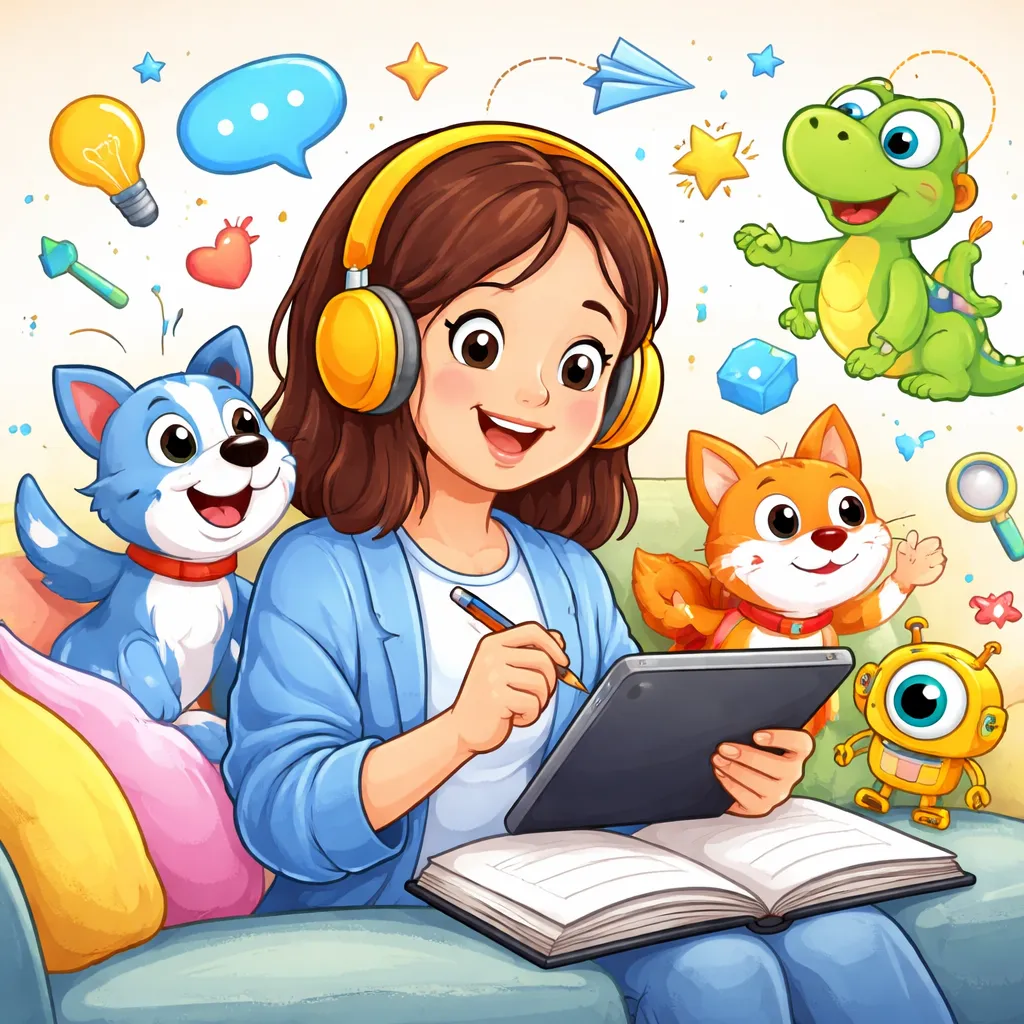
Leo loves Saturday mornings. He sits in front of the TV with his cereal. His favorite cartoon is on. The characters talk fast in English. Leo laughs at the funny parts. He understands the story from the pictures. But when his mom asks, "What did they say?" Leo just shrugs. He was not really listening to the words. His mom has an idea. "What if we turn TV time into a little learning time?" she says. "We can start using cartoons effectively for English learning. It is not just watching. It is watching with a plan." Leo is curious. Can his cartoons really teach him? Let's find out the secret plan.
Core Knowledge Explanation
Cartoons are fun. They are colorful. They are full of action. But they can also be powerful English teachers. Why? Because they show English in action. You see the characters. You hear their voices. You see their faces. This helps you understand the meaning. But to start using cartoons effectively for English learning, you must be an active watcher, not a passive watcher. Passive means just sitting and letting the sounds wash over you. Active means you are paying attention. You are thinking. You are engaging with the show.
How do you become an active watcher? First, choose the right cartoon. Pick a show that is not too hard. The words should be clear. The story should be simple. For young learners, shows with repetition are great. The characters say the same phrases again and again. This helps you remember. Second, use the magic of technology. You can pause. You can rewind. You can turn on subtitles. If you hear a word you do not know, pause. Ask, "What does that mean?" Look at the picture. Guess. Then, rewind and listen again. This is a key part of using cartoons effectively for English learning.
Third, watch a short segment many times. Do not just watch a whole episode once. Watch the same five minutes three times. The first time, just enjoy. The second time, listen for words you know. The third time, try to repeat what the characters say. This repetition helps your brain catch the sounds and the rhythm. Fourth, connect the cartoon to your life. If the cartoon is about a birthday party, think about your birthday. What words do you know? "Cake", "present", "happy". This builds connections in your brain.
Remember, the goal is not to understand every word. The goal is to catch more and more words each time you watch. This is the heart of using cartoons effectively for English learning. You are training your ears to hear English in a fun, low-pressure way. Your brain is soaking up the sounds, the intonation, and the everyday phrases that people really use. It is like having a fun English conversation friend in your TV.
Fun Interactive Learning
Let's play some active watching games. First, the "Word Hunter" game. Before you watch, choose one word. Maybe "run" or "big" or "friend". Press play. Every time you hear your word, clap your hands. See how many times you hear it. This sharpens your listening. You are now using cartoons effectively for English learning by focusing on one piece of language.
Second, play "Copycat". Watch a short scene with a character who has a clear voice. Pause. Try to say the exact same sentence. Copy the voice. Make it funny. This is great for pronunciation. It makes your mouth muscles work in new ways. Third, the "What Happens Next?" game. Pause the cartoon in the middle of a scene. Guess what the character will say next. Say it out loud in English. Then, play and see if you were close. This game makes you think in English.
Fourth, have a "Cartoon Talk" after watching. Sit with a family member. Tell them one thing that happened. Use simple English. "The dog found a bone." Draw a picture of your favorite scene. Label it with one word from the show. These activities turn watching time into interactive learning time. You are not just a viewer. You are a participant. This is the secret to using cartoons effectively for English learning.
Expanded Learning
Cartoons are made all over the world. In America, they have cartoons like "Peppa Pig" and "Paw Patrol". In the United Kingdom, they have "Hey Duggee" and "Bluey". The English is a little different. The accents are different. The words are sometimes different. "Truck" in America is "lorry" in the UK. Watching cartoons from different English-speaking countries is a fun way to hear different kinds of English. It shows you that English is a global language with many flavors.
Long ago, cartoons did not have sound. Then, they added music and voices. Now, we have amazing animation and clear voices. We are lucky. We can use this technology to help us learn. In some countries, children learn English mostly from cartoons and movies because they are not surrounded by English speakers. They are using cartoons effectively for English learning to connect with the world. You can do that too.
Let's make a cartoon theme song about learning. Sing this to the tune of any cartoon theme you know.
Watching cartoons is lots of fun, helps me learn till the day is done! I listen close to what they say, and practice English every day! With a pause, rewind, and play, I'm finding a better way! Learning English can be cool, when I use it as a tool!
What You Will Learn
You are learning about active consumption of media. You are learning new words: passive, active, engage, segment, intonation, participant, accents, global. You are learning about technology tools like pause, rewind, and subtitles.
You are learning practical sentences. You can say, "Let me rewind to hear that again." You can ask, "Can you turn on the English subtitles?" You can explain, "I am watching this cartoon to practice listening." You are using English to talk about your learning strategies, which is a higher-level skill.
You are building important abilities. You are building active listening skills. You focus and pick out words. You are building pronunciation skills. You mimic native speakers. You are building prediction skills. You guess what comes next. You are building self-discipline. You choose to watch with a purpose. You are building cultural awareness. You hear different accents and see different traditions.
You are forming a smart habit. The habit of mindful screen time. You do not just zone out. You use your screen time to grow your brain. This habit will help you in all your learning, not just English. Understanding and using cartoons effectively for English learning turns entertainment into a powerful, enjoyable part of your education.
Using What You Learned in Life
Use these tips every time you watch. Make a deal with yourself. For every 15 minutes of cartoon time, spend 2 minutes talking about it or repeating a line. This small habit makes a big difference. When you are playing with your toys, pretend to be a cartoon character. Use the phrases you heard. "Oh, boy!" "Let's go!" "That's amazing!"
When you hear a new word in a cartoon, write it down in a special notebook. Draw a picture next to it. This is your "Cartoon Word Book". Look at it once a week. You will be surprised how many words you collect. Share your favorite cartoon learning tips with your friends. Maybe you can watch the same short clip and then talk about it together. You are building a little learning club. The skills you gain from using cartoons effectively for English learning will make you a more confident English speaker and a smarter media consumer.
Closing Encouragement
You are doing something wonderful. You are a smart viewer. You are an active listener. You are a creative learner. I am so proud of you. Learning how to use cartoons effectively shows you are clever and resourceful.
Keep watching, but watch with new ears and new eyes. Let your favorite characters be your fun, funny English tutors. Enjoy every minute, and know that you are getting better with every laugh.
Remember, the world is full of stories. Cartoons are one way to hear them in English. You are opening a door to a bigger world. You are capable, curious, and on a fantastic learning adventure. Great work, my wonderful cartoon scholar.