
Meaning
The topic to be verb focuses on one of the most important verbs in English. The verb to be describes identity, feelings, age, and location. It does not show action like run or eat. It links a subject with information.
Examples show the meaning clearly.
I am a student. The sky is blue. They are happy.
In these sentences, the to be verb connects the subject with a description. This connection is called a linking function.
The to be verb also describes states.
She is tired. He is excited. The room is quiet.
Understanding the to be verb helps build basic English sentences. This verb appears in greetings, stories, questions, and daily conversations.
Conjugation
The to be verb changes form. This change is called conjugation. Different subjects and tenses need different forms.
The main forms include:
be am is are was were been being
Each form has a specific role. Each form shows who and when.
Conjugation helps sentences stay correct and meaningful. It helps show time, subject, and state.
Present Tense
Present tense forms describe what is true now.
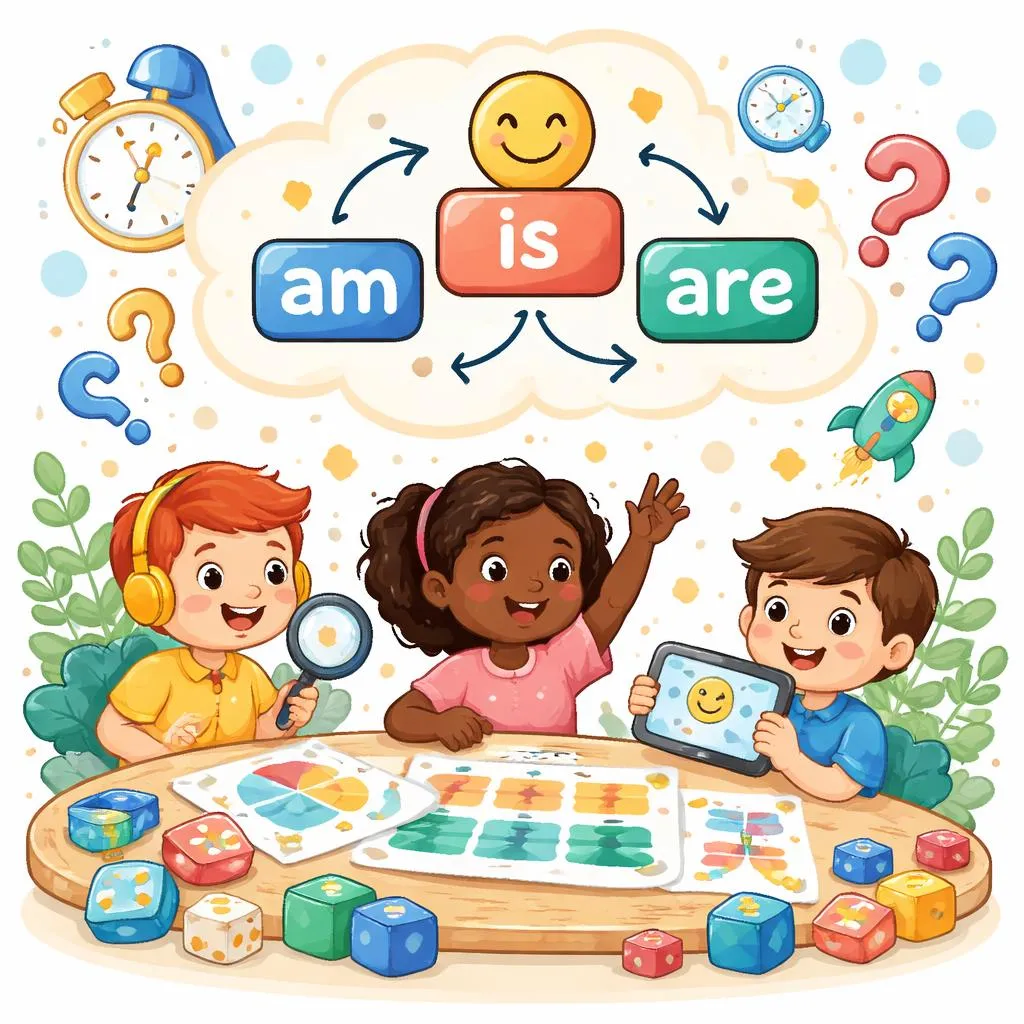
Am is used with I. Is is used with he, she, it, and singular nouns. Are is used with you, we, they, and plural nouns.
Examples show the structure.
I am happy. She is my friend. The dog is small. You are kind. We are ready. They are in class.
Present tense also supports actions happening now.
She is reading a book. They are playing outside.
In these sentences, the to be verb helps another verb. This structure is called the present continuous tense.
Past Tense
Past tense forms describe what was true before.
Was is used with I, he, she, it, and singular nouns. Were is used with you, we, they, and plural nouns.
Examples clarify the pattern.
I was tired. He was at school. The cat was hungry. You were late. We were together. They were outside.
Past tense also supports past continuous tense.
She was sleeping. They were studying.
The to be verb helps describe actions that were happening in the past.
Future Tense
Future tense uses the to be verb with will or going to.
Will be describes future states.
I will be a teacher. They will be at the park tomorrow.
Going to be describes planned future.
She is going to be a doctor. We are going to be busy next week.
The to be verb helps express plans, predictions, and future identity.
Questions
The to be verb forms questions by moving before the subject.
Am I late? Is he your brother? Are they at home? Was she happy? Were you there yesterday? Will they be ready?
This word order creates clear questions. Short answers also use the to be verb.
Yes, I am. No, she isn’t. Yes, they are. No, we weren’t.
Questions with the to be verb support daily communication. They support classroom interaction and social conversation.
Other Uses
The to be verb appears in many important English structures.
It appears in passive sentences.
The cake is eaten. The book was written.
It appears in continuous tenses.
He is running. They were laughing.
It appears in commands and expressions.
Be careful. Be quiet. Be kind.
It appears in time and age expressions.
It is Monday. She is nine years old.
The to be verb connects many grammar topics. It serves as a core structure in English.
Learning Tips
Repetition helps store the to be verb in memory. Simple sentence frames support practice.
I am ___. She is ___. They are ___.
Daily routines provide natural examples.
It is sunny. We are in class. I am fine.
Visual charts help show conjugation patterns. Color coding highlights am, is, and are. Songs and chants help memorize forms.
Short dialogues support real communication.
Hello, how are you? I am good.
Stories provide meaningful context. Pictures support comprehension. Practice in real sentences builds fluency.
The meaning of the to be verb becomes clear through context and repetition.
Educational Games
Sentence building games connect subjects and correct forms of the to be verb. Card games match subjects with am, is, and are.
Role-play games describe identity and feelings.
I am a pilot. She is a scientist. They are artists.
Board games use tense questions.
Are you happy? Were you tired yesterday? Will you be ready tomorrow?
Rhythm games chant conjugation forms.
Am, is, are Was, were Will be
Picture games describe scenes.
The boy is happy. The girls are singing. The dog was sleepy.
Story games create simple narratives with the to be verb. Games increase engagement and confidence. Playful practice supports accuracy and motivation.
The to be verb appears in greetings, stories, descriptions, and questions. It helps express identity, feelings, time, and place. It supports speaking, reading, and writing development.
Understanding the to be verb builds a strong foundation for English grammar. Clear practice builds accuracy. Meaningful use builds fluency. English becomes structured, expressive, and easy to use through the to be verb.