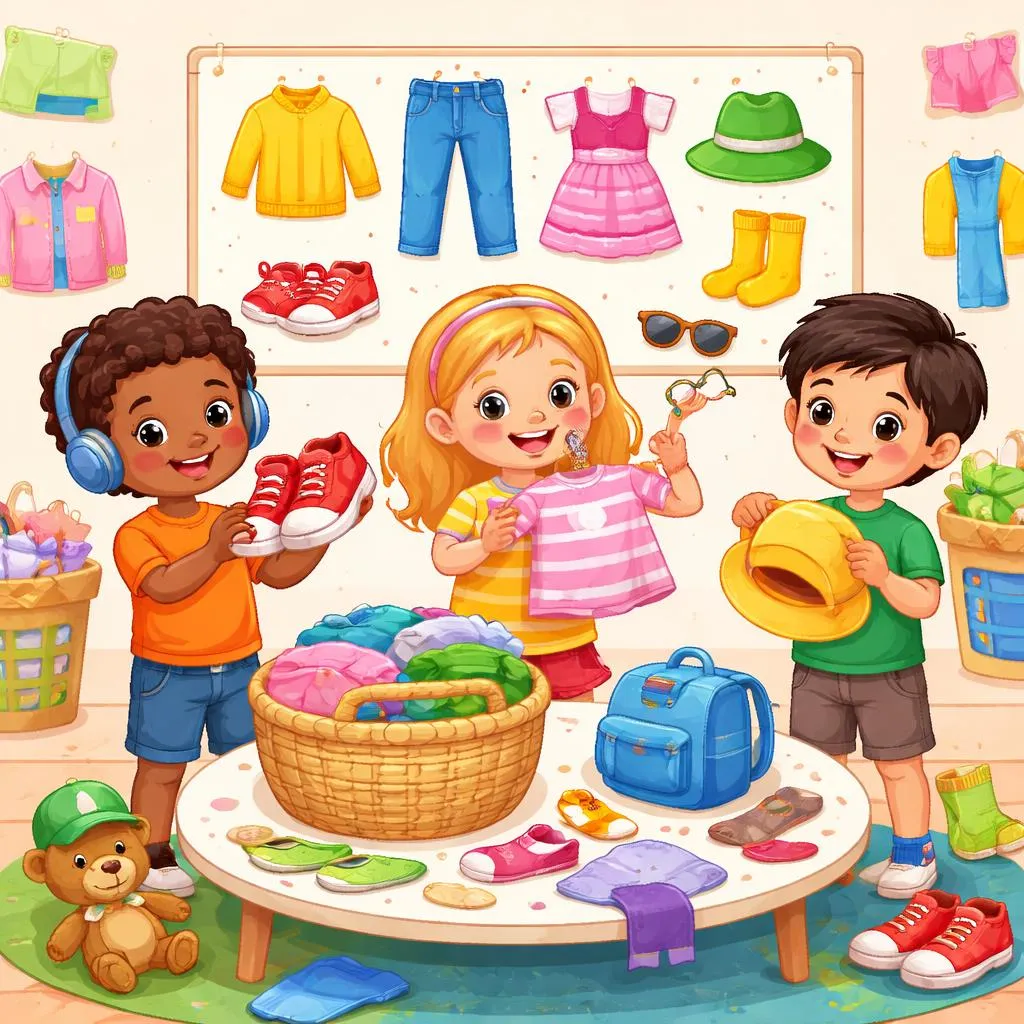

What Is Clothing Vocabulary?
Clothing vocabulary refers to the words used to name clothes, shoes, and accessories. These words appear often in daily life. Shirts, pants, dresses, hats, and shoes belong to this group. Learning these words helps English feel useful and familiar.
In early English learning, clothing vocabulary connects language to real objects. Clothes can be seen, touched, worn, and changed every day. This makes the words easy to understand and remember.
Why Clothing Vocabulary Matters in Early English Learning
Language grows faster when words connect to daily routines. Clothing appears every morning, every evening, and during many activities. This constant exposure supports natural learning.
Clothing vocabulary also supports self-expression. Talking about colors, styles, and seasons adds meaning to simple sentences. These words help build confidence in speaking.
Meaning and Explanation of Clothing Vocabulary
Clothing vocabulary includes names of items worn on the body. It also includes words for materials, parts of clothing, and accessories. Examples include jacket, sleeve, button, scarf, and socks.
These words describe what people wear to stay warm, cool, dry, or comfortable. Understanding these words helps describe daily actions and choices.
Categories of Clothing Vocabulary
Clothing vocabulary can be grouped into clear categories. Grouping helps learning stay organized and simple.
Some words describe tops such as shirts, sweaters, and jackets. Some describe bottoms such as pants, shorts, and skirts. Other words describe footwear, outerwear, or accessories.
Categories help learners see patterns in language.
Everyday Clothing Items
Everyday clothing items appear in most wardrobes. These words often become the first clothing vocabulary learned.
Examples include t-shirt, pants, dress, socks, and shoes. These items appear in daily routines, which supports repetition and memory.
Using these words in daily conversation builds fluency.
Seasonal Clothing Vocabulary
Seasons influence clothing choices. Seasonal clothing vocabulary connects language to weather and time.
Words like coat, gloves, and boots appear in colder seasons. Words like shorts, sandals, and cap appear in warmer seasons.
Seasonal vocabulary supports lessons about weather and daily life.
Clothing Vocabulary for School and Activities
Different activities require different clothes. School clothes, sports clothes, and sleepwear all introduce new words.
Uniform, backpack, sneakers, pajamas, and costume appear in specific contexts. These contexts help explain meaning without translation.
Activity-based vocabulary feels practical and engaging.
Clothing Materials and Textures
Some clothing vocabulary describes what clothes are made of. Words like cotton, wool, denim, and leather introduce material concepts.
Texture words such as soft, warm, light, and thick add descriptive language. These words support sensory learning.
Describing materials builds richer sentences.
Clothing Colors and Patterns
Colors often appear with clothing vocabulary. Red shirt, blue jeans, and green hat combine color words with clothing items.
Patterns such as stripes, dots, and checks add detail. These combinations support adjective use.
Color and pattern words make language more expressive.
Daily Life Examples of Clothing Vocabulary
Clothing vocabulary appears naturally in daily routines. Getting dressed, doing laundry, or shopping for clothes all create language opportunities.
Sentences like “The jacket is blue” or “The shoes are under the bed” connect vocabulary to actions and places.
Daily use strengthens understanding.
Using Clothing Vocabulary in Simple Sentences
Simple sentences help vocabulary feel useful. Short structures such as “This is a hat” or “The dress is red” support early speaking.
As confidence grows, sentences can expand. Descriptions and choices add complexity.
Sentence practice builds communication skills.
Classroom Activities Using Clothing Vocabulary
Classroom activities make clothing vocabulary interactive. Dress-up games allow naming items while playing.
Matching pictures to words supports recognition. Labeling activities support reading skills.
Hands-on activities increase engagement.
Learning Activities Through Play
Play-based learning supports memory. Pretend shops or fashion shows allow vocabulary use in context.
Role-play encourages speaking. Games reduce pressure and increase motivation.
Play turns repetition into enjoyment.
Educational Games for Clothing Vocabulary
Games help reinforce learning. Guessing games support listening. Memory games support word recognition.
A simple game can involve describing clothing without naming it. Others guess the item.
Games encourage interaction and laughter.
Printable Flashcards for Clothing Vocabulary
Printable flashcards provide visual support. Each card can show one clothing item with a clear image.
Flashcards support naming, sorting, and matching activities. Visual repetition helps memory.
Printables offer structured practice.
Using Songs and Chants With Clothing Vocabulary
Songs make vocabulary memorable. Simple chants naming clothing items support pronunciation and rhythm.
Music helps words stay in long-term memory. Movement can be added to represent actions like putting on a coat or shoes.
Songs bring energy to lessons.
Storytelling With Clothing Vocabulary
Stories often include clothing details. Characters wear clothes that reflect weather, mood, or activity.
Talking about story characters’ clothes builds comprehension and vocabulary. Questions like “What is the character wearing?” encourage discussion.
Stories provide meaningful context.
Sorting and Categorizing Clothing Words
Sorting activities help organize knowledge. Clothes can be sorted by season, color, or type.
Categorizing supports logical thinking and language structure. These activities build cognitive and language skills together.
Organization supports understanding.
Using Real Clothes as Learning Tools
Real objects support concrete learning. Holding a hat or jacket makes the word more meaningful.
Naming real clothes connects language to experience. This approach benefits visual and tactile learners.
Real-life learning feels natural.
Supporting Pronunciation of Clothing Words
Some clothing words include challenging sounds. Repetition through games and songs supports clear pronunciation.
Modeling correct sounds helps without pressure. Slow repetition supports accuracy.
Pronunciation improves over time.
Listening Activities With Clothing Vocabulary
Listening activities build comprehension. Following instructions such as “Touch the shoes” or “Point to the jacket” supports understanding.
Listening comes before speaking. These activities prepare learners for expression.
Understanding grows through focus.
Small Group and Pair Activities
Small group activities reduce anxiety. Pair work encourages communication.
Describing clothes to a partner supports speaking. Listening to others builds comprehension.
Interaction supports confidence.
Integrating Clothing Vocabulary Into Daily Routines
Daily routines offer natural practice. Talking about what is worn each day reinforces vocabulary.
Simple questions like “What color is the shirt?” encourage response.
Routine use strengthens learning.
Cultural Awareness Through Clothing Vocabulary
Clothing reflects culture. Traditional clothing introduces new vocabulary and cultural understanding.
Discussing clothing from different places builds respect and curiosity.
Language and culture connect naturally.
Observation and Progress in Vocabulary Learning
Progress appears through usage. Faster recall shows growth. Clearer pronunciation shows confidence.
Observation during activities provides insight without testing.
Assessment feels natural.
Supporting Parents and Teachers With Clothing Vocabulary
Clothing vocabulary works well at home and in learning spaces. Familiar objects make practice easy.
Shared activities build consistency. Consistency supports retention.
Collaboration strengthens learning outcomes.
Extending Clothing Vocabulary Beyond Basics
As learning grows, vocabulary can expand to include accessories, styles, and functions.
Words like belt, zipper, uniform, and costume add detail. Expansion supports richer language.
Growth happens step by step.
Creating a Safe Environment for Language Practice
A supportive environment encourages speaking. Mistakes feel acceptable.
Positive feedback builds confidence. Confidence leads to participation.
Safety supports progress.
Building Confidence Through Familiar Topics
Clothing feels familiar. Familiar topics reduce anxiety.
Confidence grows when language connects to daily life. Clothing vocabulary offers that connection.
Confidence supports communication.
The Ongoing Value of Clothing Vocabulary in English Learning
Clothing vocabulary remains important throughout language learning. These words appear in stories, conversations, and descriptions.
Learning clothing vocabulary builds a bridge between language and daily life. Through real objects, play, and routine use, English becomes meaningful and accessible.
With gentle guidance, repetition, and engaging activities, clothing vocabulary supports confident communication and lasting language skills.