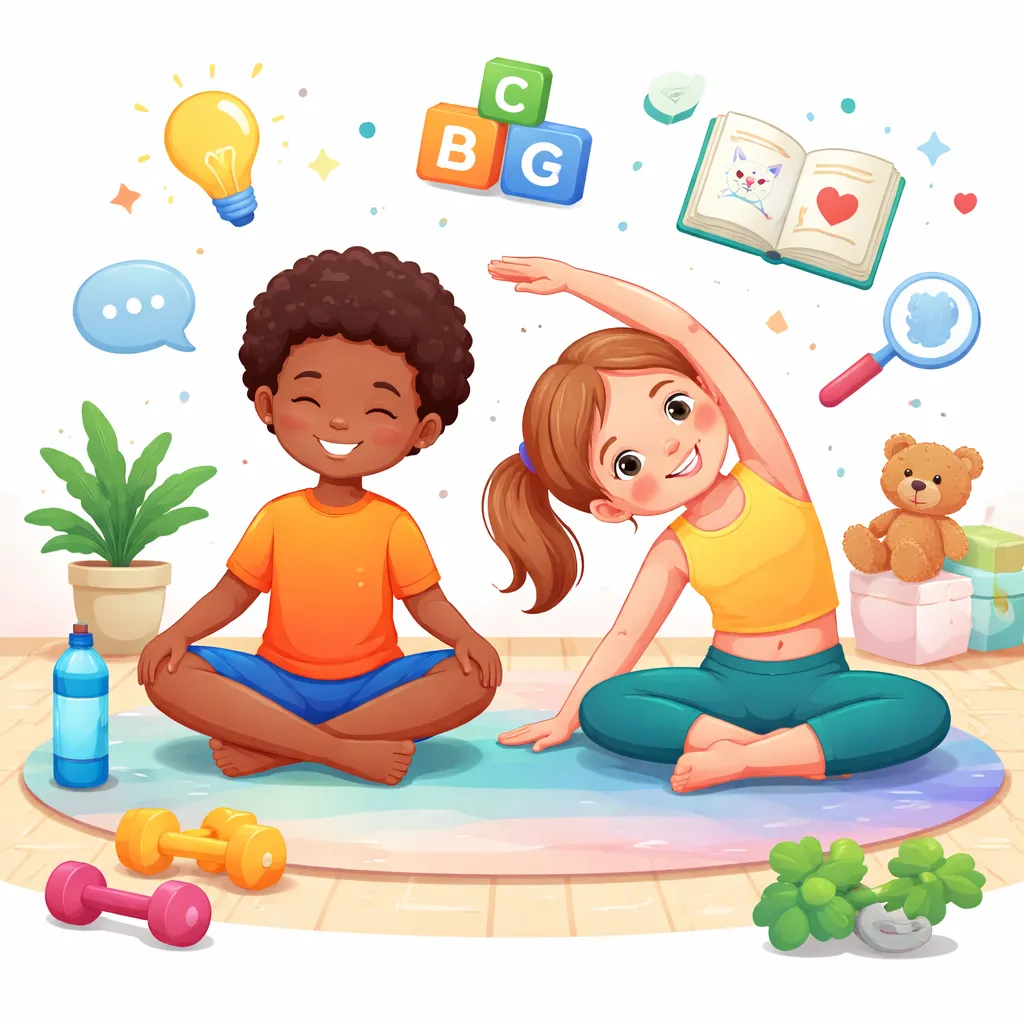

Are Similar Words Really Interchangeable? Many young learners use the words yoga and stretch as if they mean the exact same thing. In our daily exercise routines, we often see people reaching for their toes on a soft mat. While these two terms often appear together, they represent very different ideas in the English language. One describes a complete system of health and mindfulness, while the other describes a specific physical movement.
Understanding the unique roles of these words helps children communicate with more precision and professional flair. If a student says they are "doing a yoga," it sounds a bit strange to a native speaker. If they say they are "doing a stretch," the listener immediately understands the specific muscle movement they are performing. These small linguistic details are the building blocks of clear communication for young scholars and athletes.
Learning how these words function together allows parents and children to explore the world of wellness more deeply. It moves a student beyond basic labels and into the world of logical and context-aware language application. When a learner knows the specific role of each word, they feel like a true expert in the studio. This foundation makes reading health news or watching fitness videos much more engaging for the entire family.
Set 1: Yoga vs Stretch — Which One Is More Common? The word stretch is much more common in daily conversation because it describes a universal human and animal movement. You will hear it when someone wakes up in the morning or before an athlete starts a big race. It is a high-frequency verb and noun that children encounter almost every single day in many different settings. Because it applies to so many situations, it is one of the first physical action words a child masters.
Yoga is a more specialized word that people use when discussing an organized practice or a specific class. While it is a very common word globally, its usage is more restricted to the world of wellness and exercise. You might hear it more often in a community center or on a dedicated health website than in a basic playground. It suggests a certain level of structure and focused breathing that a simple "reach" might not require.
In casual English, "stretch" acts as a general word for any lengthening of the muscles for flexibility or comfort. "Yoga" acts as a more specific label for the ancient practice that combines poses, breathing, and mental focus. Both words are essential for a child's vocabulary, but "stretch" serves as a broader and more frequent starting point. Knowing which one to use makes a child's speech sound more natural and aware of the surrounding context.
Set 2: Yoga vs Stretch — Same Meaning, Different Contexts We use the term yoga when we want to emphasize the philosophy, the session, or the complete set of poses. For example, a parent might say, "We are going to join a family yoga class at the park this morning." In this context, the focus remains on the entire experience, the teacher’s guidance, and the overall peaceful environment. It describes the big picture of the mindful activity that is happening on the colorful rubber mats.
We use the term stretch to describe the specific physical action of extending a limb or a muscle group. If a child is warming up for soccer, a coach might say, "Make sure you do a deep leg stretch now." Here, the word provides a specific focus on the physical mechanics of the body rather than the spiritual or mental aspect. The context moves from the general practice of wellness to the targeted movement of the human body.
Think of it like the difference between "math" and a "number" in a busy classroom at your local school. "Yoga" is the entire subject and the complex system, much like the process of solving many different equations. The "stretch" is the essential unit or the individual action that makes the practice possible for the person. Using these contexts helps children visualize how individual physical movements belong to a larger world of health and traditions.
Set 3: Yoga vs Stretch — Which Word Is “Bigger” or More Emphatic? Yoga is the "bigger" word because it represents a massive global culture with millions of students and deep historical roots. It encompasses the history of the practice, the famous names of poses, and the science of controlled breathing. When a student says, "I love yoga," they are expressing a large interest in a worldwide health community. It is an emphatic word that carries the weight of a professional and organized international discipline.
Stretch is an emphatic word when it is used to describe the intensity or the reach of a physical movement. Phrases like "a big stretch" or "stretching to the limit" show how much power this word can generate. It highlights a specific physical sensation that helps a person feel more flexible and ready for action. While it covers a specific move, the physical feeling of a "good stretch" is very high for young learners.
For a young learner, "yoga" feels like a grand journey of learning how to move their body with grace and calm. "Stretch" feels like the satisfying physical release they feel every time they reach their hands up to the sky. One word represents a lifelong habit of mindfulness, while the other represents the immediate thrill of physical flexibility. Both words have power, but they inspire different types of awareness and dedication in a child's growing mind.
Set 4: Yoga vs Stretch — Concrete vs Abstract The word stretch is almost always a concrete term because it refers to a physical, tangible movement of the body. You can see a person reaching their arms out, feel the pull in your muscles, and watch a cat extend its paws. It is very easy for children to point to someone touching their toes and know exactly what that person is doing. This concrete nature makes it an excellent word for beginners to learn through direct observation and imitation.
Yoga can be more abstract because it often refers to a state of mind or a general concept of inner peace. You cannot "touch" yoga, but you can see the results of the practice through a person's calm behavior and balance. It involves abstract ideas like "spirit," "focus," and "harmony" that guide how a person manages their energy during a session. This makes it a great word for teaching children about invisible qualities like patience and emotional regulation.
Bridging these two concepts helps children see how concrete movements support abstract goals in their personal health development. A concrete "stretch" provides the physical building block, but "yoga" provides the internal purpose and the abstract progress toward peace. This connection helps children develop a more sophisticated way of describing their experiences and their emotional growth. It turns a simple movement into a meaningful lesson about the relationship between the body and the mind.
Set 5: Yoga vs Stretch — Verb or Noun? First Understand the Role In standard English, the word yoga primarily functions as a noun that names the specific practice or the class itself. You might say, "The yoga studio is very quiet today," or "I am wearing my favorite yoga pants for the session." In these sentences, the word acts as the subject or a modifier, providing clear information to the listener. It identifies the "what" of the situation being described by the person speaking or writing.
The word stretch is very flexible because it frequently functions as both a noun and a very active verb. You can "do a stretch" (noun) or you can "stretch your arms" (verb) to feel much better after sitting. Understanding these different roles helps children build more creative and flexible sentences in their daily writing and speaking. It allows them to describe their physical actions with more variety and accuracy during their language lessons.
Teaching kids to identify the roles of these words prevents them from making common grammatical mistakes in their schoolwork. They learn that they "practice yoga" (using it as a noun) or "stretch their muscles" (using it as a verb). This level of awareness makes their English sound more polished and shows they understand the deeper rules of the language. It gives them the right tools to express their physical interests with both technical accuracy and flair.
Set 6: Yoga vs Stretch — American English vs British English In American English, the word "yoga" is part of the standard vocabulary for fitness and school wellness programs. Americans often use the term "stretching" as a general synonym for any kind of flexibility exercise in a gym. You will find that many children in America are introduced to "yoga" through fun, animal-themed poses in their early years. The language used is very direct and reflects the practice's popularity as a common family recreation.
In British English, "yoga" is also the standard term, and the practice is a key part of many community health centers. British English speakers use the word "stretch" in the same way, but they might use the term "warm-down" for post-exercise movement. When discussing the practice in a professional studio, the language remains very similar across the Atlantic Ocean. Most children in London or New York will perfectly understand each other when talking about their favorite poses.
Despite these small regional flavors, the core meaning of these words remains a universal bridge for kids everywhere. A yoga mat looks and feels the same whether you are in Australia, India, or the United Kingdom. Learning that language can have different "styles" in different countries is a wonderful way to encourage a global mindset. It shows children that they are part of a worldwide team of students who share a love for health.
Set 7: Yoga vs Stretch — Which Fits Formal Situations? Yoga is the formal name of the practice used by international health organizations, professional studios, and academic journals. If a child is writing a formal report on the benefits of mindfulness, "yoga" is the necessary and professional choice. It sounds academic and shows that the student understands the official structure of the global wellness world. Using the formal name indicates a high level of respect and dedication to the subject matter being studied.
Stretch is a formal term when it is used in medical reports or official anatomy studies by scientists and doctors. For example, a formal report might discuss "muscle stretch reflexes" or the "optimal stretch duration" for an injury recovery plan. While it is a common word, it is also a precise physiological term that involves careful scientific study and measurement. Knowing this helps children realize that even simple movements involve high professional standards and technical biological data.
Guiding children to choose the right word for the right situation is a key part of their educational development. When they use "yoga" in a formal presentation, they sound prepared and mature for their age and learning level. When they use "stretch" in a technical way, they show they have a "scientist's eye" for the details of biology. Formal language is a tool that helps children communicate their big ideas with authority and total clarity.
Set 8: Yoga vs Stretch — Which One Is Easier for Kids to Remember? Stretch is often easier for children to remember because it is a "logical" action word that they can feel. Most kids recognize the physical sensation of reaching out and associate it with the sound of the word very quickly. The name is easy to say and has a fun, descriptive sound that matches the physical lengthening of the body. It is one of the first specific physical activity words that many children master when learning English.
Yoga is also easy to remember because it is a short, two-syllable word that is unique and easy to spell. Children quickly learn that this special word refers to the peaceful activity they do on the mats with their friends. Its connection to calm breathing and fun poses like "Downward Dog" makes it a very memorable and joyful word. This simplicity helps the word stick in the brain much more effectively over time for younger students.
To help a child remember both, parents can use the "Move and Mind" memory trick during a morning session. You do a "stretch" (the physical move) to practice "yoga" (the mindful goal) to keep the concepts clear. This hands-on practice ensures that the words are linked to physical movements and positive emotions in the child's brain. When learning is tied to fun activities, it becomes a permanent and happy part of their growing memory.
Mini Exercise: Can You Spot the Differences Between These Similar Words? Are you ready to test your knowledge and see if you can tell these two wellness words apart? Read the sentences below and decide whether the word yoga or stretch is the best fit for each blank space. This is a great way for parents and kids to work together while improving their reading and logic. Let's see if you can get all four correct!
My mother goes to a ______ studio every Tuesday evening to help her relax after work.
Please give your arms a big ______ after you finish writing your long homework assignment.
The ______ instructor showed us how to breathe deeply while holding the mountain pose.
I like to ______ my legs before I go for a run around the park with my dog.
How did you do on our mini-quiz? For sentences one and three, "yoga" is the best choice because it refers to the studio and the instructor. For sentences two and four, "stretch" is correct because it refers to the physical action of the arms and legs. If you got them all right, you are ready to be the captain of your own vocabulary team!
Parent Tips: How to Help Kids Learn and Remember Similar Words Helping your child learn new words is most successful when it is part of the activities they already love. If your child enjoys moving, use their exercise time to introduce terms like "balance," "breath," and "pose." Instead of a long list of words, these terms become part of the exciting story of their personal progress. This makes the language feel useful and worth remembering for their future classes and daily conversations.
Encourage your child to "narrate" their own activity as if they were a professional fitness coach on the television. Ask them to say things like, "She begins her yoga... she does a long stretch... she feels very calm!" This active use of language helps bridge the gap between knowing a word and being able to use it correctly. It also builds their confidence in speaking English aloud in a very fun and low-pressure environment.
Keep a "Wellness Word Chart" on the wall where you can add new terms as your child discovers them in books. You can even draw a picture of a yoga pose and label the different body parts being used, like the "spine." Seeing the words every day helps with spelling and ensures they become a permanent part of your child's growing vocabulary. Your encouragement and participation make every new word a fresh opportunity for success and a love of learning.
Exploring the world of wellness through English is a wonderful way to build a child's mind and body at the same time. By understanding the specific roles of yoga and stretch, children gain a clearer view of the world and how to describe it. These words are not just for exercise; they are the tools that help us share our feelings and achievements. Keep reaching, keep talking, and enjoy every moment of this incredible educational journey together as a family.