
Introduction to Panama
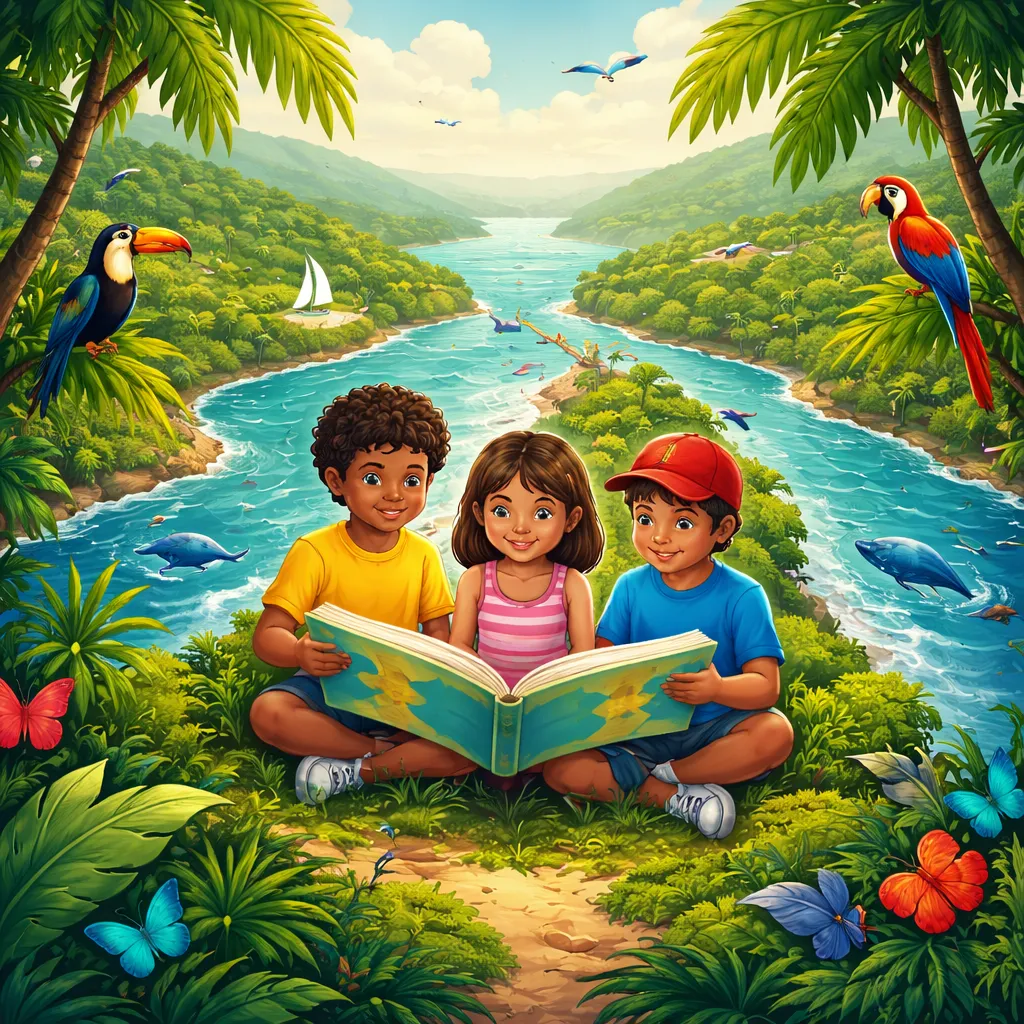
Language learning transports us to a narrow land bridge connecting two continents and two oceans. Today we explore a country that links North and South America. This nation holds one of the most important waterways in the world. Children will discover ships traveling through a man-made canal to cross from the Atlantic to the Pacific. They will learn about rainforests filled with colorful birds and monkeys. Exploring Panama builds reading skills while revealing a country of connections and biodiversity. Every fact uncovers a new wonder. Every word invites young readers to imagine this isthmus of life.
Where Is Panama?
Panama lies in Central America, forming the southernmost part of the isthmus connecting North and South America. It shares borders with Costa Rica to the west and Colombia to the east. The Caribbean Sea lies to the north. The Pacific Ocean lies to the south. The capital city is Panama City. Panama City sits on the Pacific coast near the entrance to the Panama Canal. The country covers about twenty-nine thousand square miles. The Panama Canal cuts through the center, linking the Atlantic and Pacific Oceans. Finding Panama on a map shows a narrow strip of land connecting two continents. Its location made it a crossroads for trade and travel.
Interesting Facts About Panama
Panama offers countless remarkable facts for young learners. It is home to the Panama Canal, one of the greatest engineering feats in history. The canal allows ships to cross from the Atlantic to the Pacific without sailing around South America. This saves thousands of miles of travel. Another interesting fact involves biodiversity. Panama has more bird species than the United States and Canada combined. Over one thousand bird species live here. The country also holds the largest rainforest in the Western Hemisphere outside the Amazon.
Panama also has a unique hat. The Panama hat actually comes from Ecuador. Workers on the Panama Canal wore them, giving the hat its name. Another fun fact involves the country's currency. Panama uses the US dollar as its official currency. The country mints its own coins called balboas.
The country also has indigenous cultures. Seven distinct indigenous groups live in Panama. The Guna people are known for their colorful molas, which are intricate fabric panels sewn into clothing. Another interesting fact involves the San Blas Islands. The Guna people govern these islands autonomously. Over three hundred sixty islands make up this archipelago. Panama also has a unique phenomenon. At certain times of year, you can watch the sun rise over the Pacific Ocean and set over the Atlantic Ocean due to the country's curve. These facts show children a country of engineering marvels, natural riches, and cultural diversity.
Key Vocabulary About Panama
Let us build vocabulary for this Central American nation. These words help children describe what they learn.
Canal: a man-made waterway for boats and ships.
Isthmus: a narrow strip of land connecting two larger land areas.
Lock: a section of a canal where water levels are raised or lowered.
Mola: a colorful fabric panel made by Guna women.
Biodiversity: the variety of plants and animals in an area.
Rainforest: a dense forest with high rainfall.
Tropical: relating to the warm region near the equator. Introduce these words with pictures and stories. Show the Panama Canal with ships going through locks. Show a mola with its bright patterns. Let children say each word aloud. These vocabulary words give children the language to explore Panama's canal and culture.
Simple Sentences for Reading Practice
Short sentences help new readers build confidence. Use these sentences about Panama for practice.
Panama is a country in Central America.
The Panama Canal connects two oceans.
The capital city is Panama City.
The Caribbean Sea lies to the north.
The Pacific Ocean lies to the south.
Over one thousand bird species live in Panama.
Guna people create colorful molas. Read each sentence together. Let children point to the words. Encourage them to repeat after you. Use pictures to show each fact. These simple sentences prepare young readers for longer passages.
Short Reading Passage About Panama
Here is a short passage for children to read together.
“Panama forms the narrow bridge between North and South America. The Panama Canal cuts through the center of the country. Ships enter locks filled with water. The locks raise the ships up and then lower them down. This journey moves vessels from the Caribbean Sea to the Pacific Ocean. The canal saves ships thousands of miles of travel. Panama City spreads near the Pacific entrance. Tall buildings rise beside the old quarter with Spanish colonial architecture. Outside the city, rainforests cover the land. Howler monkeys call from the trees. Toucans flash their bright bills among the leaves. The Guna people live on the San Blas Islands. They create molas, fabric panels with intricate patterns of birds, fish, and geometric shapes. Women wear these panels as part of their traditional clothing. Panama connects oceans, cultures, and wild places.”
Read this passage slowly together. Pause to talk about each idea. Ask children to find vocabulary words in the text. This activity builds reading fluency and deepens understanding.
Fun Questions About Panama
Questions make reading interactive and engaging. Use these to start conversations with young learners.
What connects the Atlantic and Pacific Oceans in Panama?
What is the capital city of Panama?
How many bird species live in Panama?
What are the colorful fabric panels made by Guna people called?
What two oceans border Panama?
What do the locks in the canal do? Let children answer in complete sentences. Encourage them to use new vocabulary. Ask them to imagine standing beside the Panama Canal. What would they see as ships pass through? Creative questions make the topic personal and exciting.
Tips for Learning English with This Topic
Use Panama to create rich English learning experiences. Start with a map activity. Let children find Panama connecting North and South America. Point out the Caribbean Sea and Pacific Ocean. Discuss how the canal changed world trade. This connects geography to engineering and history.
Next, introduce the vocabulary through a hands-on activity. Create a simple canal model using a long tray or cardboard box. Use clay or blocks to create locks. Let children move toy boats through the canal, explaining how water levels change. For molas, cut fabric or paper into layers. Let children create their own mola designs with bright colors. Use the words "canal," "lock," and "mola" during the activity.
Read the passage aloud with excitement for the engineering and wonder for the wildlife. Let your voice reflect the movement of ships through the locks. After reading, let children draw a scene from Panama. One child might draw a ship going through the canal locks. Another might draw a toucan in the rainforest. Let them label their drawings with vocabulary words. Add blue for the oceans and green for the rainforest.
Incorporate a science and engineering connection. Talk about how the locks work to raise and lower ships. Discuss why the canal was such an important achievement. This shows children that language learning reading connects to understanding engineering and global trade.
Use music and movement to enhance the experience. Listen to Latin American music with drums and maracas. Let children move like ships going through locks. Pretend to be monkeys swinging in the rainforest. Physical activity reinforces learning in joyful ways.
Encourage children to share their knowledge. Let them tell a family member about how the Panama Canal works. They can explain why ships use the canal instead of going around South America. Teaching others builds confidence and deepens understanding.
Connect Panama to your child's world. Ask, “What waterways or canals have we seen?” Compare them to the Panama Canal. Ask about birds in your area. Compare them to Panama's toucans. These connections help children see that language learning reading is about understanding different places and achievements. By exploring Panama together, you give children a rich experience. They learn new words, discover a land of oceans and canals, and grow their love for reading. This Central American nation becomes a meaningful part of their learning journey.