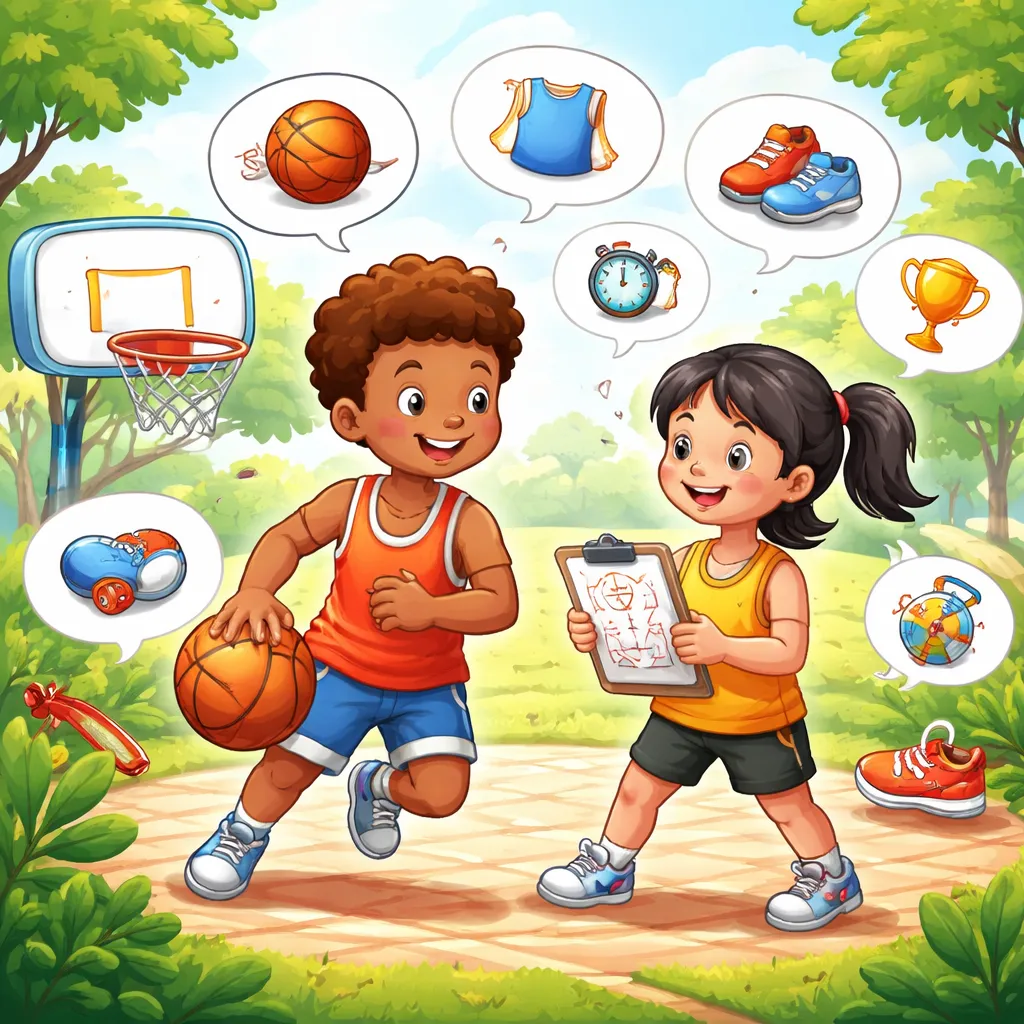

Are Similar Words Really Interchangeable? Many young learners see a orange ball and a metal ring and think they are the same thing. In the world of sports, the words basketball and hoop appear in almost every exciting story or match. While these terms are partners on the court, they serve very different purposes in the English language. One describes the activity and the object we bounce, while the other describes the target.
Using these words correctly helps children describe their favorite hobbies with much greater clarity and confidence. If a child says they are playing with a "basketball," they are talking about the physical object. If they say they are aiming for the "hoop," they are focusing on the goal of the game. These distinctions are vital for building a professional and precise vocabulary from an early age.
Learning how these two words interact allows parents and children to share a deeper understanding of sports. It moves a student beyond simple labels and into the world of descriptive and technical English communication. When a learner understands the specific role of each word, they feel like a true expert. This foundation makes reading sports news or watching games much more engaging and educational for the whole family.
Set 1: Basketball vs Hoop — Which One Is More Common? The word basketball is far more common because it acts as the primary name for the entire sport. You will find it on school schedules, on television channels, and in the titles of famous sports movies. It is a high-frequency compound word that combines "basket" and "ball" into a single, easy-to-recognize noun. Because it names the whole activity, children encounter it almost every day in a variety of settings.
Hoop is a more specialized word that fans and players use when they are actually on the court. While it is a common word among athletes, it does not appear as frequently in general academic textbooks. It is a shorter, punchier word that focuses specifically on the equipment used for scoring points in the game. You might hear it more often in a park or during a professional broadcast than in a basic classroom.
In daily conversation, "basketball" is the go-to word for describing a child's afternoon plans or their favorite hobby. "Hoop" is the specific term used to describe the excitement of a successful shot or a new piece of equipment. Both words are essential for a complete sports vocabulary, but "basketball" is the broader starting point for most learners. Knowing which one is more common helps a child prioritize their learning and sound more natural.
Set 2: Basketball vs Hoop — Same Meaning, Different Contexts We use the term basketball when we want to discuss the rules, the teams, or the physical ball itself. For example, a coach might say, "Please grab a basketball and start practicing your dribbling skills now." In this context, the focus is on the round object that players move across the hardwood floor. It is the central character of the sport that everyone is watching and trying to control.
We use the term hoop when we are describing the act of scoring or the physical structure of the goal. If a child makes a great shot, a parent might exclaim, "That ball went right through the hoop!" Here, the word provides a specific destination for the action and highlights the success of the player. The context shifts from the object being held to the target being aimed at during the play.
Think of it like the difference between a car and a garage or a letter and a mailbox. The "basketball" is the item in motion that carries the energy and the focus of the participants. The "hoop" is the stationary destination that defines whether the movement was successful or not. Using these contexts helps children visualize the "action and reaction" that makes sports so thrilling to watch and play.
Set 3: Basketball vs Hoop — Which Word Is “Bigger” or More Emphatic? Basketball is the "bigger" word because it represents a global culture involving millions of players and fans worldwide. It encompasses the history of the game, the famous jerseys, the sneakers, and the massive stadiums. When a student says, "I am a basketball fan," they are expressing a large interest in a worldwide community. It is an emphatic word that carries the weight of a professional and organized athletic discipline.
Hoop is an emphatic word when it is used to describe the "heart" or the "soul" of the game. Phrases like "shooting hoops" or "living for the hoop" show how much passion this word can carry for players. It feels more personal and direct, focusing on the simple joy of the ball meeting the net. While it is a smaller object, the "hoop" represents the ultimate challenge and the greatest reward for any athlete.
For a young learner, "basketball" feels like a big, exciting world they are just beginning to explore with friends. "Hoop" feels like the specific challenge they are trying to master every time they step onto the court. One word represents the vast community of the sport, while the other represents the personal skill of the individual. Both words have a powerful presence in English and inspire children to reach for their highest goals.
Set 4: Basketball vs Hoop — Concrete vs Abstract The word basketball can be both concrete and abstract depending on how a person uses it in a sentence. It is concrete when you are holding the orange, pebbled leather ball in your own two hands. It becomes abstract when you talk about "the spirit of basketball" or "basketball strategy" during a team meeting. This flexibility makes it a fascinating word for children to study as they grow their language skills.
Hoop is almost always a concrete term because it refers to a physical, circular object made of metal or plastic. You can touch the rim, see the net hanging down, and hear the sound of the ball hitting it. It is very easy for children to point to a hoop in the park and know exactly what it is. This concrete nature makes it a perfect word for beginners to learn through direct observation and play.
Bridging these two concepts helps children understand how physical objects can represent larger, more abstract ideas in life. A concrete "hoop" is the target, but "basketball" is the entire journey of learning how to reach that target. This connection helps children develop a more sophisticated way of describing their experiences and their personal growth. It turns a simple trip to the park into a meaningful lesson about objects and the concepts they represent.
Set 5: Basketball vs Hoop — Verb or Noun? First Understand the Role In standard English, both basketball and hoop primarily function as nouns that name specific things or activities. You might say, "The basketball is in the trunk of the car," or "The hoop is ten feet high." In these sentences, the words act as the subjects, providing clear and direct information to the listener. They identify the "who" or the "what" of the scientific or athletic situation being described.
Interestingly, "hoop" can also function as a verb in certain casual or historical contexts, meaning to encircle something. In modern sports slang, people might say "Let's go hoop," which means they are going to play a game. While "basketball" is almost never used as a verb, it is often used as an adjective, like "basketball shoes." Understanding these different roles helps children build more creative and flexible sentences in their writing.
Teaching kids to identify the roles of these words prevents them from making common grammatical errors during school. They learn that they "play basketball" (using it as a noun) or "wear basketball gear" (using it as an adjective). This level of awareness makes their English sound more polished and shows they understand how the language works. It gives them the right tools to express their athletic passions with technical accuracy and creative flair.
Set 6: Basketball vs Hoop — American English vs British English In American English, the word "basketball" is a massive part of the cultural vocabulary and the school system. Americans use the term "hoop" very frequently in casual speech, often referring to the sport itself as "hoops." You might hear an American friend say, "Do you want to play some hoops after school today?" The language is very direct and reflects the sport's huge popularity across the entire United States.
In British English, "basketball" is also the standard term, but it is sometimes less dominant than sports like football or rugby. British English speakers use the word "hoop" as well, but they might not use the slang "hoops" as often as Americans. However, with the rise of global media, these regional differences are becoming smaller every day for young learners. Most children in London or Manchester will perfectly understand an American friend talking about their favorite hoop.
Despite these small regional flavors, the core meaning of these words remains a universal bridge for kids everywhere. A basketball is the same shape and size in New York as it is in Sydney or Hong Kong. Learning that language can have different "styles" in different countries is a fun way to encourage a global mindset. It shows children that they are part of a worldwide team of students who all share a love for the game.
Set 7: Basketball vs Hoop — Which Fits Formal Situations? Basketball is the formal name of the sport used by the Olympics, the NBA, and every official school board. If a child is writing a formal report or an application for a sports scholarship, "basketball" is the necessary choice. It sounds academic, professional, and shows that the student respects the official structure of the athletic discipline. Using the formal name indicates a high level of seriousness and dedication to the subject matter.
Hoop is a formal term when it is used as a technical description of the equipment in a rulebook. For example, official regulations might state the exact diameter and height of the "basketball hoop" for a professional match. While it can be used casually, it is also a precise engineering term for a circular object or structure. Knowing this helps children realize that even sports equipment involves careful measurement and scientific standards.
Guiding children to choose the right word for the right situation is a key part of their social and emotional development. When they use "basketball" in a formal speech, they sound prepared and mature for their age and level. When they use "hoop" in a technical way, they show they have a "scientist's eye" for the details of the world. Formal language is a tool that helps children communicate their big ideas with authority and clarity.
Set 8: Basketball vs Hoop — Which One Is Easier for Kids to Remember? Basketball is often easier for children to remember because it is a "logical" compound word made of two familiar parts. Most kids already know what a "basket" is and what a "ball" is, so putting them together feels very natural. The name tells them exactly what to expect: a ball that you try to put into a basket-like net. This logical structure makes it one of the first sports words that children master in English.
Hoop is a very easy word to remember because it is short, simple, and has a fun "oo" sound in the middle. It sounds a bit like a "whoop" of joy, which is exactly how people feel when they score a goal. The word is easy to spell and easy to pronounce, making it a favorite for younger students just starting their journey. Its physical shape is also very memorable, as a "hoop" is a perfect circle that is easy to draw.
To help a child remember both, parents can use the "Bounce and Aim" memory trick during a backyard play session. You "bounce the basketball" (the action) and "aim for the hoop" (the goal) to keep the two concepts clear. This hands-on practice ensures that the words are linked to physical movements and positive emotions in the brain. When learning is tied to movement, it becomes much more effective and sticks in the long-term memory.
Mini Exercise: Can You Spot the Differences Between These Similar Words? Are you ready to test your skills and see if you can tell these two famous sports words apart? Read the sentences below and decide whether the word basketball or hoop is the best fit for each blank space. This is a great way for parents and kids to work together while improving their reading and logic. Let's see if you can get a perfect score!
My teacher bought a brand new ______ so we can play a game during our lunch break.
The professional players were so tall that they could reach up and touch the metal ______.
I am practicing my free throws because I want to join the school ______ team next year.
If you throw the ______ too hard against the backboard, it might bounce away from the net.
How did you do on our mini-quiz? For sentences one and four, the word "basketball" is the best choice because it refers to the object and the sport. For sentences two and three, the word "hoop" and "basketball" are used to describe the goal and the team. If you got them all right, you are ready to be the captain of your own vocabulary team!
Parent Tips: How to Help Kids Learn and Remember Similar Words Helping your child learn new words is most effective when it is woven into the activities they already enjoy doing. If your child loves sports, use their time on the court to introduce new terms like "rim," "net," and "backboard." Instead of a boring list, these words become part of the exciting story of their game and their personal progress. This makes the language feel relevant, useful, and worth remembering for their future matches.
Encourage your child to "narrate" their own game as if they were a professional sports commentator on television. Ask them to say things like, "He's dribbling the basketball... he shoots for the hoop... he scores!" This active use of language helps bridge the gap between understanding a word and actually being able to say it. It also builds their confidence in speaking English aloud in a fun and low-pressure environment.
Keep a "Sporty Vocabulary Chart" on the wall where you can add new words as your child discovers them. You can even draw a picture of a hoop and a basketball and label the different parts together as a family project. Seeing the words every day helps with spelling and ensures they become a permanent part of your child's mental dictionary. Your encouragement and participation make every word a new opportunity for success and a lifelong love of learning.
Exploring the world of sports through English is a wonderful way to build a child's mind and body at the same time. By understanding the specific roles of basketball and hoop, children gain a clearer view of the world and how to describe it. These words are not just for games; they are the tools that help us share our dreams and achievements with others. Keep playing, keep talking, and enjoy every moment of this incredible educational adventure together as a family.