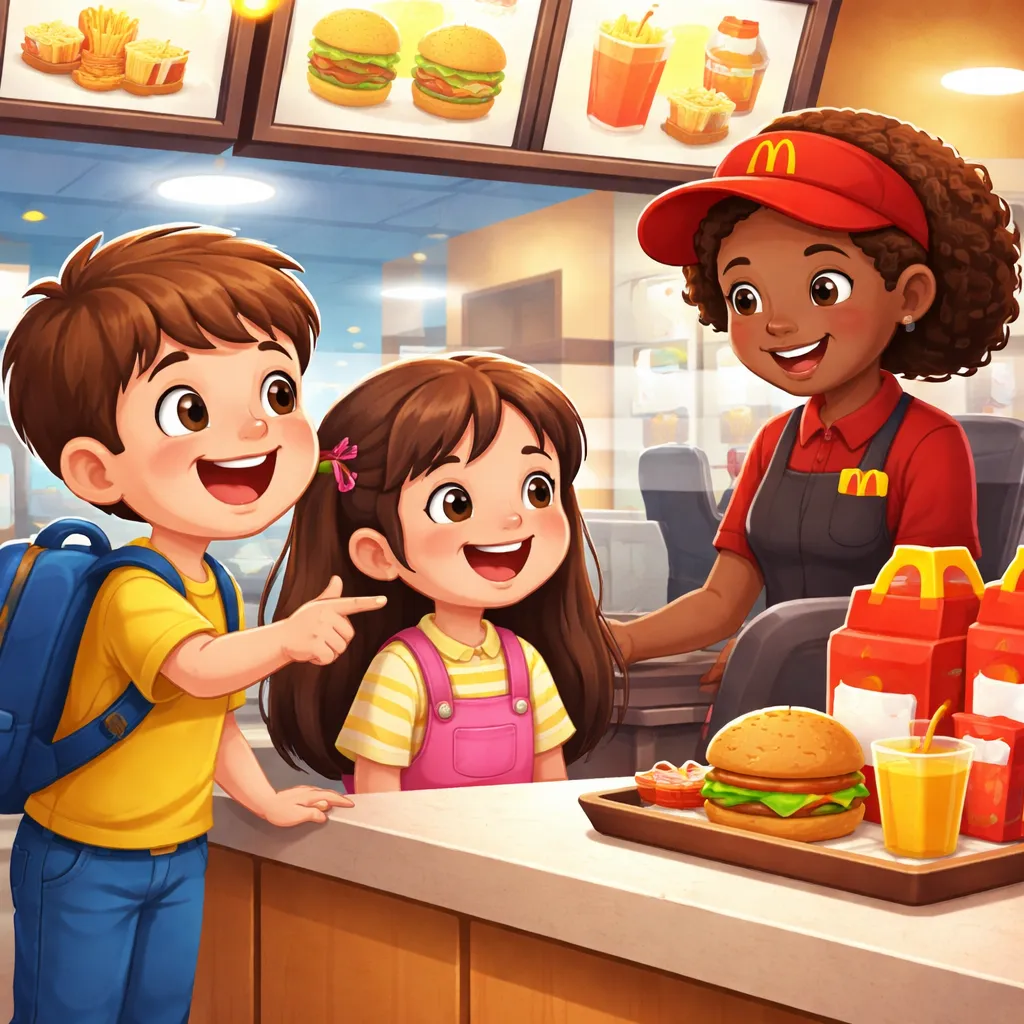

What Is This Situation? Going to McDonald's is exciting for many children. They see the golden arches. They know a happy meal might be coming. It is a place where families go for a quick meal or a special treat. The counter is where the action happens.
This situation happens when you walk up to order. Your child sees the cashier. They hear people talking. They smell the food. It is a real moment where words get them something they want. This makes learning feel powerful.
Using English at the counter gives your child a chance to speak in a real setting. They are not practicing in a classroom. They are ordering food they love. The words matter right now. This builds motivation and memory.
These conversations are short and structured. Your child can learn a few key phrases. They say them at the right time. The cashier responds. Your child gets their food. It is a complete and satisfying experience.
Key English Phrases for This Situation Start with the greeting. "Hello" is simple and friendly. Your child can say it to the cashier. It opens the conversation with warmth. Another good phrase is "I would like" instead of "I want." It is polite and easy to learn.
Use the phrase for the meal. "I want a Happy Meal, please" is clear. The child names the specific meal they know. Adding "please" makes it kind. This teaches manners naturally.
Use phrases for the drink and toy. "Apple juice, please" or "Can I have the toy car?" are specific. The child practices making choices. They learn to add details to their request.
Use phrases for paying. "Here you go" when handing over money or a card. "Thank you" after receiving the food. These short phrases complete the transaction. They show the child the full conversation.
Use phrases for after. "Thank you, have a nice day" is a kind closing. Your child can repeat it after you. It ends the interaction on a positive note.
Simple Conversations for Kids Dialogue 1: Ordering a Happy Meal Cashier: "Hello, what can I get for you?" Child: "I want a Happy Meal, please." Cashier: "What drink do you want?" Child: "Apple juice, please." Cashier: "Here is your food." Child: "Thank you."
This conversation is short and clear. The child uses "please" twice. The cashier asks one question. The child answers. The interaction is successful and friendly.
Dialogue 2: Asking for a Specific Toy Parent: "What do you want to say?" Child: "I want a Happy Meal." Cashier: "Okay. Which toy would you like?" Child: "Can I have the car, please?" Cashier: "Sure. Here is the car." Child: "Thank you!"
Here, the parent gives a quiet prompt. The child speaks. The cashier asks a follow-up. The child makes a specific request. The child receives the toy and says thank you.
Dialogue 3: Adding Ketchup Child: "I want a Happy Meal, please." Cashier: "Anything else?" Child looks at parent. Parent whispers: "Ketchup." Child: "Ketchup, please." Cashier: "Here you go." Child: "Thank you."
This dialogue shows a child asking for an extra item. The parent helps quietly. The child adds the word "please." The child learns that they can ask for what they need.
Vocabulary You Should Know Happy Meal is a special meal for kids. It comes with a main item, a side, a drink, and a toy. You can say "I want a Happy Meal." This is a high-frequency phrase children love to use.
Hamburger is a cooked patty in a bun. You can say "I want a hamburger." Some children prefer a cheeseburger. Both are easy words.
Fries are thin, crispy potatoes. You can say "I want fries." This is a favorite word for many children. It is short and fun to say.
Apple juice is a sweet drink in a small box. You can say "Apple juice, please." This is a common choice for Happy Meals.
Toy is the small gift inside the meal. You can say "What toy is it?" Children love to ask about the toy. It adds excitement to ordering.
Ketchup is a red sauce for fries and burgers. You can say "Ketchup, please." This is a useful word for adding to an order.
How to Use These Phrases Naturally Use a friendly and patient tone. Your child may feel shy. Do not rush. Let them take their turn. Speak calmly so they feel safe. The cashier will wait.
Say the phrases when you are at the counter. Let your child go first if they want. If they are quiet, you can order and let them say "thank you." Small steps build confidence.
Practice the sequence at home. Say "First we say hello. Then we say what we want. Then we say thank you." Knowing what comes next reduces anxiety.
Let your child hear you order. When you order your own food, use the same polite phrases. "I would like a coffee, please." Your child learns by watching you.
Do not force it. Some days your child will want to order. Other days they will hide behind your leg. Both are fine. The goal is positive exposure, not perfection.
Common Mistakes to Avoid One mistake is expecting too much language. A young child may only say "Happy Meal." That is enough. Celebrate that. Do not push for full sentences on the first try.
Another mistake is correcting in front of the cashier. If your child forgets "please," do not say "No, say please." Instead, you say "And please" gently. Model the word without making them feel wrong.
Some children use direct translations. They might say "I want apple juice" without "please." That is a normal first step. Add "please" naturally in your own speech.
Avoid rushing the child. Other people may be waiting. That can create pressure. Go during a quiet time. Choose a moment when you can give your child space to try.
Tips for Parents and Practice Ideas Practice at home before you go. Set up a pretend counter. Use a box as a register. Take turns being the cashier and the customer. Use the phrases you will use at McDonald's.
Look at the menu online together. Point to pictures. Say the words. "That is a hamburger. That is apple juice." Your child becomes familiar with the items before you arrive.
Let your child hold the money or card. Say "You can give this to the cashier." This makes them feel like a real part of the transaction. They connect the words to the action.
Praise the effort, not just the words. Say "You spoke so clearly to the cashier." Even if they only said two words, they tried. That is worth celebrating.
Go to the same McDonald's sometimes. Familiar places feel safer. Your child may feel more confident ordering when they recognize the setting and the people.
Fun Practice Activities Make a McDonald's play set at home. Use a small table. Put toy food on it. Your child stands behind and takes orders. You say "I want a hamburger, please." Your child practices hearing the words.
Draw your own menu. Use paper and crayons. Draw a hamburger, fries, apple juice, and a toy. Your child points and says the words. This connects pictures to spoken language.
Sing an ordering song. Make up a tune. "I want a Happy Meal, please. I want apple juice, please. Thank you, thank you, thank you." Music makes the phrases easy to remember.
Play cashier with stuffed animals. Your child is the cashier. A teddy bear is the customer. Your child practices asking "What do you want?" The bear "orders" with simple words. This builds confidence in both roles.
Watch a video of children ordering. Find a short, gentle clip. Watch together. Point out the phrases. "See, she said 'Happy Meal, please.'" This gives your child a model to follow.
The counter at McDonald's can feel tall and busy. But with a few simple words, your child can stand there with confidence. They learn to speak up, ask politely, and receive kindness in return. Each visit becomes a small victory. Over time, ordering food in English becomes second nature. Your child carries that confidence into other places too—restaurants, stores, and new situations. All from a few words said with a smile.