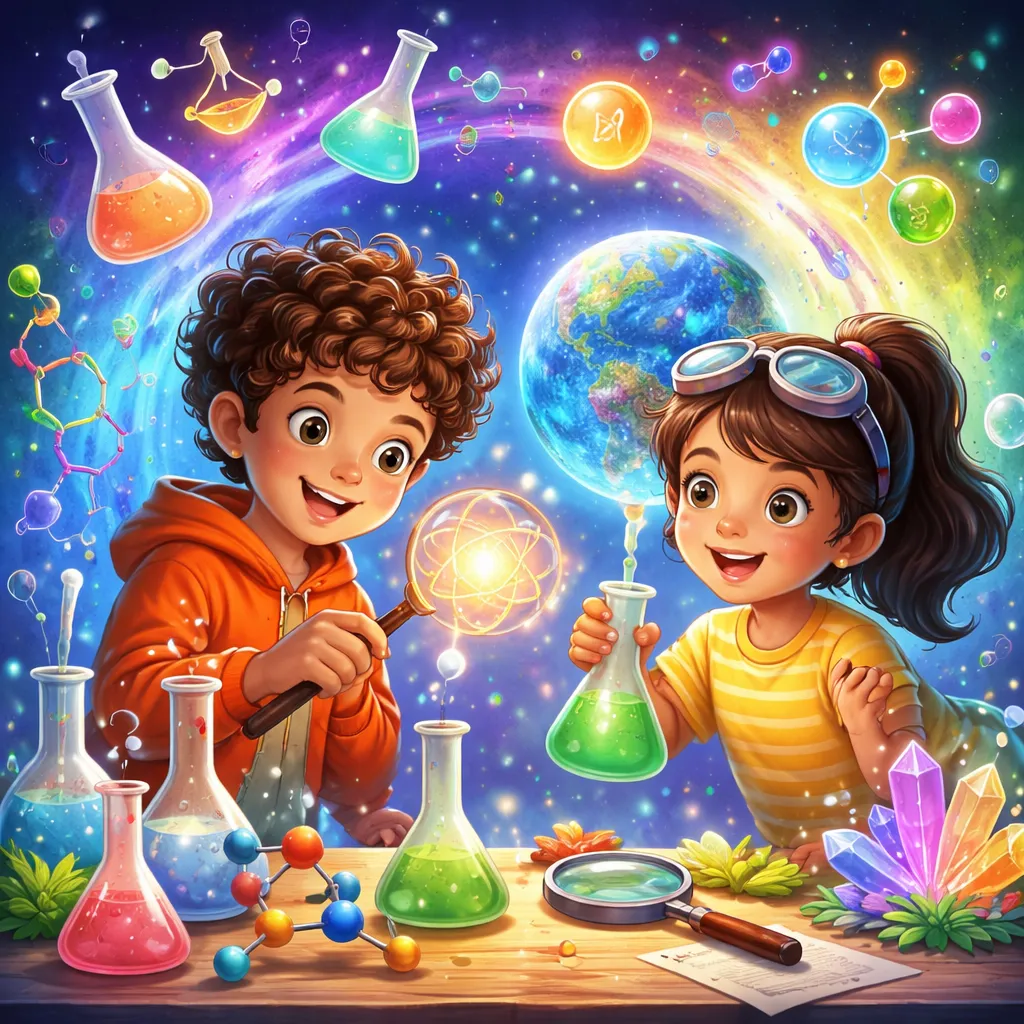

Are Similar Words Really Interchangeable? Many people use the terms chemistry and elements as if they mean the same thing. While they are closely related, they represent different levels of scientific discovery. Chemistry is the study of how substances change and interact with each other. Elements are the primary building blocks that make up every single substance in the entire universe.
Understanding the difference helps children build a strong foundation for future scientific learning. When we look at a glass of water, we see chemistry in action between different parts. The parts themselves, like hydrogen and oxygen, are the elements that create the liquid. Distinguishing between the process and the components makes science much easier to grasp for young minds.
Learning these terms correctly prevents confusion as students move into more advanced science topics. It is like learning the difference between a recipe and the ingredients used in the kitchen. Chemistry is the "recipe" of the universe, while elements are the "ingredients" on the shelf. This distinction creates a clear mental map for curious kids and supportive parents.
Set 1: Chemistry vs Elements — Which One Is More Common? The word chemistry appears frequently in daily life when we talk about cooking or cleaning. We often say a cake has good chemistry when the ingredients work well together to rise. It describes the active relationship between different materials and how they transform into something new. Children hear this word and associate it with experiments, bubbling potions, and colorful reactions.
Elements is a word that kids might encounter more often in nature documentaries or geography books. It feels more structural and permanent because elements do not change into other things easily. You might talk about the "elements of nature," like the gold in a ring or iron in a nail. Both terms are essential, but chemistry feels like an action, while elements feel like objects.
Using both words together allows kids to describe the world with much greater scientific precision. If a child says they like chemistry, they usually mean they enjoy watching things change. If they say they are studying elements, they are likely looking at the specific types of matter involved. Both are high-frequency words that serve as the gateway to all STEM subjects.
Set 2: Chemistry vs Elements — Same Meaning, Different Contexts We use the word chemistry when we focus on the "why" and "how" of a specific reaction. For example, why does vinegar make baking soda fizz up so quickly during a home experiment? That interaction is chemistry because it involves energy, movement, and the creation of a new gas. It is a contextual word used to describe events and dynamic changes over time.
Elements is the correct term when we focus on the "what" of a material's identity. If you hold a copper penny, you are holding a piece of a specific chemical element. You are not holding "chemistry" itself, but rather a physical substance that has its own unique properties. Elements provide the identity, while chemistry provides the behavior and the history of the substance.
Think of it like a set of building blocks used to create a tall, colorful tower. The individual blocks are the elements, each having a specific shape, size, and color. The act of putting them together and seeing how they balance is the chemistry of the project. Using these contexts helps children visualize abstract concepts through simple, everyday metaphors.
Set 3: Chemistry vs Elements — Which Word Is “Bigger” or More Emphatic? Chemistry is the "bigger" word because it acts as the umbrella for many different sub-sciences. It includes the study of elements, but it also covers molecules, heat, energy, and physical states. When a child says they want to be a chemist, they are looking at a huge field. It suggests a broad interest in how the entire physical world is put together.
Elements is a more emphatic and specific term used to pinpoint the exact nature of matter. There are only 118 known elements, making it a very exclusive and defined list for kids to learn. When you identify an element, you are being very precise about the fundamental nature of an object. It feels more "grounded" because it refers to the simplest form that a substance can take.
For a young learner, mastering the list of elements feels like completing a challenging and fun collection. Chemistry, on the other hand, feels like an endless adventure where new discoveries happen every single day. One represents the finite parts of the universe, while the other represents the infinite possibilities of those parts. Both words carry weight, but they serve different roles in a child's vocabulary.
Shutterstock
Set 4: Chemistry vs Elements — Concrete vs Abstract Elements are quite concrete because we can often see, touch, or weigh them in their pure forms. Think of a silver spoon, a breath of oxygen, or the carbon in a pencil lead. These are physical things that occupy space and have specific weights and melting points. Children find elements easier to understand at first because they can point to them in the room.
Chemistry can feel more abstract because it often involves things we cannot see with the naked eye. We cannot see the bonds between atoms breaking or the energy being released as invisible heat. Chemistry describes the "magic" that happens when two invisible gases turn into a visible liquid. It requires a bit more imagination to visualize the tiny movements happening inside a reaction.
Bridging the gap between the concrete element and the abstract chemistry is the goal of science education. When a child sees iron rust, they are seeing the concrete element iron participating in an abstract process. This transition from "thing" to "process" is a major milestone in cognitive development for young students. It helps them move from simple observation to complex reasoning about the world around them.
Set 5: Chemistry vs Elements — Verb or Noun? First Understand the Role In a grammatical sense, both words usually function as nouns in a sentence. However, chemistry often acts like a "process noun" that implies a lot of hidden action and movement. You might say, "The chemistry in this battery is creating electricity for my favorite toy." It functions as a subject that is doing work, making it feel very active and alive.
Elements are "identity nouns" that describe the state of being for a particular type of matter. You might say, "Gold is one of the most beautiful elements found deep inside the Earth." Here, the word acts as a category or a label for a specific thing that exists. It provides the name for the subject rather than describing what the subject is doing.
Teaching children to identify the roles of these words helps them write better science reports later. They learn that they can "do" chemistry, but they "use" or "observe" elements in their experiments. This subtle difference in usage makes their language more descriptive and their scientific thinking much sharper. It also helps them understand instructions in science kits more effectively.
Set 6: Chemistry vs Elements — American English vs British English In both American and British English, the definitions of chemistry and elements remain exactly the same. However, the way children are introduced to these topics can vary slightly between the two regions. In the United States, children often start with "General Science" before moving into specific chemistry units. They might focus heavily on the periodic table as a primary tool for learning.
In the United Kingdom and many Commonwealth countries, "Chemistry" is often taught as a separate subject earlier. British English resources might use terms like "Chemical Elements" more frequently as a combined phrase in textbooks. You might also notice slight spelling differences in specific element names, like "Aluminum" versus "Aluminium." These small changes are fun for kids to discover as they explore international science websites.
Regardless of the regional spelling or curriculum style, the core science remains a universal language. A carbon atom is the same in London as it is in New York or Sydney. Learning that science transcends borders is a great way to encourage a global mindset in children. It shows them that they are part of a worldwide community of young researchers and thinkers.
Set 7: Chemistry vs Elements — Which Fits Formal Situations? Chemistry is the formal name of the scientific discipline you will find in high school and university. If a child is writing a formal essay, they should use "Chemistry" to describe the field of study. It is the professional term used by researchers, doctors, and engineers to explain their specialized work. Using the word correctly shows that a student is serious about their academic journey.
Elements is the formal term used when discussing the Periodic Table or the composition of materials. In a formal lab report, a student would list the specific elements used in an experiment. Using "elements" instead of "stuff" or "parts" makes a child's work sound professional and accurate. It demonstrates a mastery of scientific terminology that teachers and parents love to see.
Knowing when to use these formal terms helps children feel like "real" scientists during their play or study. When they use professional language, they often take their observations more seriously and stay focused. It builds confidence and prepares them for the structured environment of a formal science classroom. Formal language is a tool that empowers kids to communicate their big ideas clearly.
Set 8: Chemistry vs Elements — Which One Is Easier for Kids to Remember? Elements is often easier for younger children to remember because it relates to the idea of "parts." Most kids have played with building sets or puzzles, so they understand that big things have small parts. You can explain that elements are the "forever parts" that cannot be broken down any further. This simple analogy sticks in the mind and makes the concept feel very accessible.
Chemistry might be harder to remember at first because it is a longer word with a unique sound. However, the excitement of "chemistry sets" and "chemical reactions" usually makes it a favorite word anyway. Kids associate it with the "boom" and the "fizz," which are very memorable experiences. It becomes a "cool" word that represents the fun and explosive side of learning.
To help a child remember both, you can use the "Kitchen Analogy" which is very effective. The elements are the flour, sugar, and eggs sitting on the counter before the baking starts. The chemistry is what happens when you mix them and put them in the hot oven to grow. This visual comparison ensures that neither word is forgotten and both are understood in relation to each other.
Mini Exercise: Can You Spot the Differences Between These Similar Words? Let's test your new knowledge with a quick and fun matching game! Look at the sentences below and decide if they should use the word chemistry or elements. This is a great way to practice thinking like a scientist while improving your English. Ready? Let's go!
Helium and Neon are both ______ that are used to make glowing signs.
When the two liquids changed color, we knew a ______ reaction was happening.
There are over one hundred ______ listed on the colorful chart on the wall.
My sister wants to study ______ so she can learn how to make new medicines.
Did you get them all right? For number one and three, the answer is "elements" because we are naming specific types of matter. For number two and four, the answer is "chemistry" because we are talking about actions and fields of study. Practice these sentences with a partner to become a vocabulary expert in no time!
Parent Tips: How to Help Kids Learn and Remember Similar Words Helping your child navigate the world of science vocabulary can be a rewarding journey for the whole family. Start by looking for elements in your own home, such as the iron in cereal or the aluminum foil. Identifying these "real-world" examples makes the word "elements" feel relevant and exciting. It turns a trip to the grocery store into a miniature science expedition.
Encourage your child to describe the "chemistry" they see when you are cooking dinner together. Ask them questions like, "What do you think is happening to the egg as it gets hot in the pan?" This promotes observational skills and helps them use the word in a natural, conversational way. You are teaching them that science is not just in books, but in every part of life.
Use colorful charts and posters to keep the names of the elements visible in their study area. Seeing the words every day helps with spelling and builds a sense of familiarity with the terminology. Celebrate their curiosity whenever they ask a "why" question about how things work. Your encouragement is the most important element in their success as a young learner.
Learning about the world of chemistry and elements opens a door to understanding how everything is connected. From the stars in the sky to the air we breathe, these concepts explain the magic of existence. By mastering these words, children gain the tools to explore, experiment, and dream about the future. Keep asking questions and looking closely at the world, because every small discovery leads to a big adventure in science.