
Plastic is everywhere. Look around your room. You see plastic bottles. You see plastic bags. You see plastic cups and toys. Plastic helps us in many ways. But plastic has a big problem. It does not go away easily. A plastic bottle can stay on our planet for hundreds of years. It sits in the ocean. It sits on the ground. It harms animals. It harms the Earth. Scientists want to fix this problem. They are looking for new ideas. One idea is very exciting. Can we make new plastic from seaweed? Seaweed grows in the ocean. It is soft and green. It is not like regular plastic at all. This article explores this big question. We will learn how seaweed plastic works. We will also find small ways to help our planet every day.
What Is the Problem With Regular Plastic? Regular plastic comes from oil. Oil comes from deep inside the Earth. Factories heat the oil. They change it into plastic. This plastic is very strong. That is good for carrying things. But it is also bad for the Earth. Regular plastic does not break down easily. When we throw it away, it stays for a very long time. A plastic bag takes about 20 years to break down. A plastic bottle takes about 450 years. Some plastic takes 1,000 years. That means the plastic your grandparents used might still be on Earth today. This plastic goes into the ocean. Fish eat small pieces of plastic. Birds eat plastic too. Animals get sick. They can die. This makes many people sad. We want a cleaner planet for children and animals. So scientists are working hard to find a new kind of plastic. One that breaks down fast. One that does not hurt the Earth.
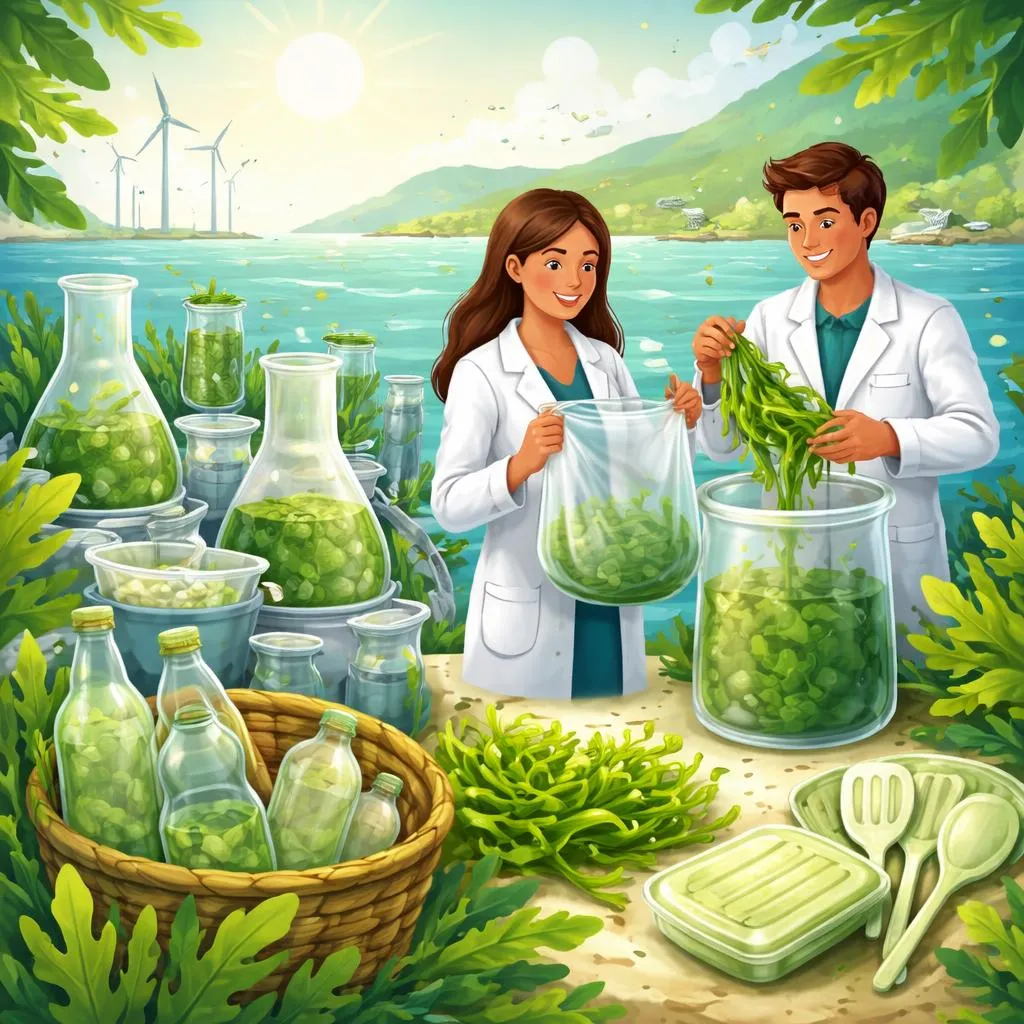
Can We Make New Plastic From Seaweed Instead? Now we come to the big question. Can we make new plastic from seaweed? The answer is yes. Scientists have already done it. They take seaweed from the ocean. Seaweed grows very fast. It does not need land or fresh water. It only needs sunlight and salt water. Scientists clean the seaweed. They dry it. They grind it into a powder. Then they mix it with other natural ingredients. The mixture becomes soft. Factories can shape it into bags, bottles, or food containers. This new material looks like plastic. It feels like plastic. But it is very different inside. When you throw this seaweed plastic away, it breaks down naturally. It takes only a few weeks or months. That is much faster than regular plastic. And it does not harm animals. If a fish eats a small piece, the fish will be okay. The seaweed plastic is safe for nature.
Why Does This New Idea Excite Scientists and Kids? This idea excites everyone. Scientists feel excited because they found a smart solution. Kids feel excited because it sounds like magic. Seaweed is everywhere in the ocean. It is not trash. It is a living thing. We can grow more seaweed easily. We do not need to dig deep into the Earth for oil. We do not need to hurt the planet to make this plastic. This is called bioplastic. Bio means life. Plastic means shapeable material. So bioplastic is a life-based material. Seaweed plastic is one type of bioplastic. Other scientists use corn or potatoes. But seaweed has a special advantage. It does not use farmland. We already have too many people who need farmland for food. So seaweed is perfect. It grows in the ocean. There is plenty of space in the ocean. This makes seaweed plastic a very promising solution for the future.
What Are the Challenges of Seaweed Plastic? We cannot buy seaweed plastic in every store yet. There is a reason. Seaweed plastic costs more money to make. How much more? It costs two to ten times more than regular plastic. A regular plastic bag costs a few cents. A seaweed plastic bag costs several times that. Many companies do not want to pay more. They want cheap materials. This is a big challenge. Scientists are working to lower the cost. They are finding faster ways to grow seaweed. They are finding better ways to process it. Another challenge is strength. Seaweed plastic is not as strong as regular plastic yet. It works well for bags and food wrappers. But it does not work well for car parts or electronics. Scientists need more time. They need more experiments. They need more money for research. But every year, they make progress. One day, seaweed plastic might be cheap and strong.
Small Things Kids Can Do to Help the Earth Today While scientists work on big solutions, kids can help too. You do not need to be a scientist. You do not need to make seaweed plastic at home. You just need to make small choices every day. These small choices add up to big changes. First, use a water bottle that is not plastic. Use a metal bottle or a glass bottle. Bring it to school. Refill it at home. Second, bring your own bag when you shop. Many stores sell cloth bags. Keep one in your backpack. When your parent buys groceries, give them the cloth bag. Third, say no to plastic straws. Drink from the cup. Or buy a metal straw. Fourth, look for products with less plastic. Buy ice cream in a cone, not a cup. Buy apples that are not wrapped in plastic. Fifth, tell your friends about plastic problems. Share what you learned about seaweed plastic. Your friends might start helping too.
Learning Activities to Discover More About Plastic and Seaweed Activity one is a plastic hunt. Walk around your home with a parent. Find ten things made of plastic. Name them in English. Say bottle, bag, cup, toy, pen, spoon, plate, straw, container, and wrapper. Write the words on paper. Draw a picture next to each word. This helps you remember the words.
Activity two is a nature walk. Go to a park or a beach. Look for plastic trash. Do not touch it if it looks dirty. Just look. Count how many pieces you see. Talk about where the plastic might come from. A bottle from a picnic. A bag from a store. This helps you see that plastic trash is everywhere.
Activity three is a seaweed investigation. Look at pictures of seaweed online. There are green seaweeds, red seaweeds, and brown seaweeds. Some are small. Some are very long. Draw your favorite seaweed. Write three sentences about it. For example, Seaweed grows in the ocean. Seaweed is green. Scientists make new plastic from seaweed.
Activity four is a family promise. Sit with your family. Make one promise to use less plastic. Maybe you promise to bring cloth bags to the store. Maybe you promise to stop buying plastic water bottles. Write the promise on paper. Put it on the refrigerator. Every time you keep the promise, give yourself a sticker.
Activity five is a letter to a scientist. Ask your parent to help you find a real scientist online. Many science museums have email addresses for questions. Write a short letter. Ask one question about seaweed plastic. For example, Dear scientist, Can seaweed plastic become as strong as regular plastic? Thank you. This activity connects your child to real science. It shows that anyone can ask big questions.
A Look Into the Future of Plastic The future of plastic might be green. And we do not mean the color. We mean good for the Earth. One day, your water bottle might come from seaweed. Your sandwich bag might come from corn. Your toy might come from potatoes. When you finish playing, the toy can go into the ground. It will break down. It will become food for plants. That is a beautiful future. Scientists are working hard to make this future real. But they need help. They need us to use less plastic today. They need us to support new ideas. They need us to care. Every time you pick up a piece of trash, you help. Every time you bring a cloth bag, you help. Every time you tell someone about seaweed plastic, you help. The Earth thanks you. The animals thank you. And the scientists thank you too. So keep asking big questions. Keep learning new words. Keep trying small actions. Together, we can make our planet cleaner and happier for everyone.