
Opening Introduction
Mia is new in the English class. She sits in the back. She looks at her shoes. The teacher asks a question. Mia knows the answer. But her voice feels stuck. She is shy. Her classmate, Leo, sees this. He remembers when he felt shy too. He wants to help. He asks his teacher, "How can I help Mia? How can we make English fun for her?" The teacher smiles. "That is a wonderful question, Leo. We need special ways. We need to know how to teach English to shy children. It is about kindness, patience, and fun." Let's join Leo and learn these special ways together.
Core Knowledge Explanation
What is shyness? Shyness is a feeling. It is like a butterfly in your stomach. It makes you feel quiet. It makes you want to hide. Shy children are not unfriendly. They are often very good listeners. They have wonderful ideas. But sharing those ideas feels scary. They worry about making mistakes. They worry about what others will think. Learning a new language can make this feeling bigger. So, when we think about how to teach English to shy children, we must think about safety. We must create a safe, happy place for learning.
The first rule is: no pressure. Pressure means forcing someone to talk. We never say, "Say it now!" or "Why are you so quiet?" This makes the shy child feel worse. Instead, we give them time. We let them watch and listen. We let them join when they are ready. The second rule is: start with non-verbal activities. Non-verbal means without words. We can use drawing, pointing, or nodding. For example, we can say, "Point to the picture of the cat." The child can point without speaking. This is a success. We celebrate it.
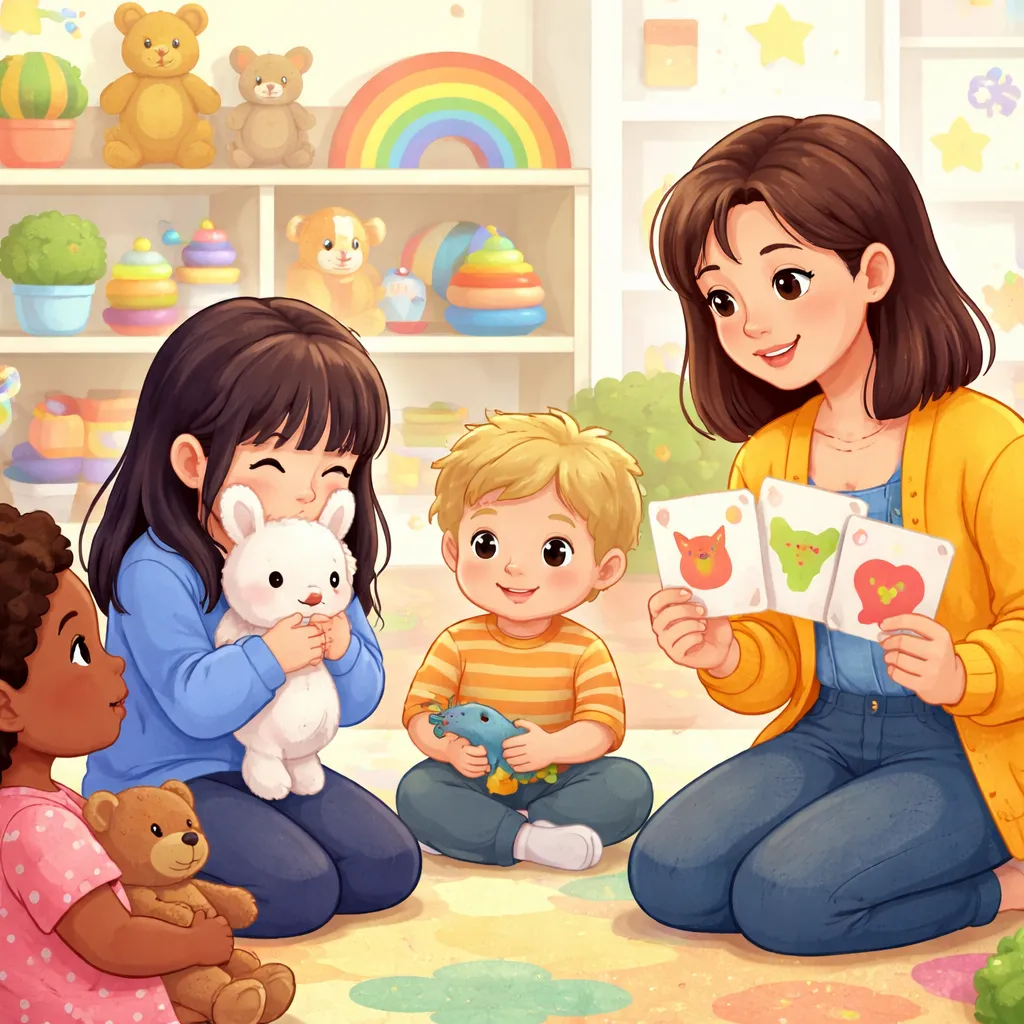
The third rule is: use buddies. A buddy is a friendly partner. A shy child might feel safer with one friend than with a big group. You can be a buddy. You can sit with them. You can do an activity together. You can say, "Let's do this worksheet together." The fourth rule is: let them use tools. Tools can be puppets, stuffed animals, or masks. A shy child might speak for a puppet. The puppet is not shy. This is a fun way to practice English without feeling on the spot.
The fifth rule is: focus on listening first. Shy children are often great listeners. We can give them listening tasks. "Can you hand me the blue crayon?" They show they understand by doing the action. This builds confidence. Confidence is the feeling of "I can do it." Slowly, with confidence, they might try to speak. The sixth rule is: praise every effort. If they say one word, we say, "Great job! I heard your word!" We do not correct mistakes harshly. We just say the word correctly in a happy way. "Yes, that's a dog!"
These are the keys to how to teach English to shy children. It is not about making them talk fast. It is about helping them feel safe and brave. Every child is different. Some need more time. Some need a special friend. Your kindness is the most important tool.
Fun Interactive Learning
Let's play some games that are perfect for how to teach English to shy children. First, the "Feeling Faces" game. Make cards with faces: happy, sad, angry, surprised. Ask the shy child to pick a card that shows how they feel. They don't have to say it. They can just show the card. Then you can say, "You feel happy today. I am happy too." This teaches feeling words without pressure.
Second, the "Magic Bag" game. Put some small toys in a bag. A car, a block, a small animal. Ask the child to put their hand in and feel one toy. Can they guess what it is? They can whisper the word to you, or they can nod if you guess. "Is it the car?" Nod yes. "Yes, it's a car!" This game is mysterious and fun.
Third, the "Draw and Tell" game. Give the child paper and crayons. Say, "Draw a big sun." They draw. Then you say, "Wow, a big, yellow sun!" Then say, "Draw a flower under the sun." They draw. You describe the picture. "The sun is above the flower." Later, you can ask, "Can you tell me one thing in your picture?" They might say "sun." That is a big win.
Fourth, the "Puppet Show" game. Use two hand puppets. You talk for one puppet. Let the shy child hold the other puppet. You can have a simple conversation between the puppets. "Hello, I am Dog. What is your name?" The child might make their puppet whisper, "I am Cat." The puppet is talking, not the child. It feels safer.
Fifth, the "Copycat" game. You do an action and say the word. "Jump!" Then you do it. See if the child will copy the action. They might not say the word, but doing the action shows they understand. Later, they might say the word when they jump. These games are part of how to teach English to shy children in a gentle, joyful way.
Expanded Learning
Shyness is not a bad thing. In many cultures, being quiet is seen as respectful and thoughtful. In Japan, listening carefully is very important. In Finland, people often think before they speak. Your shy friend might have deep thoughts. They are like a calm lake. The lake is quiet on the surface, but it is full of life underneath. When we learn how to teach English to shy children, we are learning to appreciate different ways of being.
Many famous people were shy as children. They became great writers, artists, and scientists. Their quiet time helped them observe the world. Your shy friend might be a great observer. They might notice details others miss. In your English class, they might hear the sounds of words very clearly. They might become a wonderful writer. Your patience now helps their talent grow.
Let's sing a song about being a good friend. Sing this to the tune of "The More We Get Together".
I can be a patient friend, patient friend, patient friend. I can be a patient friend, to someone who is shy. I will wait and I will smile, I will smile, I will smile. I will wait and I will smile, and give it time to try. We can draw and we can play, we can play, we can play. We can draw and we can play, and learn English today!
This song reminds us to be kind and patient.
What You Will Learn
You are learning about kindness and teaching. You are learning new words: shyness, pressure, non-verbal, buddy, tools, confidence, observe, patient, respectful. You are learning about feelings and how to help others.
You are learning kind sentences. You can say, "Take your time. I will wait." You can ask, "Would you like to draw the answer?" You can encourage, "You did a great job listening." You are using English to build up others. This is a superpower.
You are building wonderful skills. You are building empathy. You understand how a shy friend feels. You are building leadership. You guide and include others. You are building creativity. You think of new games to help. You are building communication. You learn to listen with your heart.
You are forming a beautiful habit. The habit of inclusion. You look for the quiet friend. You make space for them. You help them shine. This habit makes you a true friend and a great classmate. Knowing how to teach English to shy children makes you a hero of kindness in your classroom.
Using What You Learned in Life
Use these ideas every day. In your English class, look for a friend who is quiet. Sit next to them. Share your crayons. Do not force them to talk. Just be friendly. At home, if you have a shy sibling, play the "Magic Bag" game with them. Use simple English words. You are helping them learn and feel loved.
On the playground, invite a shy friend to play a simple game. "Let's jump on the count of three. One, two, three, jump!" Use English for the counting. This combines play and practice. In the library, read a picture book with a shy friend. You read most of it. Ask them to point to something on one page. "Can you point to the mouse?" This is a small, safe task.
Remember, your goal is not to change the shy person. Your goal is to be a safe harbor for them. A safe harbor is a place where ships can hide from a storm. You can be a safe harbor for a shy friend. Your kindness is the calm water. Your patience is the warm sun. When they feel safe, their English voice might grow, like a small plant growing in a sunny garden. And you helped make the sun shine.
Closing Encouragement
You are doing an amazing thing. You are a kindness expert. You are a patient teacher. You are a true friend. I am so proud of you. Learning how to teach English to shy children shows you have a big heart and a smart mind.
Keep these ideas in your heart. Use them to make your world a kinder, more inclusive place. Every shy friend you help will remember your kindness. And you will feel the joy of helping.
Remember, the strongest voices sometimes start as whispers. Your job is to listen for the whisper and say, "I hear you. You are important." Keep being kind, keep being patient, keep being you. Great work, my wonderful friend and teacher.