
Opening Introduction
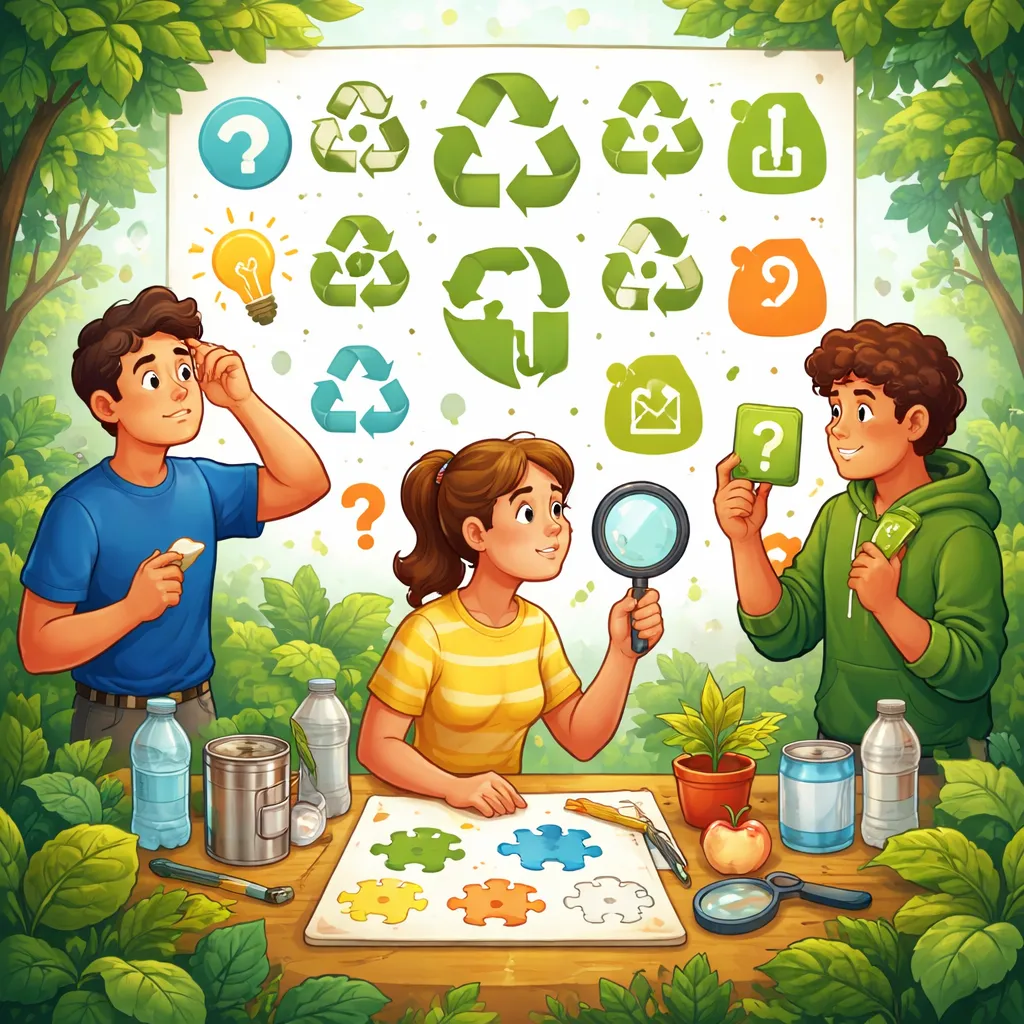
Leo was holding an empty juice box. He was about to throw it in the trash. "Wait!" said his sister, Mia. She pointed to a small sign on the bottom. It looked like three arrows chasing each other in a triangle. "That's the recycling symbol! It means this box can be recycled. It doesn't have to be trash. But look, there is a number inside the triangle. What does that mean?" Their mom came over. "Great spotting! That little triangle is a secret code. It tells us how to recycle the material. There are many recycling symbols and meanings in English to learn. Knowing them makes us expert planet helpers!" Leo looked at the tiny triangle. A secret code on his juice box? This was a mystery he wanted to solve. Let's become symbol detectives together.
Core Knowledge Explanation
Recycling is when we take something old and make it into something new. This saves resources and helps our planet. But we can't recycle everything the same way. Different materials go to different places. That's why we have recycling symbols and meanings in English on our packages. They are like little signs that give us instructions. Let's learn the most common symbols.
The first and most famous symbol is the universal recycling symbol. It is three arrows that curve and chase each other. They form a triangle. This symbol means that the item or the material can be recycled. Sometimes it is black. Sometimes it is green. The three arrows stand for the three steps: collect, remake, buy. It shows the cycle of recycling.
Now, look inside the triangle. You often see a number. This is a resin identification code. It is for plastic. Plastic is a tricky material. There are many types. The number helps people at the recycling center sort it. Number 1 is PETE or PET. This plastic is used for water bottles and soda bottles. It is commonly recycled. Number 2 is HDPE. This plastic is used for milk jugs and shampoo bottles. It is also very recyclable. Number 3 is PVC. It is used for pipes and some food wrap. It is not recycled as often. Number 4 is LDPE. It is used for shopping bags and bread bags. Number 5 is PP. It is used for yogurt cups and bottle caps. Number 6 is PS, or Styrofoam. It is used for cups and food boxes. It is hard to recycle. Number 7 is OTHER. This is for all other plastics. They are often not recycled. These numbers are a key part of recycling symbols and meanings in English for plastic.
Other materials have symbols too. The "green dot" symbol is two arrows in a circle. It does not always mean the package is recycled. It means the company that made it paid money to a recycling program. The "Tidyman" symbol is a picture of a person throwing litter into a bin. It reminds you not to litter. Please put it in the trash. The "compostable" symbol looks like a leaf or a plant growing out of a loop. It means the item can break down into compost, a natural plant food. You should not put it in the normal recycling. The "glass" symbol is a picture of a glass and fork. It means the container is suitable for food. The "mobius loop" is the same as the universal recycling symbol. These are the main recycling symbols and meanings in English. When you understand them, you can sort your waste like a pro.
Fun Interactive Learning
Let's play "Symbol Detective." This is the best way to learn. Ask a grown-up for permission. Go on a safe hunt around your kitchen. Look at the bottom of plastic bottles, food boxes, and cans. How many symbols can you find? Take a notebook. Draw the symbol you see. Write down the number if there is one. Can you find the chasing arrows? Can you find a number 1 or 2? This makes you a real detective for the recycling symbols and meanings in English in your own home. Be careful not to touch anything sharp or dirty.
Another fun activity is "Sorting Game." Get three boxes. Label them: Plastic #1 & #2, Cans & Paper, Trash. Now, collect some clean, empty packages from your home. Use your detective skills. Check the symbol. A soda bottle with a "1" goes in the first box. A cereal box (paper) goes in the second box. A chip bag (often not recyclable) goes in the trash box. Say the action as you sort. "This has the recycling symbol with a number 2. It goes in the recycling." This game is fun and teaches you the real meaning of the recycling symbols and meanings in English.
You can also make "Symbol Flash Cards." On small cards, draw the symbols. On the back, write what they mean. For example, draw the three chasing arrows. On the back, write "This can be recycled." Draw the compostable symbol. On the back, write "This can become plant food." Use your cards to quiz your family. This helps everyone learn.
Expanded Learning
The universal recycling symbol is not very old. It was created in 1970 for the first Earth Day. A student named Gary Anderson won a design contest. He made the three chasing arrows. Now, it is known all over the world. The recycling symbols and meanings in English are used in many countries, but the rules can be different. In some places, they recycle more types of plastic. In other places, less. It is important to check your local recycling rules.
Learning these symbols is part of being a global citizen. Kids everywhere are learning to be responsible for their waste. The goal is to have less trash in landfills. When you recycle correctly, you save energy. It takes less energy to make a new can from an old can than from new materials. You also help animals by keeping plastic out of the oceans. Knowing the recycling symbols and meanings in English gives you the power to make good choices. Let's make a recycling symbol chant. Chants are catchy and help you remember.
Three chasing arrows, in a loop, recycling gives our planet a boost! Number 1, number 2, these are plastics we can renew! A green dot, a tidy man, reminders for every girl and man! A leaf that grows from a small line, means it's for the compost fine! Learn the symbols, know the score, to help the Earth we all adore!
What You Will Learn
You are learning about sustainability, symbols, and responsible actions. You are learning the key recycling symbols and meanings in English: the universal recycling symbol (three chasing arrows), resin identification codes (numbers 1-7), the green dot, the Tidyman, the compostable symbol, the glass and fork symbol. You are also learning words like recycle, sort, material, compost, and landfill.
You are learning instructive and explanatory sentences. You can say, "This bottle has a number 1 inside the triangle. It is recyclable." You can explain, "The compostable symbol means it can go in the food waste bin." You can remind others, "The Tidyman symbol means please don't litter." You are using English to give clear, helpful instructions about the environment. This builds leadership and communication skills.
You are building essential life skills. You are building visual literacy. You understand and follow symbols. You are building sorting and categorization skills. You separate different materials. You are building environmental stewardship. You take action to reduce waste. You are building global awareness. You understand a system used worldwide. You are building confidence. You can correctly identify recyclable items.
You are forming a meticulous and caring habit. The habit of looking closely, reading the symbols, and disposing of things thoughtfully. You see that even small actions, guided by the right knowledge, have a big impact. Learning the recycling symbols and meanings in English turns you from a passive consumer into an active, informed participant in the cycle of sustainability.
Using What You Learned in Life
Use your new knowledge every day. When you finish a snack, check the package. Say, "This yogurt cup has a number 5. Can we recycle it here?" Help your family sort the recycling. Be the home expert on the recycling symbols and meanings in English. Start a compost bin for fruit and vegetable scraps if you see the compostable symbol. When you go shopping, look for products with the recycling symbol. Choose those over ones with no symbol.
At school, you can teach your classmates. Make a poster for your classroom showing the different symbols. You could even start a "Green Team" to make sure everyone is recycling correctly. When you are out, if you see recycling bins with symbols, you will know exactly what to put in them. The more you practice, the faster you will get. Soon, you'll spot a symbol and know its meaning in a flash. You are becoming a guardian of the recycling stream.
Closing Encouragement
You are a symbol decoder. You are a recycling expert. You are a careful and responsible planet hero. I am so proud of you. Learning all these recycling symbols and their meanings shows you have a sharp eye and a committed heart.
Keep looking for those secret codes on everything you use. Keep sorting, recycling, and teaching others. Remember, you are not just throwing something away. You are sending it on a new adventure to become something else. You are a key part of that amazing journey.
You are knowledgeable, you are proactive, and you are learning the visual language of caring for our Earth. Great work, my wonderful eco-detective.