
Opening Introduction
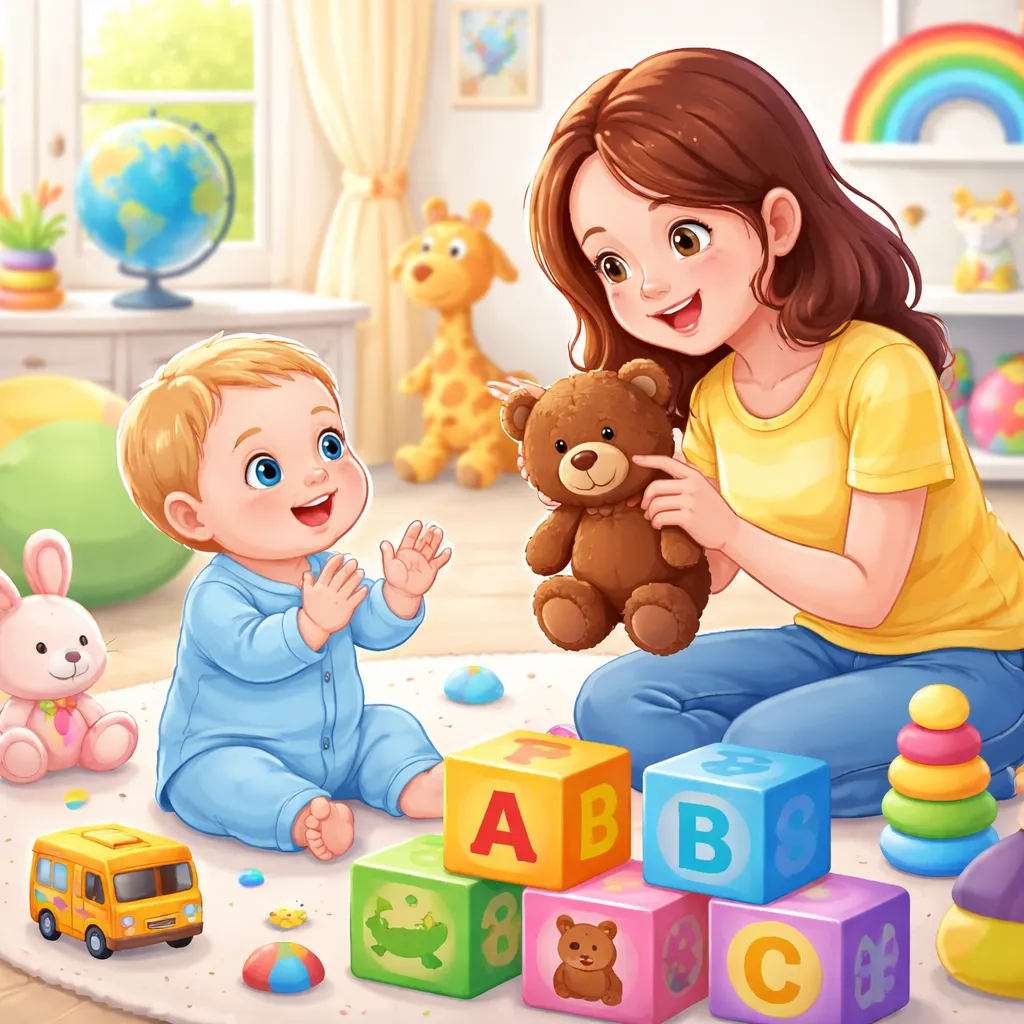
Lily is holding her baby sister, Emma. Emma is six months old. She looks at Lily with big eyes. Lily says, "Hello, Emma!" Emma smiles. Lily wonders, "How can I help Emma learn English? She is so small. Where do I start?" Lily's mom hears her. "You are already starting," Mom says. "When you talk to her, you are teaching her. Let me show you more ways. There are special ways for how to start English for babies. It is all about love, sounds, and fun." Lily is excited. She can be her sister's first teacher. Let's learn these special ways together.
Core Knowledge Explanation
Babies are amazing. They are born ready to learn languages. Their brains are like new computers. They are waiting for information. The first years are very important. This is the time to build a strong language base. But babies do not learn like big kids. They do not sit at a desk. They learn through their senses. They learn by listening, watching, and feeling safe and loved.
So, what is the secret for how to start English for babies? The secret is simple. Talk, sing, and read. But you must do it in a special baby way. First, you must use "parentese". Parentese is a way of talking. It is slow, clear, and musical. Your voice goes up and down. You say, "Helloooo, baby! How are youuuu?" This kind of talk gets the baby's attention. It helps them hear the sounds of English.
Second, you must be a commentator. A commentator describes what is happening. You talk about what you are doing. "I am changing your diaper. This is a clean diaper. Now we put on your socks. One foot, two feet." You talk about what the baby is doing. "You are looking at the light. The light is bright. You are waving your hands." This constant talk fills the baby's brain with words.
Third, you must sing. Babies love music. The rhythm and rhyme of songs are perfect for their brains. Sing simple songs. "Twinkle, Twinkle, Little Star." "The Itsy Bitsy Spider." "Old MacDonald." You can sing during bath time, during diaper change, during play. The songs teach the melody of the language.
Fourth, you must read. Read board books with bright pictures. Point to the pictures. "Look, a dog! The dog says woof." Even a two-minute reading time is powerful. It builds a love for books. It teaches new words.
Remember, the goal is not to make the baby speak early. The goal is to create a rich language environment. A rich environment is full of words, songs, and love. This is the best way for how to start English for babies. You are planting seeds. The seeds will grow in their own time.
Fun Interactive Learning
You are a big kid. You can help with a baby. Let's do some activities that show how to start English for babies. First, the "Copycat Game". Sit face-to-face with the baby. Make a sound. "Ba-ba-ba." Wait. See if the baby tries to copy. Then you copy the baby's sound. This is a conversation of sounds. It teaches the baby that sounds are for communicating.
Second, the "Name Game". Point to body parts. Gently touch the baby's nose. Say, "Nose. This is your nose." Touch the baby's ear. "Ear. This is your ear." Do this during dressing or bath time. The baby learns the words for their body.
Third, the "Toy Talk". When the baby plays with a toy, talk about it. "You have a red ball. The ball is round. You are rolling the ball. Good job!" This connects words to actions and objects.
Fourth, the "Picture Walk". Hold the baby and walk around the house. Point to things. "Clock. The clock ticks. Window. We look out the window." You are giving a tour of the world in English.
Fifth, the "Lullaby Time". Before nap or bedtime, sing a soft song. Rock the baby gently. This creates a calm, English-language routine. The baby will connect English with comfort and safety.
These activities are the heart of how to start English for babies. They are simple, loving, and powerful. You are not just playing. You are building a baby's brain.
Expanded Learning
All babies learn language the same way. In every country, parents talk to their babies. They use parentese. They sing lullabies. The songs are different, but the purpose is the same: to connect and teach. Knowing how to start English for babies connects you to parents and babies all over the world.
Some families speak two languages at home. This is great. A baby's brain can learn two languages as easily as one. The key is consistency. One parent might speak one language. The other parent speaks the other. Or, they might use one language at home and one outside. The baby will sort it out. Your job, if you are helping, is to be consistent in English.
Let's sing a song about talking to babies. Sing this to the tune of "Row, Row, Row Your Boat".
Talk, talk, talk all day, to your baby dear. Sing a song, read a book, so the words are clear. Point and tell, ring a bell, everything you do. Helps the baby learn the words, from me and you.
Singing about it helps us remember the plan.
What You Will Learn
You are learning about the beginning of language. You are learning new words: parentese, commentator, environment, communicate, routine, consistency, lullaby. You are learning about child development: how a baby's brain grows.
You are learning kind and patient sentences. You can say, "I am talking to the baby in parentese." You can explain, "Reading to a baby builds their vocabulary." You are using English to talk about nurturing and teaching. This shows you are caring and smart.
You are building wonderful skills. You are building empathy. You think about how a baby experiences the world. You are building nurturing skills. You learn to soothe and engage a baby. You are building communication skills. You learn to speak clearly and simply. You are building leadership. You are a guide for a younger learner.
You are forming a beautiful habit. The habit of gentle teaching. You use your voice and your time to help someone smaller. This habit makes you a kinder person. Knowing how to start English for babies gives you a special role in a baby's life. You are a language ambassador.
Using What You Learned in Life
Use this knowledge at home. If you have a baby sibling or cousin, you now know how to help. Spend ten minutes each day doing a baby activity. Talk, sing, read. You will bond with the baby and help them learn. Your parents will be so grateful.
If you visit a friend who has a baby, you can share your knowledge. "I know how to talk to babies in English. Can I read this book to her?" You will be a wonderful guest.
When you hear a baby crying, you will understand. Maybe they are overwhelmed. You can use a calm, soft English voice. "It's okay. Shhh." Your voice might soothe them. You are using English as a tool for comfort.
Remember, you were a baby once. Someone talked to you, sang to you, read to you. Now you can pass on the gift. Knowing how to start English for babies is a circle of love and learning. You are now part of that circle.
Closing Encouragement
You have learned something truly special today. You are a baby whisperer. You are a language gardener. You are a kind and patient teacher. I am so proud of you. Understanding how to start English for babies shows you have a big heart.
Keep this knowledge. Use it. Share it. You are making a difference in a baby's life. You are helping to build their future.
Remember, every word you say to a baby is a seed. You are planting a forest of words in their mind. One day, that forest will be full of stories, songs, and conversations. Thank you for being a wonderful planter. Great work, my amazing baby language helper.