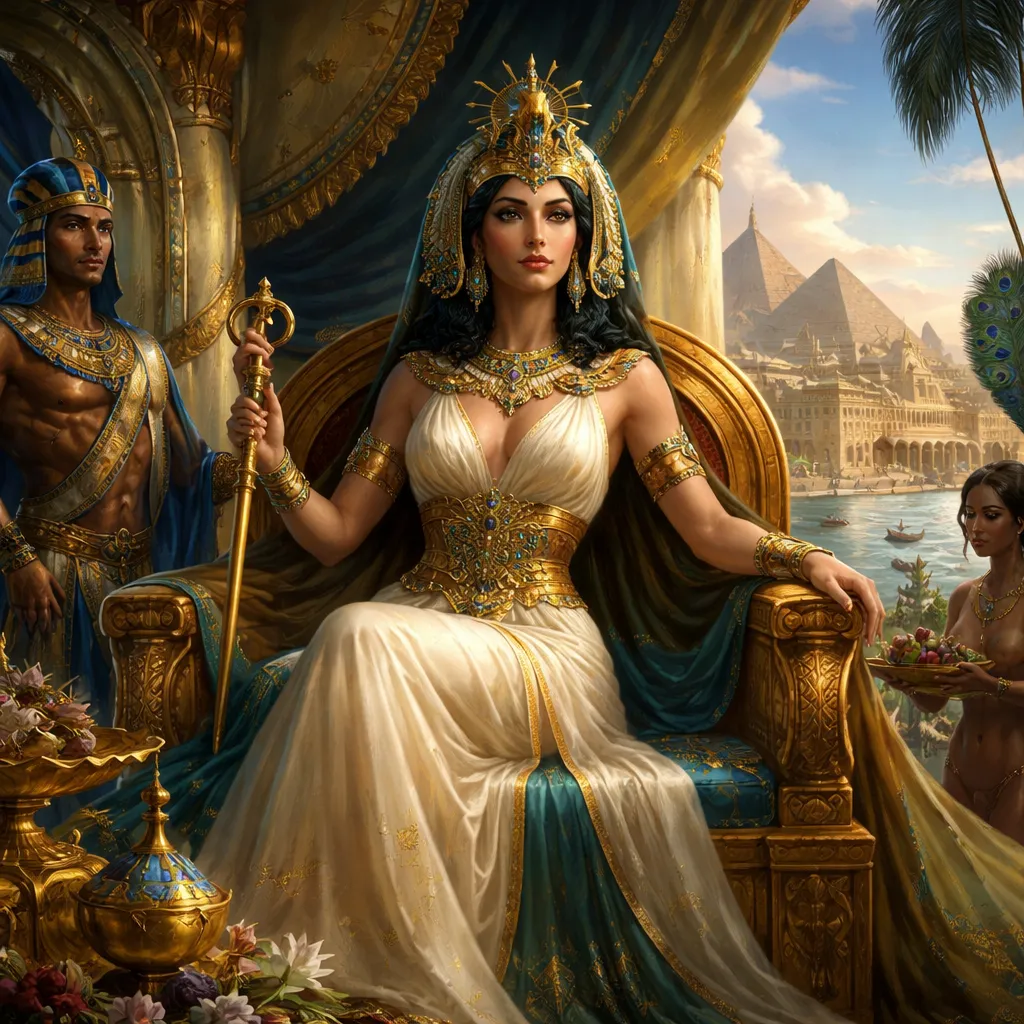

Introduction to Cleopatra
Cleopatra VII Thea Philopator, known simply as Cleopatra, was the last active ruler of the Ptolemaic Kingdom of Egypt. Born in 69 BCE, Cleopatra was of Greek descent, a member of the Ptolemaic dynasty, which had ruled Egypt since the time of Alexander the Great. Despite her Greek heritage, Cleopatra became a symbol of Egyptian power, wisdom, and leadership.
Cleopatra is one of the most famous figures in ancient history. Her life is filled with political intrigue, alliances, and incredible stories of resilience. She is remembered not only for her beauty but also for her sharp intellect, political acumen, and strength as a leader. Her reign marked a period of political change and turmoil, and her alliances with powerful Roman figures like Julius Caesar and Mark Antony are still discussed in history and popular culture today.
Understanding Cleopatra's story provides valuable lessons in leadership, intelligence, and the art of diplomacy. Her life offers a glimpse into the complexities of ruling an empire and the importance of strategy in both politics and personal relationships.
Early Life and Background
Cleopatra was born in 69 BCE in Alexandria, the capital of Egypt. She was the daughter of Ptolemy XII, the king of Egypt, and a member of the Greek royal family. The Ptolemies had ruled Egypt for nearly three centuries, following the conquests of Alexander the Great. Cleopatra’s family was not Egyptian, but rather Greek in origin, and they had adopted many of the local customs and traditions of Egypt over the years.
As a young girl, Cleopatra was well-educated and fluent in several languages, including Greek, Egyptian, and Aramaic. Her education was not only academic but also practical, as she learned about Egyptian governance, culture, and religion. It was clear early on that Cleopatra was not just a beauty, but a highly intelligent and capable individual, well-prepared for the challenges of ruling Egypt.
At the age of 18, Cleopatra ascended to the throne following her father's death. However, her rule was not secure. Her brother Ptolemy XIII, who was much younger, was named co-ruler. Soon after taking the throne, Cleopatra found herself embroiled in a power struggle with him, which set the stage for the dramatic events that would follow.
Career Highlights and Achievements
Cleopatra’s reign began in a time of political instability in Egypt. As a ruler, she faced both internal challenges, such as maintaining her power against her brother and his advisers, and external pressures from the expanding Roman Republic.
One of her most significant achievements was her political savvy. In order to secure her position as ruler, Cleopatra famously formed an alliance with Julius Caesar, the most powerful man in Rome at the time. This alliance helped her to reclaim the throne after she had been briefly exiled. Cleopatra's meeting with Julius Caesar in 48 BCE in Rome is one of the most famous moments in history. Their relationship not only solidified her rule over Egypt but also resulted in the birth of a son, Ptolemy XV, who was also known as Caesarion.
After Caesar’s assassination in 44 BCE, Cleopatra returned to Egypt and continued to rule as a strong and independent monarch. She then formed an alliance with Mark Antony, another powerful Roman general, and their relationship became both romantic and political. Together, Cleopatra and Mark Antony fought to maintain control of Egypt and their shared empire. Their alliance, however, led to a conflict with Rome and eventually to their downfall.
Despite these challenges, Cleopatra was able to maintain her position as a powerful ruler until her death in 30 BCE. Under her rule, Egypt experienced a period of stability and prosperity. She made several important reforms, including improvements in agriculture, trade, and infrastructure. Cleopatra was also a patron of the arts and sciences, and her court attracted scholars, artists, and intellectuals from across the Mediterranean world.
Famous Works or Performances
Cleopatra’s “works” are not defined by traditional art, literature, or performances. Rather, her legacy lies in her actions and the way she shaped history through diplomacy and leadership. As the ruler of Egypt, she engaged in a variety of political and military maneuvers that affected the course of both Egyptian and Roman history.
Her most famous performance, however, was the way she presented herself to the Roman world. Cleopatra was a master of public relations and knew how to craft an image of herself that would capture the attention of powerful men, such as Julius Caesar and Mark Antony. She was known for her charm, intelligence, and charisma, which she used to secure the best possible outcomes for Egypt.
The way Cleopatra positioned herself within the context of Roman politics was groundbreaking. She was one of the few women in ancient history who had such a significant influence over the male-dominated world of Roman leadership. Cleopatra's ability to balance her personal relationships with her political ambitions continues to fascinate historians and admirers.
Personal Life and Fun Facts
Cleopatra’s personal life was as dramatic as her reign. She had a reputation for being not only politically astute but also deeply charming. Cleopatra is often depicted as an extremely attractive woman, but her allure was as much intellectual as it was physical. She was known to engage in witty conversation, and her ability to speak several languages was a testament to her education and cultural fluency.
One of the most famous anecdotes about Cleopatra involves her meeting with Julius Caesar. According to legend, she had herself smuggled into Caesar’s palace rolled up in a carpet, and when unrolled, she emerged in front of him, a dramatic and bold entrance that is often depicted in literature and film.
Cleopatra’s relationship with Julius Caesar, followed by her romance with Mark Antony, has inspired countless stories, plays, and films. However, despite the personal nature of these relationships, they were also deeply political. Cleopatra was always thinking about how these alliances could benefit Egypt and strengthen her power.
Cleopatra was also a loving mother to her children, including Caesarion, her son with Julius Caesar, and Alexander Hellenistic and Ptolemy Philadelphus, both sons fathered by Mark Antony. Despite the political chaos around her, Cleopatra’s devotion to her children and their future was unwavering.
Legacy and Influence
Cleopatra’s legacy is vast. She remains one of the most powerful female rulers in history and is often seen as a symbol of intelligence, beauty, and power. Her ability to navigate the treacherous waters of ancient politics, forming key alliances with Rome’s most influential men, allowed her to secure her position as a ruler and ensure the survival of her kingdom.
Although Cleopatra’s reign ended tragically with her death and the fall of the Ptolemaic Kingdom to Rome, her influence continued to resonate throughout history. Her story has inspired countless works of art, literature, and drama, and she remains a cultural icon. She is remembered not only as a queen but also as a woman who defied the limitations placed on her by her gender, demonstrating how intellect, charisma, and political cunning can be just as powerful as military might.
Cleopatra’s story has been passed down through generations, and her life continues to captivate people around the world. She is a reminder of the complexity of leadership and the ways in which individuals can shape the course of history through strategic thinking, boldness, and vision.
Quotes or Famous Sayings
Cleopatra, as a figure of great intelligence and charm, is known for her memorable quotes. Although many of her sayings have been romanticized over the centuries, her reputation as a shrewd and calculated leader has left a lasting mark. One of the most famous quotes attributed to her is:
“I will not be a queen of a weak kingdom.”
This quote highlights Cleopatra’s determination to secure her throne and her unwavering commitment to preserving Egypt’s power and prosperity.
How to Learn from Cleopatra
Cleopatra's life offers valuable lessons on leadership, intelligence, and resilience. From her strategic alliances with powerful figures like Julius Caesar and Mark Antony to her ability to navigate difficult political situations, Cleopatra demonstrates that strength and leadership are not just about physical power but also about using intellect and diplomacy effectively.
For young readers, Cleopatra’s story shows the importance of education, preparation, and taking initiative. Her ability to overcome personal and political obstacles through careful planning and determination is an inspiring example of how perseverance and smart decision-making can lead to great achievements.
Cleopatra also teaches us the importance of understanding the cultures and people around us. By learning languages and embracing the diversity of her empire, Cleopatra was able to connect with people from different regions, strengthening her rule and fostering unity in Egypt.
In conclusion, Cleopatra's life offers valuable insights into leadership, intelligence, and resilience, making her an inspiring figure for both young readers and adults alike. Her story continues to inspire people today, reminding us of the importance of vision, strategic thinking, and the pursuit of knowledge in shaping the world around us.