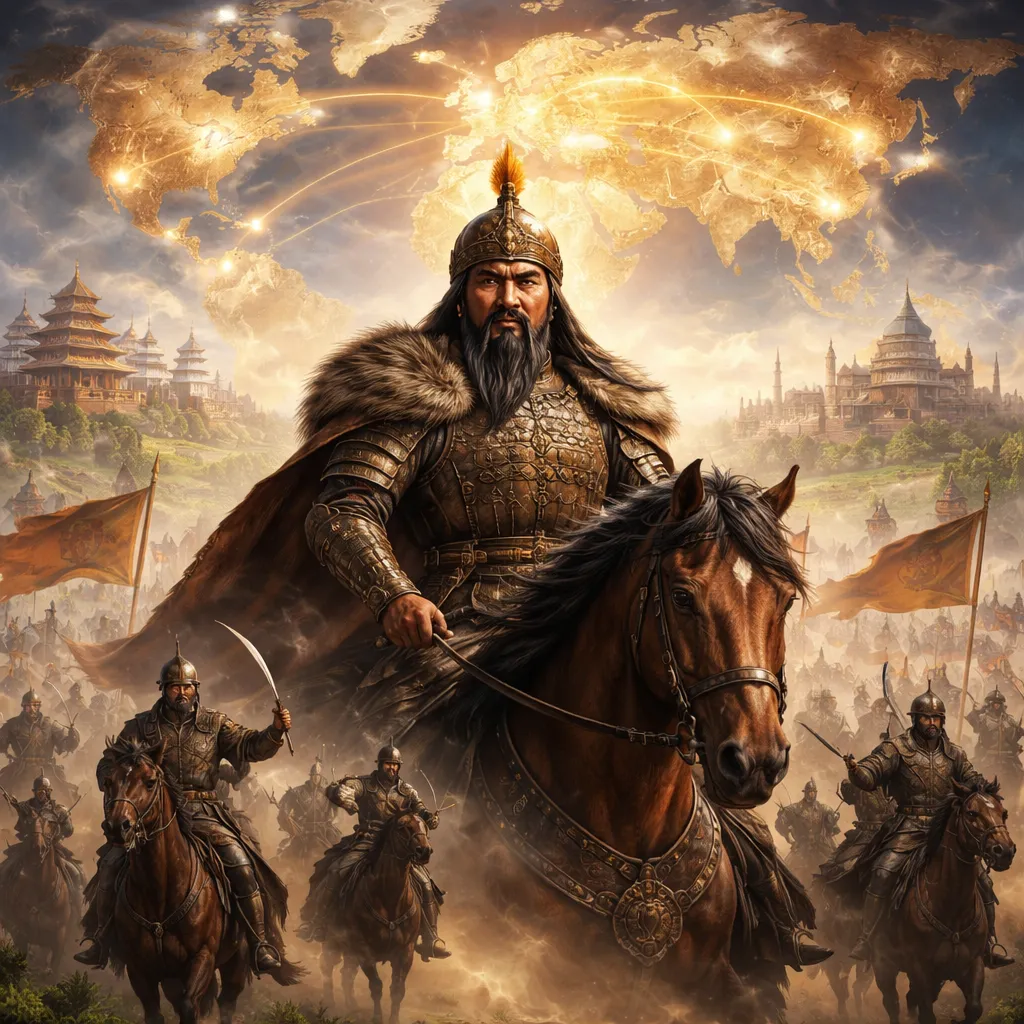

Introduction to Genghis Khan
Genghis Khan, born as Temujin in the 12th century, was a Mongolian warrior, military leader, and founder of the Mongol Empire. His rise from humble beginnings to become one of the most powerful rulers in history is a story of resilience, ambition, and strategic brilliance. Genghis Khan’s influence is still felt today, not just in Mongolia but around the world. His ability to unite disparate tribes and create an empire that spanned much of Asia and Europe is a remarkable achievement that continues to inspire and intrigue people of all ages.
For children and parents, Genghis Khan's life offers valuable lessons on leadership, persistence, and the importance of strategic thinking. Despite his reputation as a conqueror, his leadership style also focused on merit, loyalty, and innovation. His story teaches us the importance of perseverance, thinking ahead, and believing in oneself, no matter the circumstances.
Early Life and Background
Temujin was born in 1162 in the Mongolian steppes, a harsh and unforgiving environment. His father, Yesügei, was a tribal chief, but he was poisoned when Temujin was just nine years old. This event left Temujin and his family vulnerable to attacks from rival tribes. His early years were marked by hardship as his family struggled to survive in the wilderness.
Despite the challenges, Temujin showed early signs of leadership. He was determined to unite the Mongol tribes, a task that seemed nearly impossible at the time. From a young age, he learned the value of loyalty and resourcefulness. His time spent in the wilderness, enduring hardships with his family, shaped his character and laid the foundation for his future accomplishments.
Temujin’s early years were also influenced by the people around him. His mother, who played a key role in his upbringing, was a strong and wise figure who taught him how to survive and lead. Temujin was particularly influenced by the teachings of his childhood friend, Jamukha, who would later become one of his rivals. This relationship taught him the importance of alliances and the complexities of leadership.
Career Highlights and Achievements
Genghis Khan’s career is defined by his military conquests and the establishment of the Mongol Empire. After years of fighting and overcoming internal tribal rivalries, Temujin finally united the Mongol tribes in 1206 and was given the title Genghis Khan, meaning "Universal Ruler." This was the turning point that marked the beginning of his extraordinary military campaigns.
One of Genghis Khan’s greatest achievements was his ability to unite the Mongol tribes, which had been fragmented and in constant conflict for centuries. Through a combination of diplomacy, alliances, and military force, he brought together these tribes under his leadership, creating a unified Mongol nation.
Genghis Khan then set his sights on expanding his empire. His military campaigns were both strategic and brutal, using innovative tactics that revolutionized warfare. He defeated the Jin Dynasty in northern China, the Khwarezmian Empire in Central Asia, and many other powerful states. By the time of his death in 1227, the Mongol Empire had become the largest contiguous empire in history, stretching from the Pacific Ocean to Eastern Europe.
His achievements were not only military. Genghis Khan implemented a system of laws, known as the Yassa, which governed the behavior of his empire’s people. He encouraged trade, communication, and cultural exchange across his vast empire, which helped foster economic growth and cultural integration.
Famous Works or Performances
Although Genghis Khan did not leave behind traditional works such as books or artistic performances, his greatest contribution to history is his strategic and military expertise, particularly as detailed in his military campaigns. The conquest of China, Central Asia, and parts of Europe showcased his brilliance in military strategy and leadership.
One of his most notable accomplishments was the creation of an organized and efficient military system. Genghis Khan organized his troops into units called "tumen," each consisting of 10,000 soldiers. These units were further divided into smaller groups, making the Mongol army incredibly agile and efficient. His military innovations, such as the use of cavalry and psychological warfare, gave him a significant advantage over his enemies.
Genghis Khan’s empire also promoted cultural exchange and trade. The famous Silk Road, which ran through the Mongol Empire, flourished under his rule. This allowed goods, ideas, and technologies to be exchanged between the East and West, helping to connect different cultures and civilizations.
Personal Life and Fun Facts
Genghis Khan’s personal life was as remarkable as his career. He had several wives, the most famous of whom was Borte, who played a significant role in his early life and helped him establish alliances with other tribes. Genghis Khan also had many children, and his descendants would go on to rule large parts of Asia and Europe for generations.
One fun fact about Genghis Khan is his belief in meritocracy. Unlike many rulers of his time, who favored their own family members and aristocracy, Genghis Khan promoted individuals based on their abilities and loyalty. This helped him build a strong and capable leadership team that contributed to his empire’s success.
Another interesting aspect of Genghis Khan’s life is his commitment to religious tolerance. Despite his military conquests, he allowed the people he conquered to continue practicing their own religions. This made his empire a melting pot of different cultures and belief systems.
Despite his fearsome reputation, Genghis Khan was also known for his respect for skilled individuals. He valued knowledge and science, and he invited scholars, engineers, and craftsmen to his court, encouraging innovation and intellectual exchange.
Legacy and Influence
The legacy of Genghis Khan is immense. The Mongol Empire he created changed the course of history, reshaping the political and cultural landscape of Asia, the Middle East, and Europe. His descendants, including Kublai Khan, continued his legacy by expanding the empire even further.
One of Genghis Khan’s most significant contributions was his ability to unite disparate cultures and peoples. His empire was a melting pot of various cultures, languages, and religions, which created an environment of cultural exchange. This helped spread ideas, technology, and art across vast distances.
Genghis Khan’s military tactics and leadership strategies continue to influence modern military theory. His use of speed, psychological warfare, and strategic alliances set the foundation for modern warfare strategies. His ability to adapt to different environments and challenges is a lesson in leadership that is still relevant today.
Genghis Khan also played a key role in the development of trade routes across Asia. The Silk Road flourished under his rule, allowing for the exchange of goods and ideas between the East and West. This not only boosted the economy but also fostered cultural understanding between different civilizations.
Quotes or Famous Sayings
While there are no known records of Genghis Khan’s specific sayings, there are many quotes attributed to him that reflect his philosophy and approach to leadership. Some of the most famous include:
"It is not strength, but perseverance, that conquers." "A leader who does not listen is not a true leader." "If you’re afraid – don’t do it, if you do it – don’t be afraid."
These quotes highlight Genghis Khan’s emphasis on persistence, leadership, and courage. They serve as powerful reminders that true leadership requires listening, adaptability, and the courage to face challenges head-on.
How to Learn from Genghis Khan
Genghis Khan’s life offers many valuable lessons, especially for young people aspiring to be leaders. His story teaches us the importance of resilience, strategic thinking, and the ability to learn from failure.
For children, Genghis Khan’s life can serve as an example of how determination and clever strategies can help overcome even the greatest challenges. His ability to rise from difficult circumstances, unite people, and lead with intelligence and strength is an inspiring story for anyone facing obstacles.
Parents can use Genghis Khan’s principles to teach their children the value of perseverance and adaptability. His life demonstrates that success often comes from understanding the situation, being flexible, and working hard toward your goals. Leadership is about more than just giving orders — it’s about understanding others, building relationships, and making thoughtful decisions.
Through his story, children can learn that success comes not just from strength, but from patience, cleverness, and the ability to bring people together for a common purpose. Genghis Khan’s legacy encourages us all to think big, act wisely, and never give up, no matter what challenges we face.