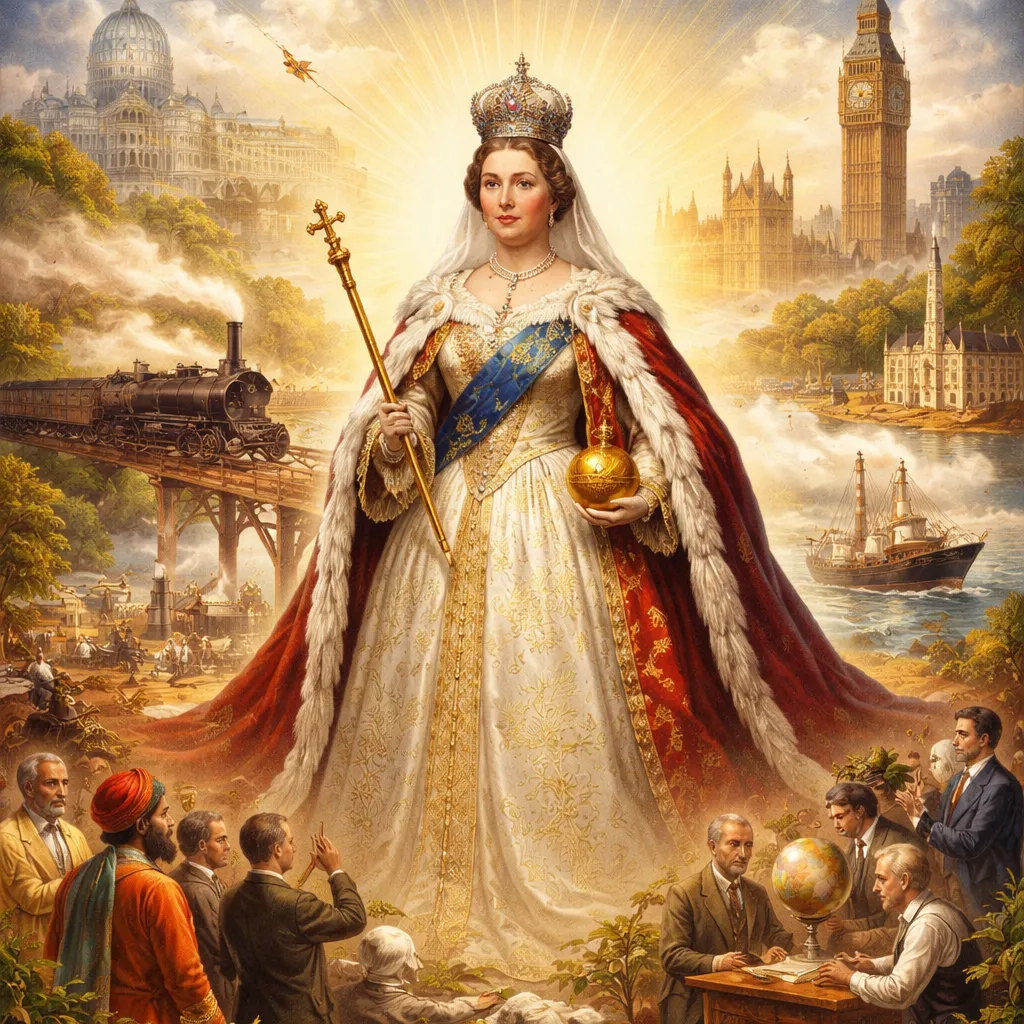

Introduction to Queen Victoria
Queen Victoria, born in 1819, was the longest-reigning monarch in British history until Queen Elizabeth II surpassed her in 2015. As the Queen of the United Kingdom from 1837 to 1901, her reign is known as the Victorian Era, a period of great change and expansion for both Britain and the world. Under her leadership, Britain experienced unprecedented growth in industry, empire, and cultural achievements.
Queen Victoria was not only a monarch but also a symbol of stability, progress, and a moral backbone during an era of rapid transformation. She steered the British Empire through many challenges, including political reforms, the rise of industrialization, and the expansion of the empire across the globe. Queen Victoria’s influence extends far beyond her reign, as she remains an important figure in the history of the British monarchy and a key player in shaping the modern world.
Understanding Queen Victoria's life offers insight into how personal strength, determination, and leadership can make a significant impact on a country and its people. Her legacy continues to inspire leaders and individuals today.
Early Life and Background
Queen Victoria was born on May 24, 1819, at Kensington Palace in London. Her full name was Alexandrina Victoria, and she was the only child of Prince Edward, Duke of Kent, and Princess Victoria of Saxe-Coburg-Saalfeld. Victoria's early life was marked by instability, as her father died when she was just eight months old. This left her mother as her primary caretaker, and they lived a relatively secluded life away from the bustling royal court.
As the only child of the Duke of Kent, Victoria became the heir to the British throne, but her path to the crown was not certain. Her cousin, Prince George, the Prince Regent, was the first in line, but Victoria's ascent was secured after his death, and she succeeded him to the throne at the age of 18 in 1837.
Despite her royal birth, Victoria's upbringing was quite humble in comparison to other monarchs of her time. She was educated privately, under the guidance of her mother and various tutors, who instilled in her a strong sense of duty and moral responsibility. Victoria developed a keen interest in history, politics, and philosophy, and she was particularly passionate about art, literature, and music.
The early years of her life prepared her for the heavy responsibilities she would face as queen. Although she grew up under the watchful eye of her mother, Queen Victoria soon became an independent and assertive ruler, willing to stand firm in her beliefs and decisions. Her determination and intelligence were evident from an early age, and these qualities helped her navigate the complexities of ruling a vast empire.
Career Highlights and Achievements
Queen Victoria’s reign is often seen as a time of great transformation for both the British monarchy and the world. Under her leadership, Britain became the world’s most powerful empire, with colonies spread across Africa, Asia, and the Americas. The period of her reign, known as the Victorian Era, was one of the most prosperous times in British history.
One of Queen Victoria’s major accomplishments was her role in leading Britain through the Industrial Revolution. This was a period of rapid industrialization and innovation, and Queen Victoria supported many of the advances in science, technology, and engineering. During her reign, Britain saw the invention of the steam engine, the development of railroads, and the expansion of factories, which transformed the economy and society.
Victoria also oversaw significant political and social reforms. She supported the abolition of slavery throughout the British Empire, a cause that gained significant momentum during her reign. Her leadership in the expansion of civil rights and education helped modernize Britain and made it more democratic and inclusive.
Queen Victoria was also known for her strong personal character and sense of morality. Her belief in duty and devotion to family and country became key features of her leadership style. She was not just a figurehead but a monarch who was actively involved in the governance of the empire. Throughout her reign, Victoria remained a beloved figure, widely respected for her determination, wisdom, and compassion.
Famous Works or Performances
Although Queen Victoria was not known for artistic endeavors in the traditional sense, her reign saw the rise of many important cultural and artistic achievements. The Victorian Era is famous for its literature, music, and visual arts, all of which were heavily influenced by the period’s political and social climate.
One of the most prominent writers of the era was Charles Dickens, whose works, such as A Tale of Two Cities and Oliver Twist, continue to be revered for their social commentary. Victorian literature explored themes of morality, industrialization, and class struggles, and many of these works were inspired by the changes taking place during Queen Victoria’s reign.
Music and art also flourished during this time. The Victorian Era saw the rise of classical composers such as Edward Elgar and Sir Arthur Sullivan, whose compositions are still beloved today. The period also saw the growth of the Pre-Raphaelite Brotherhood, an artistic movement that sought to return to the detailed and vibrant styles of the past.
Queen Victoria herself was a patron of the arts and a lover of literature and music. She encouraged the growth of these cultural pursuits, and her personal interest in art and culture helped to foster a flourishing creative atmosphere in Britain.
Personal Life and Fun Facts
Queen Victoria's personal life is as fascinating as her public achievements. In 1840, at the age of 20, she married Prince Albert of Saxe-Coburg and Gotha, her cousin, and the love between them was deep and sincere. Their marriage was a true partnership, with Albert playing a significant role in advising the queen and helping to shape the direction of her reign. The couple had nine children together, and their family became known as the "family of Europe" due to their many royal connections across the continent.
Queen Victoria was also known for her sense of humor and warmth, which was often hidden behind the formal image of the monarchy. She was a devoted wife and mother, and her letters and diaries provide insight into her personal thoughts and feelings. Victoria’s relationship with her children was particularly close, and she often relied on them for emotional support throughout her reign.
Despite her many responsibilities, Queen Victoria enjoyed a wide range of hobbies, including drawing, reading, and taking long walks in the countryside. She also had a deep appreciation for nature and often spent time at her various royal residences, including Windsor Castle and Osborne House on the Isle of Wight.
Queen Victoria's image as a solemn and reserved monarch was complemented by her personal devotion to her family and her deep love for Prince Albert, who passed away in 1861. His death profoundly affected Victoria, and she wore black for the rest of her life as a sign of her mourning.
Legacy and Influence
Queen Victoria's legacy is immense, and her influence continues to be felt today. Under her leadership, the British Empire expanded to become the largest empire the world had ever seen, stretching across continents and oceans. Her reign oversaw the development of a modern, industrialized Britain, and she played a key role in shaping the values and priorities of the British people.
The social and political reforms of the Victorian Era laid the foundation for many of the rights and freedoms enjoyed by people today. Queen Victoria's support for education, civil rights, and the abolition of slavery helped to shape the modern world and bring about lasting change.
Her image as a devoted monarch, dedicated to her family and her country, has made her a lasting symbol of strength and leadership. Today, Queen Victoria’s legacy is celebrated through numerous monuments, books, films, and other forms of media that continue to honor her impact on history.
Quotes or Famous Sayings
Queen Victoria was known for her wit and wisdom, and many of her sayings have become famous. One of her most iconic quotes is:
"We are not interested in the possibilities of defeat. They do not exist."
This quote exemplifies Queen Victoria's determination and her refusal to entertain the idea of failure. It reflects her steadfastness in both her personal and public life.
Another memorable quote is:
"I am very small, but I am the Queen of a mighty people."
This quote reflects her awareness of her position and the immense responsibility that came with it, even though she often felt burdened by the challenges of leadership.
How to Learn from Queen Victoria
Queen Victoria’s life teaches us many valuable lessons about leadership, perseverance, and the importance of duty. Despite facing personal loss and the challenges of ruling a vast empire, Victoria remained steadfast in her commitment to her role. Her ability to balance family life with her responsibilities as queen offers an example of how to manage both personal and professional challenges with grace and determination.
Queen Victoria’s belief in the importance of education, morality, and public service can inspire young people today to pursue their passions while contributing to society. Her life also demonstrates the value of collaboration and mutual respect, as seen in her close partnership with Prince Albert, which helped her rule effectively.
Queen Victoria’s legacy is a powerful reminder that leadership is about more than power; it is about making a lasting impact on the world and leaving behind a positive influence for future generations.