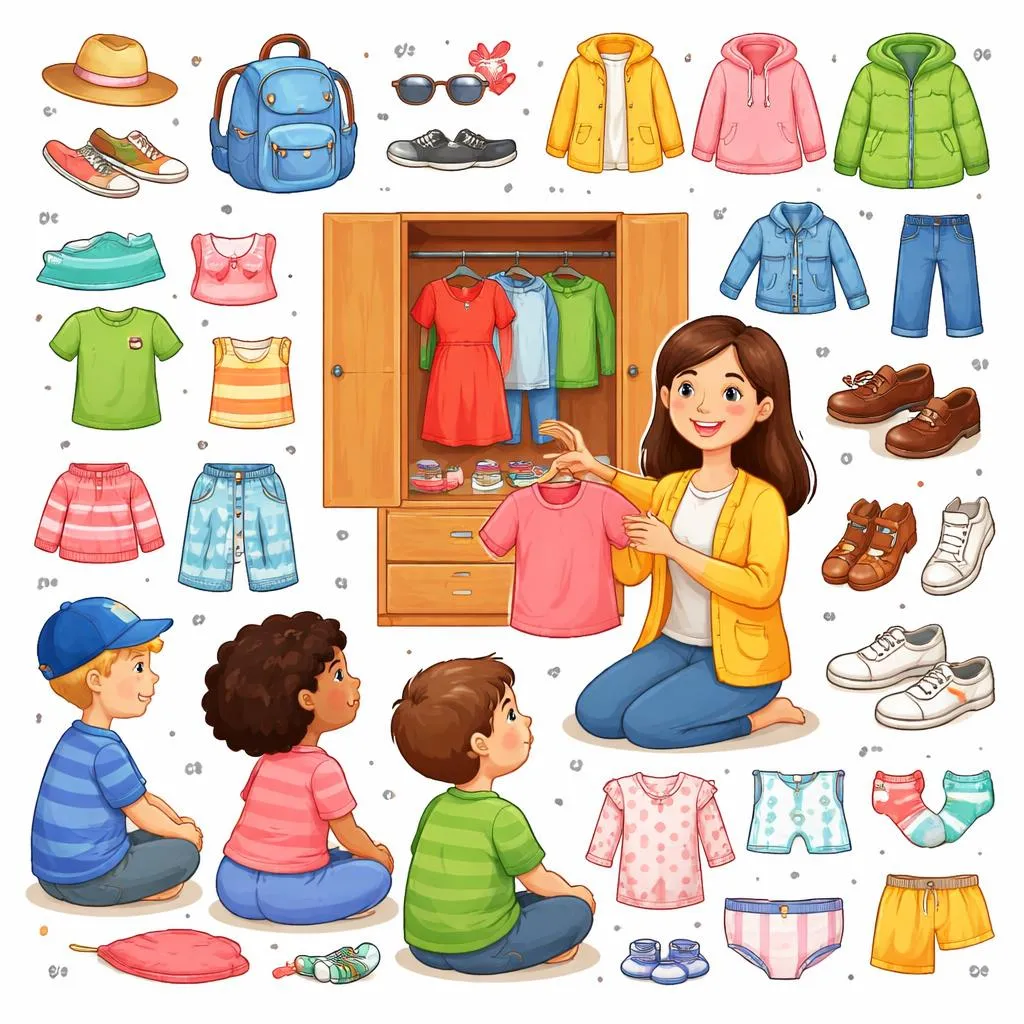

Clothes Vocabulary as an Everyday Learning Topic
Clothes appear in daily life from morning to night. Getting dressed, talking about the weather, or preparing for school all involve clothing words. Because of this, clothes vocabulary becomes one of the most practical and familiar topics in early English learning.
From a teacher’s point of view, clothing words feel comforting and concrete. These words connect language to real objects that can be touched, worn, and seen. This article explores clothes vocabulary in a clear and friendly way, guiding learning step by step with simple language and real-life connections.
What Is Clothes Vocabulary?
Clothes vocabulary includes words used to name items people wear. These words describe shirts, pants, shoes, and many other items.
Clothing words also describe accessories, materials, and seasonal wear.
Learning clothes vocabulary helps describe daily routines and personal needs. Language becomes useful right away.
Meaning and Explanation of Clothes Vocabulary
The word “clothes” refers to items worn on the body. Clothes protect, keep warm, and express style.
Vocabulary means words and their meanings.
Together, clothes vocabulary means the English words used to talk about what people wear.
Understanding these words helps with communication in simple, meaningful ways.
Basic Clothes Vocabulary for Everyday Use
Some clothing words appear very early in learning.
Shirt, pants, dress, and shoes often come first.
These words describe items worn almost every day.
Using familiar items supports quick understanding and confidence.
Clothes Vocabulary by Category
Grouping words helps organization and memory.
Some words describe tops like shirts and sweaters.
Some words describe bottoms like pants and shorts.
Some words describe footwear like shoes and socks.
Categories help learners see patterns and relationships.
Tops and Upper Body Clothing
Upper body clothes cover the top part of the body.
Shirt is one of the most common words.
T-shirt, sweater, jacket, and coat appear often.
These words connect strongly to weather and seasons.
Bottoms and Lower Body Clothing
Lower body clothes include pants, shorts, skirts, and jeans.
These words appear in daily routines like getting dressed.
Talking about clothes choices becomes easier with these words.
Simple sentences help practice naturally.
Footwear Vocabulary
Footwear words describe items worn on the feet.
Shoes and socks often appear first.
Boots, sandals, and sneakers add variety.
Footwear vocabulary often connects to activities and weather.
Accessories in Clothes Vocabulary
Accessories add detail to clothing.
Hat, scarf, gloves, and belt appear often.
Accessories connect to seasons and style.
These words add richness to language.
Seasonal Clothes Vocabulary
Clothes change with the weather.
In winter, coat, hat, and gloves appear.
In summer, shorts, T-shirt, and sandals appear.
Seasonal words connect language to real-life experience.
Clothes Vocabulary for Different Weather
Weather and clothes work together.
Rain brings raincoat and boots.
Cold brings sweater and jacket.
Sunny days bring hat and light clothes.
These connections make vocabulary meaningful.
Daily Life Examples Using Clothes Vocabulary
Clothing words appear in daily conversation.
“Put on your shoes.” “The jacket is blue.” “This shirt feels warm.”
Simple sentences connect words with actions.
Daily use supports strong memory.
Describing Clothes With Adjectives
Clothes vocabulary grows with describing words.
Colors like red, blue, and green appear often.
Size words like big and small add detail.
Texture words like soft and warm add feeling.
Description makes language more expressive.
Clothes Vocabulary and Colors
Color words pair well with clothing words.
“Red dress” and “blue shirt” feel natural.
This pairing supports both vocabulary topics at once.
Learning becomes efficient and connected.
Clothes Vocabulary and Size Words
Size words help describe fit.
Big, small, long, and short appear often.
“These pants are long.” “The shirt is small.”
These phrases support clear communication.
Grammar Patterns With Clothes Vocabulary
Clothes words appear with simple grammar.
“This is my hat.” “These are my shoes.”
Singular and plural forms appear naturally.
Grammar grows through use, not explanation.
Singular and Plural Clothing Words
Some clothes words are singular.
A shirt, a hat, a coat.
Some clothes words are plural.
Pants, shorts, shoes.
Learning these forms supports sentence accuracy.
Clothes Vocabulary in Simple Questions
Questions help practice.
“What is this?” “What are you wearing?” “Where is your jacket?”
These questions appear in daily interaction.
Question forms build communication skills.
Learning Clothes Vocabulary Through Stories
Stories often include clothing descriptions.
Characters wear different outfits.
Pictures support understanding.
Stories make vocabulary memorable.
Songs and Chants About Clothes
Songs support repetition and rhythm.
Simple clothes songs name items one by one.
Melody helps words stay longer in memory.
Music adds joy to learning.
Using Real Clothes in Learning
Real objects support clear understanding.
Pointing to a shirt or shoe connects word and object.
Trying on clothes adds movement and fun.
Hands-on learning builds strong connections.
Printable Flashcards for Clothes Vocabulary
Flashcards support visual learning.
Each card shows one clothing item.
Clear pictures support recognition.
Flashcards work well for review and games.
Learning Activities With Clothes Vocabulary
Drawing outfits supports creativity.
Coloring clothes connects art and language.
Matching pictures to words builds recognition.
Activities keep learning active and calm.
Educational Games Using Clothes Vocabulary
Games add motivation.
A matching game connects clothes with seasons.
A guessing game describes clothes and names them.
Games support focus and enjoyment.
Clothes Vocabulary and Personal Expression
Clothes express personality and mood.
Talking about favorite clothes feels meaningful.
Language connects with identity.
Expression supports confidence.
Supporting Parents and Teachers With Clothes Vocabulary
Clothes vocabulary fits daily routines.
Talking about clothes during dressing time feels natural.
Repetition during real moments builds memory.
Consistency supports learning more than speed.
Building Confidence Through Familiar Topics
Familiar topics reduce stress.
Clothes feel safe and known.
Confidence grows through success.
Success encourages more language use.
Expanding Clothes Vocabulary Over Time
After basic words feel comfortable, new ones appear.
Uniforms, pajamas, costumes add variety.
Learning grows gradually.
Each new word connects to known ones.
Clothes Vocabulary Across Cultures
Clothing styles differ across cultures.
Talking about clothes introduces cultural awareness.
Respect and curiosity grow through discussion.
Language learning becomes broader.
Clothes Vocabulary as a Foundation for Daily English
Clothes vocabulary supports everyday communication in a clear and practical way. These words connect language with routine, comfort, and personal expression.
Through categories, daily examples, activities, and gentle repetition, clothing words become familiar and useful. Learning flows naturally as clothes vocabulary becomes part of daily English, supporting confidence, clarity, and meaningful communication.