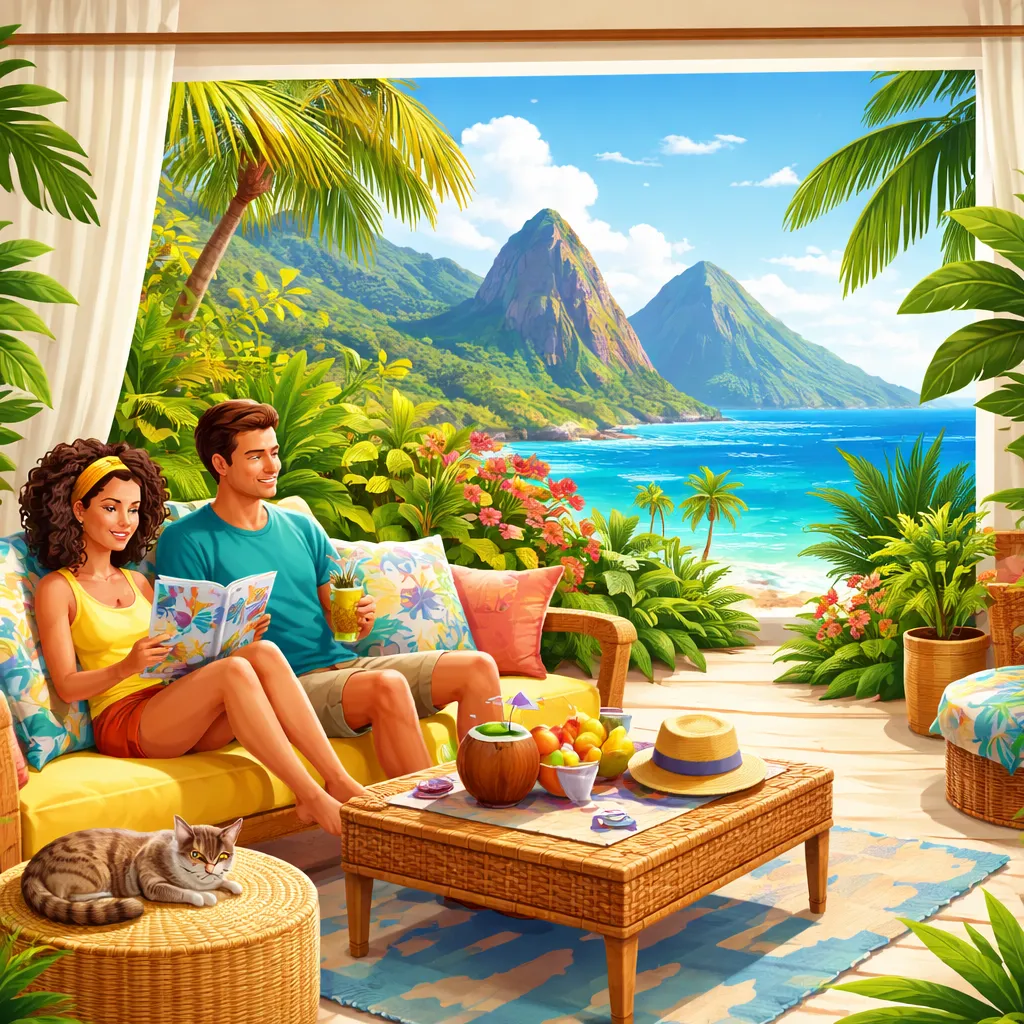

Introduction to Saint Lucia Saint Lucia is a beautiful island in the Caribbean Sea. It is not a large island. But it holds many wonders. Children there learn English as their first language. They also speak a French-based Creole at home. Language learning reading: Saint Lucia gives your child a chance to explore two languages at once. Kids on this island read stories about volcanoes and rainforests. They also tell tales about pirates and glowing seas. Reading about Saint Lucia feels like a warm breeze. Your child can visit this tropical paradise from a cozy chair. Every new word opens a door to adventure. Let us walk through that door together.
Where Is Saint Lucia? Saint Lucia sits between Martinique and Saint Vincent. You find it in the eastern Caribbean Sea. This region is called the Lesser Antilles. The Atlantic Ocean lies to the east. The Caribbean Sea lies to the west. The capital city is Castries. Castries has a beautiful natural harbor. Ships from all over the world visit this harbor. The whole island covers 617 square kilometers. That is about three times the size of Washington, D.C. But Saint Lucia feels much bigger. Tall mountains rise from the sea. Green rainforests cover the hills. Language learning reading: Saint Lucia becomes real when you find it on a map. Look for the chain of small islands in the Caribbean. Saint Lucia is one of them. Point to the island. Trace its shape with your finger. Then say the name together. “Saint Lu-ci-a.” Three syllables. Three small steps into a new world.
Interesting Facts About Saint Lucia Saint Lucia has many amazing facts. First, the island has two famous mountains. They look like cones. People call them the Pitons. The Pitons are a UNESCO World Heritage site. Second, Saint Lucia has a drive-in volcano. You can actually drive your car right up to the volcano. It is called Sulphur Springs. Third, the island grows bananas. Many families work on banana farms. Fourth, Saint Lucia has a magical place called the Toraille Waterfall. You can swim in the cool water. Fifth, the island has a glowing bay. Tiny living things in the water make light at night. This is called bioluminescence. Sixth, Saint Lucia has more Nobel Prize winners per person than any other country. Two winners came from this small island. Language learning reading: Saint Lucia teaches us words like “volcano,” “waterfall,” and “banana.” Each fact gives your child a new picture. Imagine a cone-shaped mountain. Imagine yellow bananas hanging in bunches. Imagine water that glows blue at night. These pictures make words stick. Parents can ask: “Would you swim in a glowing bay?” “What sound does a waterfall make?” Your child will giggle thinking about a drive-in volcano.
Key Vocabulary About Saint Lucia Let us learn six important words from Saint Lucia.
First is “Piton.” A Piton is a pointed mountain. Saint Lucia has two Pitons.
Second is “volcano.” A volcano is a mountain that can release hot steam. Sulphur Springs is a drive-in volcano.
Third is “banana.” A banana is a long yellow fruit. It grows in bunches on trees.
Fourth is “waterfall.” A waterfall is water that falls from a high place. Toraille Waterfall flows into a pool.
Fifth is “rainforest.” A rainforest is a thick forest with many trees and rain. Saint Lucia has large rainforests.
Sixth is “bioluminescence.” This is a long word. It means living things that make their own light.
Language learning reading: Saint Lucia gives you these six words. Write each word on a sticky note. Put the notes on your wall. Say each word every time you walk by. For Piton, draw two triangles. For volcano, draw steam coming from the top. For banana, draw a curved yellow shape. For waterfall, draw lines falling down. For rainforest, draw many green circles. For bioluminescence, draw tiny stars in blue water. Break the long word into parts. Bio-lumi-nes-cence. Say each part slowly. Then put them together. Your child will feel proud saying such a big word. Play a game. You say the definition. Your child says the word. “This is a pointed mountain.” “Piton!” Clap each time. Learning feels like playing.
The Famous People About Saint Lucia Two very famous people come from this small island. The first is Sir Derek Walcott. He wrote poetry and plays. He won the Nobel Prize in Literature in 1992. His words describe the beauty of the Caribbean. The second is Sir Arthur Lewis. He won the Nobel Prize in Economics in 1979. He studied how countries grow rich. These two men came from the same small island. That is very rare. No other country has so many Nobel winners per person. Other famous people include Joseph Marcell. He acted on a popular TV show called The Fresh Prince of Bel-Air. He played a butler named Geoffrey. There is also a singer named Taj Weekes. He sings reggae music about peace and love. Language learning reading: Saint Lucia shows that small places produce great minds. Say each name. “De-rek Wal-cott.” “Ar-thur Lew-is.” “Jo-seph Mar-cel.” “Taj Weekes.” Talk about what each person did. “What did Derek write?” “He wrote poems.” “What did Arthur study?” “He studied money and countries.” “What does Taj sing?” “He sings reggae.” Your child can dream about winning a prize someday. Maybe for writing. Maybe for science. Maybe for music. These famous people make the island shine brighter.
Simple Sentences for Reading Practice Here are easy sentences about Saint Lucia. Read each one aloud.
Saint Lucia has two famous mountains called the Pitons.
The capital city of Saint Lucia is Castries.
You can drive your car into the volcano at Sulphur Springs.
Bananas grow on tall trees across the island.
The Toraille Waterfall makes a loud splashing sound.
A rainforest feels wet and green.
At night, the bay glows blue with bioluminescence.
Sir Derek Walcott wrote beautiful poems.
Sir Arthur Lewis won a Nobel Prize for economics.
People on Saint Lucia speak English and Creole.
Language learning reading: Saint Lucia makes these sentences easy to remember. Read one sentence. Then your child draws it. For sentence three, draw a car going into a volcano. For sentence five, draw blue water falling down. For sentence seven, draw glowing stars in the water. For sentence ten, draw two talking faces. After drawing, ask your child to read the sentence again. The picture helps them remember the words. You can also make a game. Write each sentence on a strip of paper. Cut it into words. Mix the words up. Your child puts the sentence back together. This puzzle builds reading skills. Start with sentence one. It has nine words. That is a good challenge. When your child finishes, celebrate. “You rebuilt a whole sentence about the Pitons!”
Short Reading Passage About Saint Lucia Read this passage together. It uses all the words we learned.
Saint Lucia is a green island in the Caribbean Sea. Two tall mountains called the Pitons rise from the water. They look like giant green cones. People travel from far away to see them. The island also has a drive-in volcano. You take your car to Sulphur Springs. You see steam and smell the earth. Banana farms cover the hills. Farmers pick big bunches of yellow bananas. In the rainforest, you find the Toraille Waterfall. Cold water falls into a warm pool. Families swim there on hot days. At night, a special bay glows blue. Small living creatures make light in the dark. This is bioluminescence. Two Nobel Prize winners came from Saint Lucia. Sir Derek Walcott wrote poems about the sea. Sir Arthur Lewis studied how nations grow. People on the island speak English. They also speak a French Creole at home. Language learning reading: Saint Lucia invites you to explore. You can see volcanoes, waterfalls, and glowing water. You can taste sweet bananas. You can hear poems and reggae music. Now close your eyes. Imagine you stand at the bottom of a Piton. The mountain reaches for the clouds. What color is the sky? What do you feel on your skin?
This passage has 170 words. Read it one time for fun. Read it a second time to find your favorite part. Does your child like the glowing bay? Or the drive-in volcano? Or the poems? Ask them to point to their favorite sentence. Read that sentence again together. Then ask one simple question. “Why do you like that part?” There is no wrong answer. Maybe they like the blue light. Maybe they like the cold waterfall. Their answer tells you what excites them. Use that excitement tomorrow. Find a video of a glowing bay. Find a song about the ocean. Follow their joy.
Fun Questions About Saint Lucia Use these questions to talk about Saint Lucia.
Which would you rather climb: a Piton or a waterfall? Why?
Would you drive your car into a volcano? Why or why not?
What does a banana taste like when you pick it fresh?
How does a waterfall make you feel when you stand under it?
What would you do in a rainforest? Walk? Run? Sit quietly?
Have you ever seen water glow at night? What would you name that bay?
If you met Sir Derek Walcott, what would you ask him about his poems?
Why do you think so many smart people came from one small island?
Would you rather learn English or Creole first? Why?
Can you make a sound like a waterfall? Can you make a sound like a monkey in the rainforest?
Language learning reading: Saint Lucia turns every question into a story. Parents answer first. “I would climb the Piton because I want to see everything from the top.” Then your child answers. Let them use their imagination. If they say “I would swim in the volcano,” do not correct them. Say “That sounds exciting! What would you see there?” The goal is conversation, not accuracy. You can also act out the answers. Pretend to climb a mountain. Pretend to pick bananas. Pretend to swim in a glowing bay. Laugh together. Learning a language works best when you feel safe and happy. These questions create that safe space. Ask one question during breakfast. Ask another question on a walk. Keep Saint Lucia in your back pocket for quiet moments.
Tips for Learning English with This Topic Now let us bring Saint Lucia into your home. First, make a volcano in your kitchen. Use baking soda and vinegar. Watch it bubble. Say the word “erupt” as it bubbles. Second, eat a banana together. Before you peel it, say “banana” three times. Then describe how it tastes. “Sweet.” “Soft.” “Yellow.” Third, make a waterfall sound. Cup your hands. Pour water from one hand to the other. Say “waterfall” as the water falls. Fourth, draw the Pitons at sunset. Use orange and purple crayons. Label your drawing. “The Pitons are tall.” Fifth, listen to reggae music from the Caribbean. Dance slowly. Say the word “rhythm” as you move. Sixth, write a short poem like Sir Derek Walcott. Start with “I see a blue bay.” Then add one line each day. “I see a green mountain.” “I hear a soft wave.” Language learning reading: Saint Lucia gives you these six tips. Do one tip each day. Repeat your child’s favorite tip again next week. Learning English is not a race. It is a slow walk through a rainforest. You stop to look at leaves. You stop to hear birds. You stop to feel the warm rain. That is how you learn. That is how you remember.
Your child will remember Saint Lucia. They will remember the Pitons and the glowing bay and the banana farms. But most of all, they will remember reading with you. That quiet time together builds a bridge between your hearts. So keep this article nearby. Read one sentence tonight. Ask one question tomorrow. Do one tip this weekend. Saint Lucia is not far away. It lives in your living room every time you open a book. Open it now. The adventure waits.