
Are Similar Words Really Interchangeable?
Many English words look similar. Some even share close meanings. This can confuse young learners. Parents may also wonder how to explain these differences clearly.
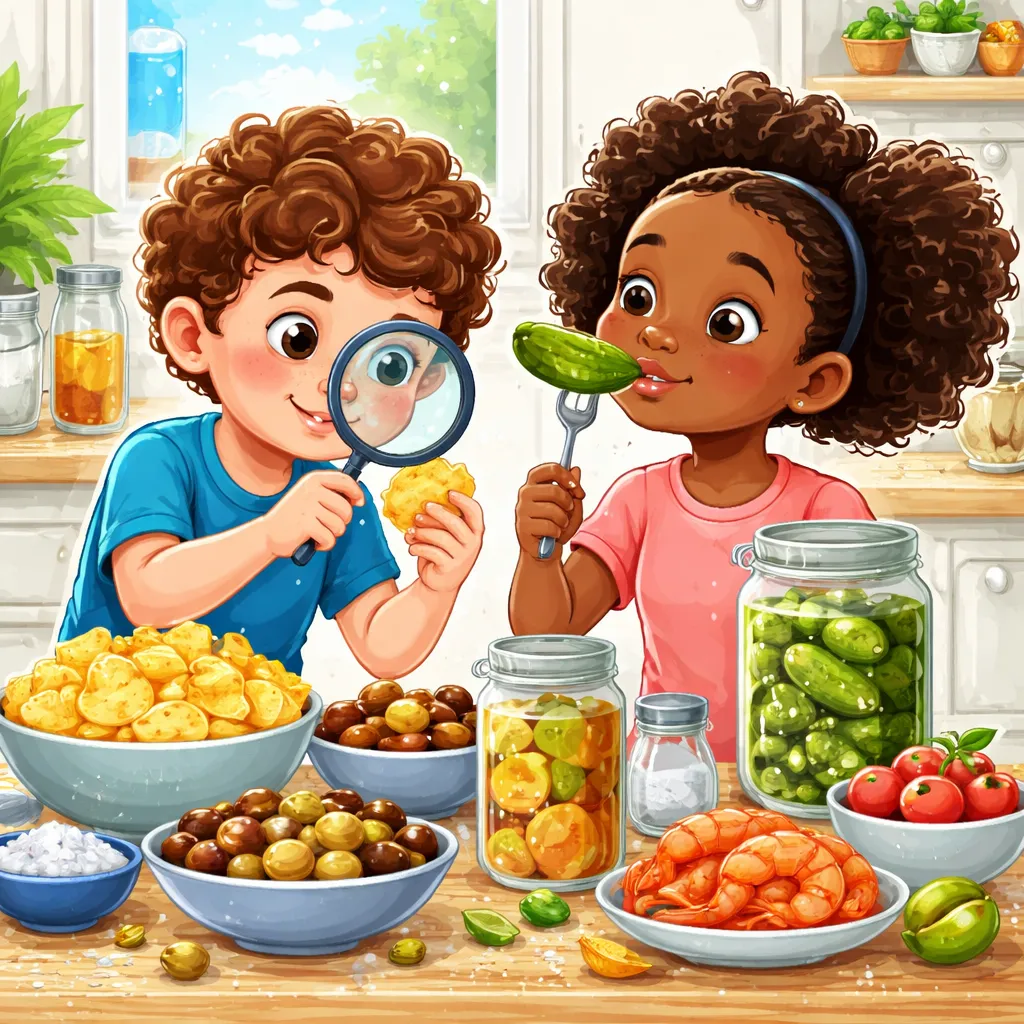
The pair salty and briny often appears in food descriptions. Both relate to salt. Both describe taste. Yet they are not always the same.
Understanding small differences helps children grow their vocabulary. It also builds confidence in reading and speaking. When children know when to use salty and briny, they express ideas more clearly.
This article guides both parents and children. It explores how these two words work in real life. Step by step, the differences become easier to understand.
Set 1: salty vs briny — Which One Is More Common?
The word salty is very common. Children hear it early. It appears in daily life. For example, snacks like chips or fries taste salty.
Parents often use it at home. “This soup is too salty.” Children quickly connect the word with salt taste.
Briny is less common. It appears more in books or food writing. People use it when talking about the ocean or seafood.
For example, oysters have a briny taste. Sea air may also smell briny.
Because salty appears more often, children learn it first. It feels simple and direct. Briny comes later. It adds detail and richness to language.
Set 2: salty vs briny — Same Meaning, Different Contexts
Both words relate to salt. But they appear in different situations.
Salty describes food with added salt. It works for snacks, soups, or sauces. It often points to human cooking.
Example: “These fries are salty.” “The popcorn tastes salty.”
Briny connects to natural salt. It often refers to seawater. It also describes seafood flavors.
Example: “The oysters taste briny.” “The wind feels briny near the sea.”
So, the difference lies in context. Salty fits everyday food. Briny fits ocean-related experiences.
This helps children learn that meaning depends on situation.
Set 3: salty vs briny — Which Word Is “Bigger” or More Emphatic?
Some words feel stronger. Some carry more detail.
Salty is simple. It tells us something has salt. It does not add much extra meaning.
Briny feels richer. It suggests not just salt, but the sea. It can include smell, air, and feeling.
When someone says “briny,” they paint a picture. The listener may imagine waves, shells, or ocean breeze.
So, briny is more descriptive. It carries a bigger idea. Salty stays basic and clear.
This helps children understand how words can grow in depth.
Set 4: salty vs briny — Concrete vs Abstract
Salty is concrete. Children can taste it easily. They can connect it to real food right away.
They eat chips. They taste salt. The learning feels direct.
Briny is more abstract. It may describe taste, smell, or atmosphere. It often connects to places children may not visit often.
For example, a child may not eat oysters. They may not visit the ocean often. So briny becomes a more imaginative word.
This shows how vocabulary moves from simple to complex. Children first learn concrete words. Then they explore abstract ones.
Set 5: salty vs briny — Verb or Noun? First Understand the Role
Both salty and briny are adjectives. They describe things.
Example: “Salty soup” “Briny water”
They do not act as verbs. They do not show action. They also do not work as nouns.
This makes them easier to learn. Children only need to remember one role. They describe taste or smell.
However, they connect to nouns. For example: Salt → salty Brine → briny
This connection helps children build word families. It supports vocabulary growth.
Set 6: salty vs briny — American English vs British English
Both words appear in American and British English. There is no spelling difference.
However, usage patterns may vary.
Salty appears often in both regions. It remains a daily word.
Briny may appear more in descriptive writing. It shows up in travel books or food reviews.
In both regions, the meaning stays the same. So children can use these words confidently anywhere.
This consistency helps learners feel secure.
Set 7: salty vs briny — Which Fits Formal Situations?
Salty fits informal and formal situations. It works in everyday speech and writing.
Example: “The dish is too salty.” This sentence works in school or at home.
Briny sounds more formal or literary. Writers often use it in detailed descriptions.
Example: “The soup carries a briny flavor.” This sounds more polished.
So, briny adds sophistication. It works well in essays or creative writing.
Teaching this difference helps children adjust their tone. They learn to choose words based on context.
Set 8: salty vs briny — Which One Is Easier for Kids to Remember?
Salty is easier. It is short. It connects directly to salt. Children can taste it and remember it.
The spelling is simple. The meaning is clear.
Briny takes more effort. Children must understand “brine,” which means salt water. This adds one more step.
However, briny becomes memorable through stories. When children imagine the ocean, they remember the word.
Parents can use pictures or real-life experiences. A beach trip can make the word stick.
So both words are useful. One is simple. The other is imaginative.
Mini Exercise: Can You Spot the Differences Between These Similar Words?
Try these simple exercises together.
Choose the correct word:
The chips taste very ______. (salty / briny) The ocean air feels ______. (salty / briny) This soup is too ______ for me. (salty / briny) The oysters have a ______ flavor. (salty / briny)
Answers:
salty briny salty briny
Now try creating your own sentences. This builds confidence and memory.
Parent Tips: How to Help Kids Learn and Remember Similar Words
Start with real experiences. Food works well. Let children taste something salty. Ask them to describe it.
Use pictures or videos of the ocean. Introduce the word briny in a calm way.
Repeat words naturally. Do not force memorization. Let children hear the words in daily life.
Encourage storytelling. Ask children to imagine a beach. What does the air smell like? Guide them to use briny.
Keep sentences short. Clear examples help children understand faster.
Praise effort, not perfection. Learning vocabulary takes time. Small steps lead to strong language skills.
Building vocabulary through pairs like salty and briny helps children notice details. It also supports reading and writing growth. Over time, these small differences create strong communication skills.