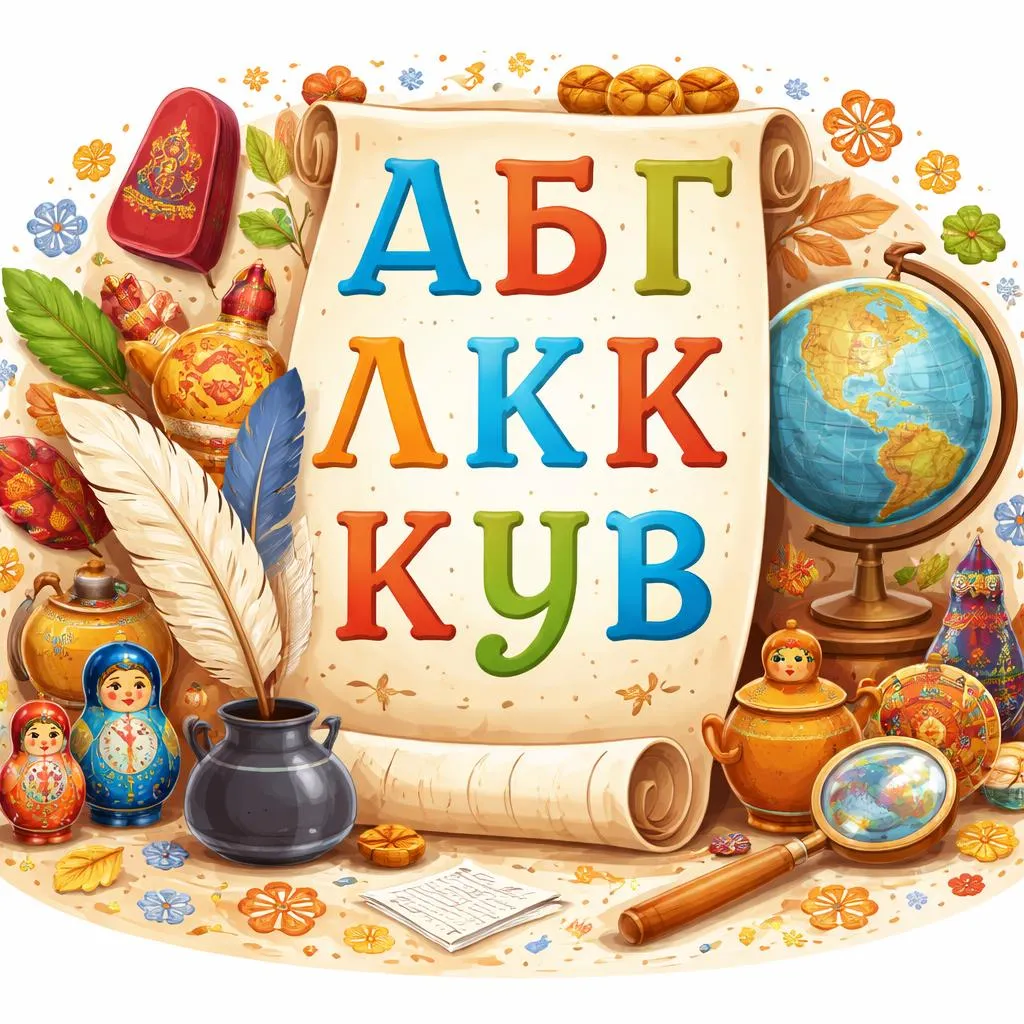

What Is the Cyrillic Alphabet? The Cyrillic alphabet is a writing system used by many languages, most famously Russian, but also other Slavic languages, such as Ukrainian, Bulgarian, and Serbian, as well as some non-Slavic languages, including Tajik, Kyrgyz, and even Mongolian. The Cyrillic script was developed in the 9th century and has since evolved into the script used in many languages today. The Cyrillic alphabet was created by Saints Cyril and Methodius, two Byzantine missionaries, to help spread Christianity and translate religious texts into Slavic languages. Their alphabet, which was originally based on the Greek alphabet, evolved over time to include additional letters to represent sounds unique to Slavic languages. Today, the Cyrillic alphabet is used by hundreds of millions of people worldwide, particularly in Eastern Europe and Central Asia. It is an important part of the history and culture of many countries, and understanding the alphabet is the first step in learning to read and write in these languages.
The History of the Cyrillic Alphabet The Cyrillic alphabet has an interesting history that begins in the 9th century. The two Byzantine missionaries, Cyril and Methodius, sought to make the Bible and religious texts accessible to the Slavic peoples in their native languages. Before that, many Slavic people could only understand Greek and Latin, which were the dominant languages of the Christian church. To help with this, Cyril and Methodius created a new alphabet that was based on the Greek alphabet but adapted to the sounds of the Slavic languages. This new writing system allowed the Slavic people to learn to read the Bible and other religious texts in their own language. Over the centuries, the Cyrillic alphabet underwent many changes. New letters were added to represent sounds that were unique to the Slavic languages. These changes helped the alphabet evolve into the form we recognize today. In the 18th century, the Russian emperor Peter the Great introduced a major reform of the Cyrillic alphabet, simplifying the script and making it more uniform across the Russian Empire. This helped standardize the alphabet and made it easier for people in different regions of Russia to read and write. Today, the Cyrillic alphabet is used not only in Russia but also in many countries that were once part of the Soviet Union, as well as in other parts of Eastern Europe and Central Asia.
The Letters of the Cyrillic Alphabet The Cyrillic alphabet has 33 letters in the Russian language, but this number can vary in other languages that use the script. Some Cyrillic letters are similar to those in the Latin alphabet, while others are completely different. Let’s take a look at the letters of the Russian Cyrillic alphabet and how they compare to the Latin alphabet.
- Letters That Are the Same as in Latin Some letters in the Cyrillic alphabet look identical to those in the Latin alphabet and represent the same sounds. These letters are:
А – A
Е – E
К – K
М – M
О – O
Т – T
У – Y (pronounced like the English "oo")
Х – X (pronounced like the English "h" in "loch")
- Letters That Look Similar but Have Different Sounds There are several Cyrillic letters that look similar to Latin letters but represent different sounds:
В – V (looks like B in Latin but sounds like V)
Г – G (looks like Г but sounds like G)
Д – D (looks like D but sounds like D)
- Letters That Are Completely Unique Some Cyrillic letters are entirely unique and don’t exist in the Latin alphabet. These include:
Ж – Zh (sounds like the "s" in "measure")
И – I (pronounced like ee in English)
Й – Short I (similar to И, but shorter)
Л – L (pronounced like l in "love")
П – P (sounds like P, but with more emphasis)
Р – R (sounds like R, not P)
С – S (sounds like S in "sun")
Ф – F (pronounced like the English F)
Ц – Ts (pronounced like "ts" in "cats")
- Special Letters in the Cyrillic Alphabet There are a few letters in the Cyrillic alphabet that represent sounds that don’t exist in English. These letters are:
Щ – Shch (a complex sound like "sh" in "she" and "ch" in "church" together)
Ы – Y (a hard "i" sound, pronounced like "i" but with the tongue pulled back)
Э – E (used for the sound "e" in words like "bed")
Ю – Yu (used for the sound "you")
Я – Ya (used for the sound "ya")
How to Pronounce the Cyrillic Alphabet Pronouncing the Cyrillic alphabet can be tricky, especially since some of the letters represent sounds that don’t exist in English. Let’s take a look at some tips to help you pronounce the letters correctly.
- Vowels in the Cyrillic Alphabet Cyrillic vowels are pronounced similarly to those in English, but with a few differences. Let’s look at the Russian vowels:
А – Pronounced like the "a" in "father"
Е – Pronounced like the "e" in "yes"
Ё – Pronounced like the "yo" in "yoga"
И – Pronounced like the "ee" in "see"
О – Pronounced like the "o" in "pot"
У – Pronounced like the "oo" in "food"
Э – Pronounced like the "e" in "bed"
Ю – Pronounced like the "you" in "youth"
Я – Pronounced like the "ya" in "yard"
- Consonants in the Cyrillic Alphabet Cyrillic consonants can sometimes look similar to their Latin counterparts, but they may be pronounced differently. For example:
В – Pronounced like V, not B
Г – Pronounced like G, not R
Д – Pronounced like D, not L
Ж – A sound similar to the "s" in "measure"
З – Pronounced like Z, not S
The Importance of the Cyrillic Alphabet The Cyrillic alphabet is more than just a way of writing. It plays an important role in the cultures and histories of the countries that use it. The script has influenced art, literature, and religious texts throughout history. For example:
Literature: Many famous works of literature are written in Cyrillic-based languages, such as Russian, Ukrainian, and Bulgarian. Authors like Leo Tolstoy (author of "War and Peace") and Fyodor Dostoevsky (author of "Crime and Punishment") wrote their works using the Cyrillic alphabet.
Religion: The Cyrillic alphabet helped spread Christianity in Eastern Europe. Religious texts, such as the Bible, were translated into Slavic languages using the script.
Science and Education: The Cyrillic alphabet is an essential part of learning in many countries. Students learn to read and write in Cyrillic-based languages from an early age.
Learning the Cyrillic Alphabet Learning the Cyrillic alphabet might seem difficult at first, but with practice, it becomes easier. Here are some tips to help you get started: Start with the Basics Begin by memorizing the basic letters. Focus on the letters that look like the Latin alphabet first, then move on to the ones that look different. Practice Writing Practice writing the letters repeatedly. This will help you get used to their shapes and make it easier to recognize them when you see them in words. 3. Learn Common Words Start reading simple words in Cyrillic, such as names and places, to get familiar with how the letters come together. For example, "Москва" (Moscow) and "Росси́я" (Russia) are two common words that use the Cyrillic alphabet. Use Language Apps and Tools There are many apps, such as , Memrise, or Babbel, that can help you learn the Cyrillic alphabet through interactive exercises and games. These can help you practice pronunciation, reading, and writing in fun ways. Listen to Native Speakers To understand the pronunciation better, listen to native speakers. You can find videos, podcasts, or even movies in languages that use the Cyrillic alphabet to hear how the letters are pronounced.
Fun Facts About the Cyrillic Alphabet Here are some fun facts about the Cyrillic alphabet:
Many Cyrillic letters are based on the Greek alphabet, which was the inspiration for the first version of the Cyrillic script.
The first version of Cyrillic had fewer letters: The original script had just 38 letters, but over time, the alphabet expanded and changed.
The Cyrillic alphabet is used in more than 120 languages today, including Russian, Ukrainian, Serbian, Bulgarian, and more.
The letter "Ё" (Yo) is often replaced by "Е" in written Russian, but it’s still important in correct spelling and pronunciation.
Mongolian is also written in a version of the Cyrillic script, which was introduced during the Soviet era.