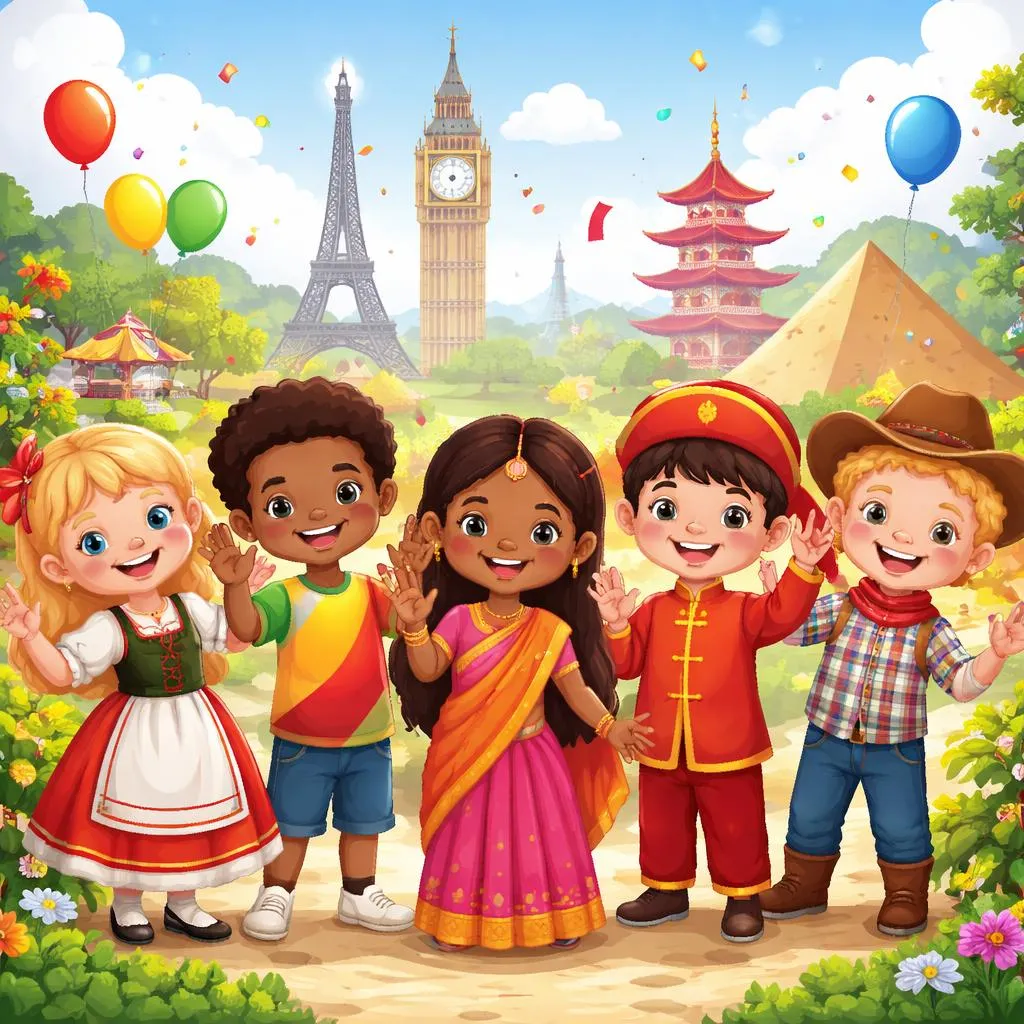

Different nationalities are important words.
They talk about people around the world.
Children hear them in stories and in daily life.
What Are Nationalities
Nationalities tell where people come from.
They connect people to countries.
These words help children understand the world.
Nationalities and Real People
Nationality words describe real people.
Friends. Teachers. Characters in books.
Words feel meaningful.
Nationalities and Belonging
Belonging matters.
Nationality words show connection.
Connection helps children understand identity.
Country and Nationality Words
Countries and nationalities work together.
France and French. China and Chinese.
Learning them together makes sense.
Nationalities and Simple Understanding
Nationalities are not complicated.
They answer one question.
Where is the person from?
American
American describes people from the United States.
Children hear this word often.
It feels familiar.
British
British describes people from the United Kingdom.
The word appears in stories.
Stories support learning.
Canadian
Canadian is a longer word.
Children learn it slowly.
Practice builds comfort.
Australian
Australian sounds different.
The sound catches attention.
Interesting sounds support memory.
Nationalities in Europe
Europe has many countries.
Each country has its own nationality word.
Learning feels like discovery.
French
French describes people from France.
It is short.
Easy words build confidence.
German
German describes people from Germany.
The word sounds strong.
Children remember it.
Italian
Italian is smooth and clear.
It feels friendly.
Friendly words invite use.
Spanish
Spanish describes people from Spain.
Children hear this word in language class.
Familiar words feel safe.
Nationalities in Asia
Asia is large.
Many countries live there.
Nationality words help name diversity.
Chinese
Chinese describes people from China.
It is common in books and media.
Recognition helps learning.
Japanese
Japanese has a clear rhythm.
Rhythm supports pronunciation.
Children like saying it.
Korean
Korean is short and clear.
Short words feel manageable.
Indian
Indian describes people from India.
Children see this word in stories and pictures.
Nationalities in Africa
Africa has many cultures.
Nationality words show respect.
Respect matters.
Egyptian
Egyptian connects to history.
History words spark curiosity.
Curiosity supports learning.
Kenyan
Kenyan is short.
Children remember it easily.
Nigerian
Nigerian sounds musical.
Sound patterns support memory.
Nationalities in South America
South America has many countries.
Nationality words add color.
Brazilian
Brazilian is a fun word.
It feels lively.
Lively words invite speaking.
Argentinian
Argentinian is long.
Long words need patience.
Patience builds skill.
Nationalities in Everyday Talk
Nationality words appear in daily talk.
Talking about friends. Talking about classmates.
Words feel useful.
Nationalities and School Life
Schools have many nationalities.
Learning these words supports inclusion.
Everyone feels seen.
Nationalities and Classroom Sharing
Sharing time often includes nationality.
Children talk about where family comes from.
Language supports identity.
Nationalities and Respect
Respectful language matters.
Nationality words must feel kind.
Kindness builds safety.
Nationalities and Differences
Differences are normal.
Nationality words help explain differences.
Explanation reduces fear.
Nationalities and Similarities
People are also similar.
Nationality words do not separate.
They describe.
Nationalities and Simple Sentences
Simple sentences come first.
She is French. He is Korean.
Clear meaning supports understanding.
Nationalities and Slightly Longer Sentences
Longer sentences add one idea.
She is Italian, and she likes music.
One sentence. Two clear ideas.
Nationalities and Question Practice
Questions help learning.
Where are you from? Is he Canadian?
Answers stay short.
Nationalities and Answer Practice
Answer practice builds structure.
I am Brazilian. She is German.
Confidence grows.
Nationalities and Listening Skills
Listening comes first.
Children hear nationality words before using them.
Hearing builds comfort.
Nationalities and Speaking Practice
Speaking follows listening.
Children try words they hear often.
Success feels good.
Nationalities and Pronunciation
Pronunciation needs time.
Modeling helps.
Children repeat naturally.
Nationalities and Error Acceptance
Errors happen.
Trying matters.
Nationality words should feel safe to try.
Nationalities and Gentle Correction
Correction stays gentle.
Teachers repeat the word.
Children adjust slowly.
Nationalities and Vocabulary Growth
Vocabulary grows step by step.
Nationality words add world knowledge.
World knowledge supports reading.
Nationalities and Reading Practice
Reading includes nationality words.
Stories about children from different places.
Familiar structure supports comprehension.
Nationalities and Picture Books
Picture books show people worldwide.
Words match pictures.
Visual support strengthens memory.
Nationalities and Songs
Songs include countries and people.
Music supports repetition.
Repetition builds recall.
Nationalities and Games
Games make learning fun.
Matching countries and nationalities.
Fun supports motivation.
Nationalities and Sorting Activities
Sorting activities build logic.
Countries here. Nationalities there.
Words guide thinking.
Nationalities and Maps
Maps support understanding.
Seeing countries adds meaning.
Words connect to place.
Nationalities and Cultural Awareness
Cultural awareness starts early.
Nationality words open conversation.
Conversation builds respect.
Nationalities and Inclusion
Inclusive language makes classrooms safe.
All nationalities matter.
Everyone belongs.
Nationalities and Identity
Identity develops slowly.
Nationality words help children explain themselves.
Language supports self-expression.
Nationalities and Home Connections
Home connections support learning.
Families share stories.
Words feel real.
Nationalities and Daily Routines
Daily routines include world topics.
Morning talk. Story time.
Language stays active.
Nationalities and Long-Term Learning
Nationality words stay useful.
They return in later lessons.
They grow with learners.
Nationalities and Calm Learning Pace
Learning pace remains gentle.
No rush.
Understanding deepens over time.
Nationalities and Confidence
Confidence grows with familiarity.
Familiar words invite use.
Use builds skill.
Nationalities and Lifelong Curiosity
Curiosity matters.
Nationality words spark questions.
Questions lead to learning.
Different Nationalities in Everyday English
Different nationalities are part of everyday English.
They help children talk about the world, respect differences, and feel connected to people everywhere as their language skills continue to grow.
Nationalities and Everyday Classroom Language
Everyday classroom language can include nationalities.
Talking about classmates. Talking about friends.
Words feel natural.
Nationalities and Name Introductions
Introductions often include nationality.
My name is Anna. I am Polish.
Simple sharing builds confidence.
Nationalities and Pair Activities
Pair activities encourage speaking.
Children ask questions. Children give answers.
Nationality words support conversation.
Nationalities and Group Activities
Group activities build cooperation.
Sharing countries. Sharing nationalities.
Everyone participates.
Nationalities and Show and Tell
Show and tell is a good moment.
Children bring pictures.
Pictures support language.
Nationalities and Family Stories
Family stories often include nationality.
Talking about parents. Talking about grandparents.
Language connects generations.
Nationalities and Home Languages
Home languages are part of identity.
Nationality words help explain language differences.
Respect grows.
Nationalities and Language Awareness
Language awareness starts early.
Different countries use different languages.
Understanding builds curiosity.
Nationalities and Curiosity
Curiosity drives learning.
Children ask questions.
Questions lead to discussion.
Nationalities and Asking Politely
Polite questions matter.
Where are you from? What country is this?
Tone matters.
Nationalities and Polite Answers
Polite answers feel respectful.
I am from Mexico. I am Mexican.
Clarity builds confidence.
Nationalities and Listening Respect
Listening respect supports conversation.
Children wait.
Everyone feels heard.
Nationalities and Turn Practice
Turn practice builds patience.
One speaker at a time.
Language feels organized.
Nationalities and Simple Role Play
Role play supports understanding.
Pretend travel. Pretend meetings.
Words feel active.
Nationalities and Travel Talk
Travel talk feels exciting.
Talking about places opens imagination.
Nationality words add meaning.
Nationalities and Imaginary Journeys
Imaginary journeys spark creativity.
Flying to Japan. Visiting Italy.
Words support imagination.
Nationalities and Cultural Objects
Cultural objects support learning.
Clothes. Food. Flags.
Words match objects.
Nationalities and Flags
Flags are visual tools.
Seeing flags helps memory.
Words stick better.
Nationalities and Matching Games
Matching games support recall.
Country and nationality.
Games reduce pressure.
Nationalities and Repetition
Repetition helps learning.
Seeing words again builds comfort.
Comfort builds confidence.
Nationalities and Memory Building
Memory builds slowly.
Visual cues help.
Familiar words stay longer.
Nationalities and Describing People
Describing people uses nationality words.
She is Spanish. He is Canadian.
Descriptions feel clear.
Nationalities and Adjective Awareness
Nationality words act like adjectives.
They describe people.
Understanding grows naturally.
Nationalities and Sentence Order
Sentence order matters.
She is French. He is Egyptian.
Patterns repeat.
Nationalities and Grammar Comfort
Grammar comfort comes from exposure.
No rules first.
Patterns appear naturally.
Nationalities and Natural Grammar Growth
Children hear correct forms often.
Hearing supports understanding.
Rules come later.
Nationalities and Reading Aloud Practice
Reading aloud includes nationality words.
Familiar words support smooth reading.
Reading feels successful.
Nationalities and Independent Reading
Independent reading feels possible with known vocabulary.
Nationality words support confidence.
Nationalities and Writing Sentences
Writing sentences starts simply.
I am Korean. She is Brazilian.
Short writing builds control.
Nationalities and Drawing with Labels
Drawing supports learning.
Draw a person. Add a flag.
Label with nationality.
Nationalities and Label Practice
Label practice connects word and image.
Connection supports memory.
Memory supports recall.
Nationalities and Sorting by Region
Sorting by region builds thinking skills.
Europe. Asia. Africa.
Words organize knowledge.
Nationalities and World Awareness
World awareness grows slowly.
Nationality words open the world.
Learning feels meaningful.
Nationalities and Respect for Differences
Respect is a key goal.
Different nationalities are valued.
Language teaches kindness.
Nationalities and Inclusion in Language
Inclusive language creates safety.
Everyone belongs.
Words matter.
Nationalities and Emotional Safety
Emotional safety supports learning.
No pressure to share.
Choice is respected.
Nationalities and Self-Identity
Self-identity develops with time.
Nationality words help explain self.
Language supports confidence.
Nationalities and Sharing Pride
Pride can be shared gently.
Talking about home feels positive.
Positive talk builds connection.
Nationalities and Classroom Community
Community forms through sharing.
Nationality words build understanding.
Understanding builds trust.
Nationalities and Calm Learning Environment
Calm environments support growth.
World topics are introduced gently.
Learning feels safe.
Nationalities and Long-Term Vocabulary Use
Nationality words stay useful.
They appear again in later lessons.
They grow with learners.
Nationalities and Lifelong Language Skills
Lifelong language skills start early.
Simple words build strong foundations.
Nationality words support global understanding and confident communication as children continue their language journey.