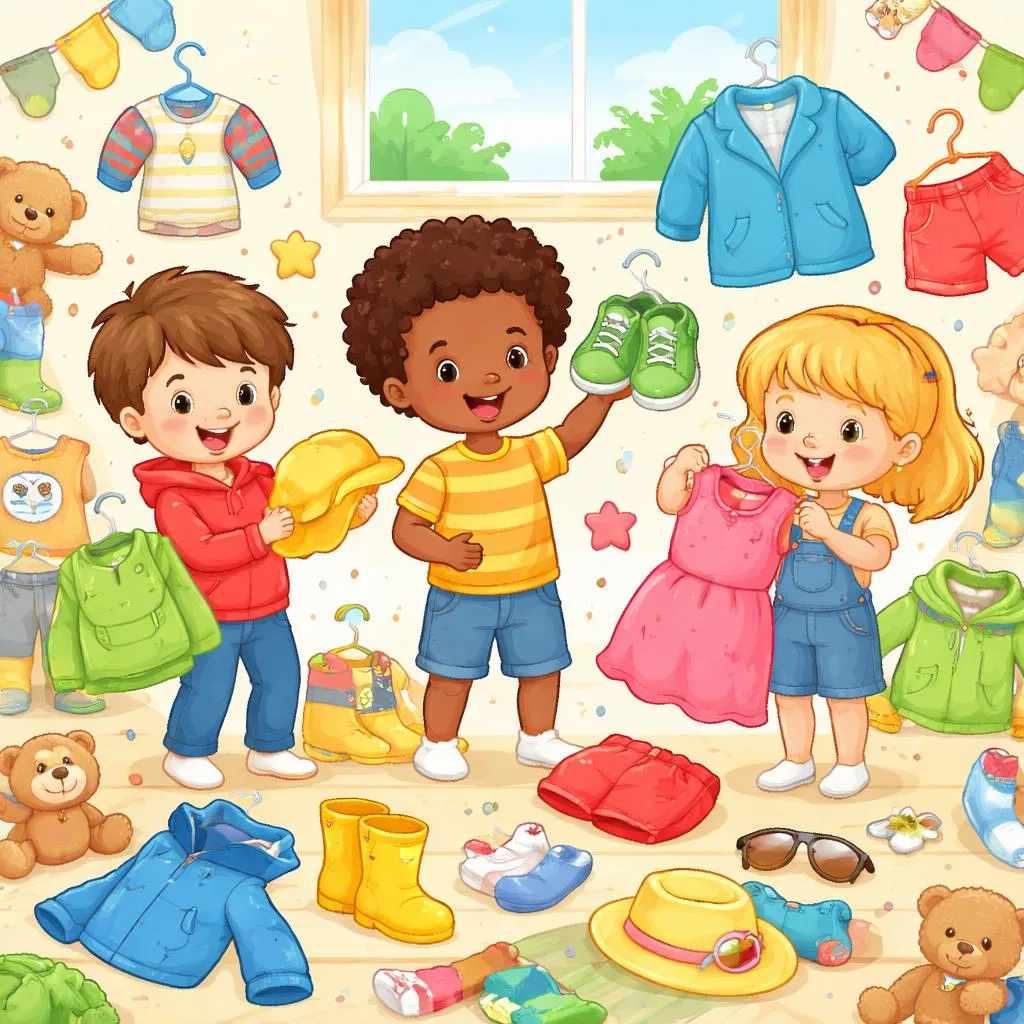

What Are Clothes Names? Clothes names are the words used to describe different pieces of clothing. They help children recognize, talk about, and choose what to wear. Everyday clothing includes shirts, pants, dresses, and shoes. Children hear these words in school, at home, and in stories. Learning clothes names builds vocabulary and confidence in English. It also helps children describe themselves and others. Clothes names can be simple, like hat or sock, or longer, like cardigan or raincoat.
Using clothes names in sentences helps understanding. For example, “The shirt is red” or “I like the shoes.” Seeing pictures and real objects makes learning easier. Children connect words with visual memory naturally. Interactive learning improves retention and enjoyment.
Meaning and Explanation Clothes names describe different types of clothing worn on the body. They include tops, bottoms, outerwear, and accessories. Tops include shirts, t-shirts, blouses, and sweaters. Bottoms include pants, skirts, shorts, and jeans. Outerwear includes coats, jackets, and raincoats. Accessories include hats, scarves, belts, and gloves.
Clothes names also include footwear. Shoes, sandals, boots, and slippers are common examples. Different materials and styles may have specific names. For example, sneakers are casual shoes for sports. Children can compare items: “Boots are for winter” or “Sandals are for summer.” This comparison builds understanding of function and context.
Categories of Clothes Names Clothes names can be divided into groups: casual, formal, and seasonal. Casual clothes include t-shirts, jeans, hoodies, and sneakers. Formal clothes include suits, dresses, and ties. Seasonal clothes include jackets, coats, hats, and scarves. Children learn to match clothes with weather and occasions. It is useful for storytelling and real-life conversations.
Another category is accessories. Hats, gloves, belts, and sunglasses are common examples. Accessories complete an outfit and add style. Children notice accessories in pictures, stories, and real life. Using categories helps organize vocabulary efficiently. It also improves memory and recall during activities.
Daily Life Examples of Clothes Names “The shirt is blue and soft.” “She wears a red dress to the party.” “He puts on a jacket because it is cold.” “Children wear hats when playing outside.” “Socks keep the feet warm in winter.” These sentences show how clothes names appear in daily life.
Using clothes names in context is important. Children practice asking questions like “What is she wearing?” They also answer: “She is wearing a yellow coat.” This helps develop speaking and comprehension skills. Games and role-play make these examples interactive and fun. Children enjoy acting out scenes using real clothes or toys.
Printable Flashcards for Clothes Names Flashcards show pictures and words together. For example, a card shows a picture of pants with the word “pants.” Children can match words with pictures. Flashcards also support memory games: “Find the red dress” or “Pick the boots.” Printing multiple sets allows group activities. Flashcards can also include seasonal clothes to teach context.
Flashcards help with recognition, pronunciation, and vocabulary. Children can play memory games or sorting games with them. Repetition with flashcards increases confidence in using clothes names. It also provides visual support for reading and writing exercises.
Learning Activities With Clothes Names Sorting games: categorize clothes by type, color, or season. Dress-up activities: children choose items and describe them. Matching games: match picture cards with words. Storytelling: describe what characters wear in pictures. Role-play: act out going to school, park, or party. Singing songs about clothes helps reinforce vocabulary.
Children enjoy hands-on learning activities. They link words with actions and objects naturally. Repetition in different contexts strengthens memory. Learning through play keeps children motivated. Activities can be done individually or in groups for social practice.
Phonics and Pronunciation Points Clothes names introduce new sounds and syllables. Words like jacket, blouse, and scarf have distinct pronunciations. Children can practice syllable counting: “ja-cket” or “sweat-er.” Pronunciation practice improves speaking confidence. Songs and rhymes with clothes names support rhythm and intonation. Children notice patterns and sounds while having fun.
Grammar Patterns With Clothes Names Clothes names are nouns, so they can be subjects or objects in sentences. “The hat is green.” “I like the shoes.” They can also be plural or singular: “pants” vs “a pant leg.” Children practice using articles: “a shirt” or “the jacket.” Adjectives describe clothes: “red dress,” “warm coat.” Short sentences with clear structure help children grasp grammar naturally.
Educational Games for Clothes Names Guessing game: “What am I wearing?” with visual clues. Memory game: match picture cards with words. Sorting game: group clothes by color, type, or season. Role-play: children describe outfits for different occasions. Sing-along songs about clothes names for fun reinforcement. Interactive games encourage speaking, listening, and vocabulary retention.
Daily practice and playful activities make clothes names familiar and meaningful. Children connect words with their own experiences and objects. Flashcards, games, songs, and storytelling provide multiple ways to learn. Understanding clothes names improves communication, reading, and writing. Vocabulary grows naturally while children enjoy learning English.