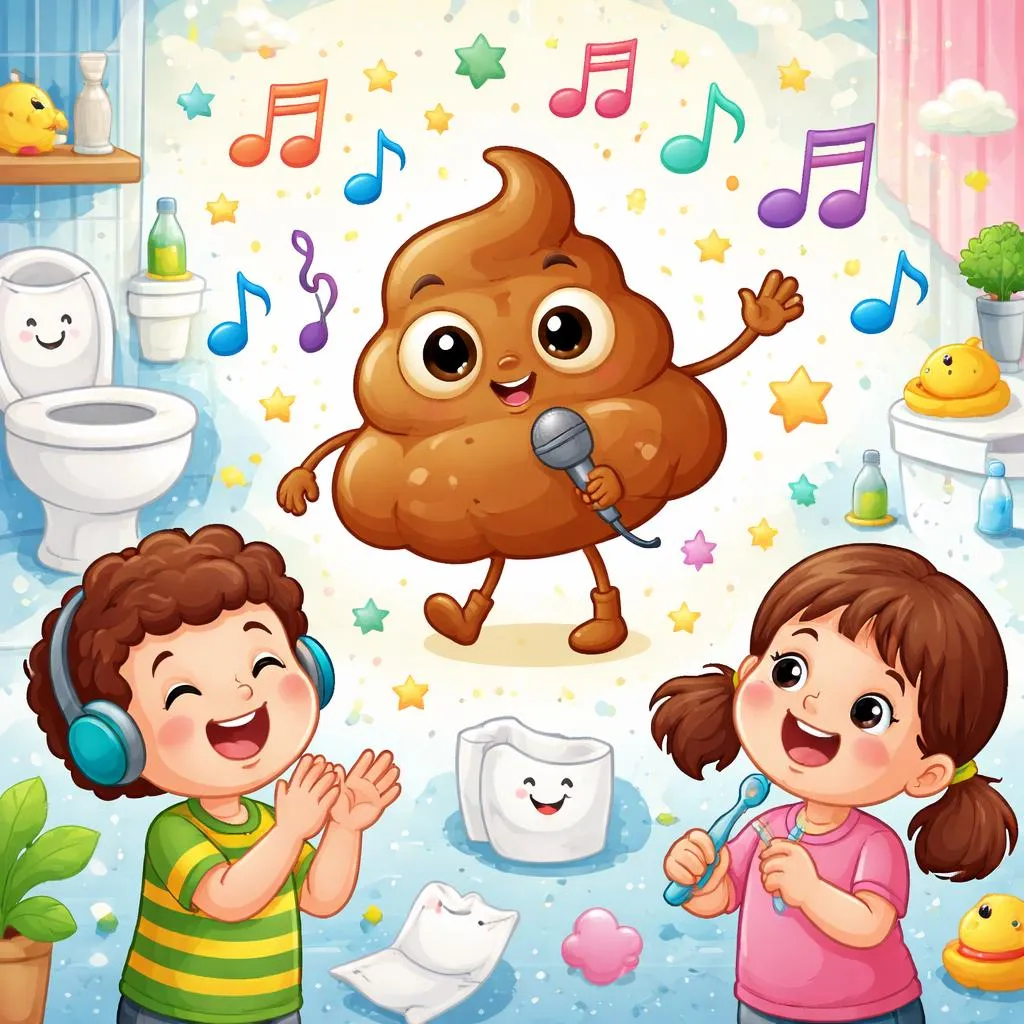

What is the Rhyme/Story?
The “poop song” is a playful and silly children’s song that combines humor with learning. It focuses on bodily functions in a fun, non-embarrassing way. The song usually tells a story about going to the bathroom, eating healthy foods, or simply making noises and rhymes.
Because the song is silly, children are naturally engaged. The rhythm and repetition help them remember words and phrases easily. This makes it a useful tool for learning language, pronunciation, and even some basic health lessons.
The “poop song” often includes funny sound effects, actions, and gestures. Singing and moving while performing the song encourages participation and builds confidence in speaking English.
The Lyrics of “poop song”
Lyrics vary depending on the version, but a common example goes like this:
“Poop, poop, goes the little tummy, Flush, flush, into the potty. Eat your fruits, eat your veggies, Poop, poop, goes the tummy.”
Short, repetitive phrases like this are perfect for children. They are easy to sing, remember, and act out. Repetition in songs helps children notice sounds, words, and rhythm patterns in English.
Vocabulary Learning
The “poop song” introduces several important words for children:
Poop: the act of going to the bathroom
Tummy: a child-friendly word for stomach
Potty: a small toilet for children
Flush: the action of sending waste down the toilet
Healthy foods: fruits, vegetables, and other nutritious items
Each word is repeated in the song. This repetition helps children remember vocabulary naturally. Associating words with actions or sounds strengthens understanding and retention.
Phonics Points
The “poop song” is excellent for practicing phonics. Words like “poop” and “tummy” emphasize short vowel sounds. Repeating phrases like “Flush, flush, into the potty” helps children practice consonant sounds and rhythm.
Songs like this make learning sounds and pronunciation more engaging. Children can hear the sounds clearly, repeat them, and connect them to actions, which improves both speaking and listening skills.
Grammar Patterns
The lyrics also provide simple grammar patterns for young learners. For example, phrases like “Poop goes the tummy” introduce subject-verb order in a fun context.
Other useful grammar points include:
Simple present tense: “Poop goes”
Imperatives: “Eat your fruits”
Repetition and rhythm for sentence structure: “Flush, flush, into the potty”
By singing, children internalize these patterns naturally without feeling like they are studying grammar.
Learning Activities
Several activities can help reinforce the “poop song”:
Act It Out: Children can use gestures for words like “poop,” “flush,” or “tummy.” Acting while singing improves memory and motor skills.
Draw the Story: Make a coloring page with fruits, vegetables, and a potty. Children label each object using the vocabulary from the song.
Movement Games: Pretend to flush, hold the tummy, or march while singing. This connects actions to words and helps children remember them.
Story Sequencing: Cut out cards with different parts of the song. Ask children to arrange the cards in the correct order while singing.
Printable Materials
Flashcards and worksheets can support learning. Flashcards might show: poop, tummy, potty, flush, fruits, vegetables. Children can match the word to the picture while singing or reading.
Worksheets can include:
Fill-in-the-blank sentences: “_____ goes the tummy.”
Matching words with pictures: connect “fruit” to an apple image.
These materials reinforce vocabulary and sentence patterns from the song.
Educational Games
Games make the “poop song” even more fun:
Potty Parade: Children march around the room following the song’s lyrics, acting out each action.
Poop Song Bingo: Create bingo cards with key words from the lyrics. Mark words as they are sung.
Memory Challenge: Sing line by line, asking children to repeat previous lines before adding new ones. This strengthens memory and comprehension.
Guess the Action: One child performs an action from the song while others guess the word. For example, pretending to flush or eat vegetables.
These games keep children engaged while reinforcing pronunciation, vocabulary, and comprehension.
Daily Life Examples
The “poop song” also connects to everyday life. Talking about healthy foods encourages children to eat fruits and vegetables. Singing about using the potty reinforces hygiene habits.
Parents and teachers can integrate the song into bathroom routines, snack times, or movement activities. Children associate language learning with daily life, making it meaningful and memorable.
Singing about everyday topics like this helps children learn new words and understand how English describes simple actions. Humor in the song makes children feel relaxed and confident while speaking.
Tips for Parents and Teachers
Repeat the song daily to strengthen memory and vocabulary.
Encourage children to act out each line to connect words with actions.
Ask questions about the song: “What goes in the tummy?” or “What do we flush?”
Use flashcards and printable activities alongside singing.
Record children singing the song to boost confidence and pronunciation.
Why Children Love This Song
The humor, rhythm, and silly words make children excited to sing the “poop song”. It encourages movement, imagination, and laughter.
Songs like this combine learning and fun. Children practice vocabulary, phonics, grammar patterns, and healthy habits without noticing they are learning. They gain confidence speaking English in a playful, interactive way.
Using songs such as the “poop song” helps children develop English skills, creativity, and social interaction. Singing, acting, and playing games make the experience memorable, fun, and educational.