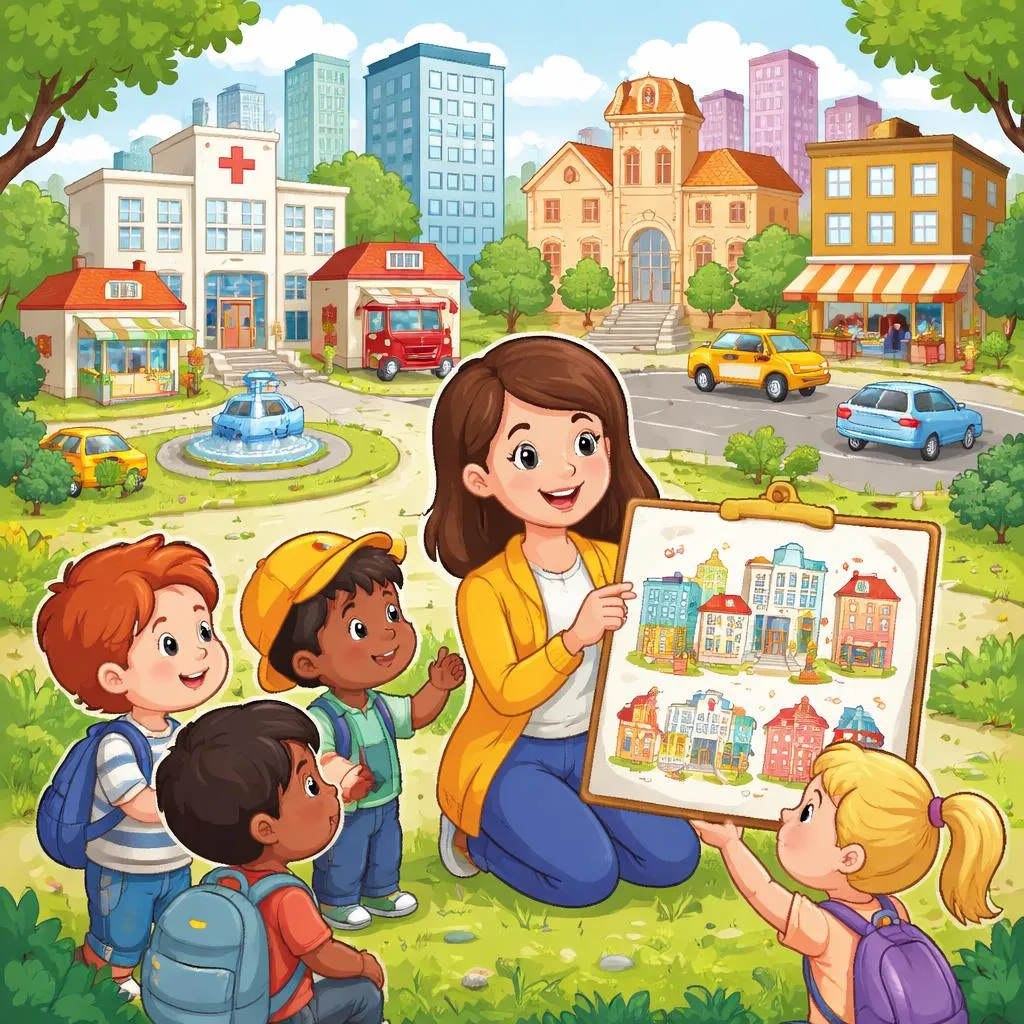

Downtown Buildings as a Meaningful Learning Topic
Cities feel busy and exciting. Streets fill with people, cars, and sounds. At the center of many cities stands downtown. This area often holds the tallest and most important structures. Learning about downtown buildings helps connect language with real places and daily experiences.
In lessons, city buildings offer clear visual references. Pictures, maps, and walks around town support understanding. Words connect easily to things already seen. Learning feels grounded and relevant.
This article explores downtown buildings from a teacher’s perspective. Each section gently guides learning with clear language and simple ideas. The goal stays focused on understanding, curiosity, and confidence.
What Are Downtown Buildings?
Downtown buildings are structures found in the central part of a city. This area often includes offices, shops, public spaces, and cultural centers. Downtown areas usually feel busy during the day.
Many people work, shop, or visit downtown. Buildings often stand close together. Streets feel lively and active.
Learning this concept helps explain how cities work. It also supports vocabulary related to community and daily life.
Meaning and Explanation of Downtown Buildings
The word downtown describes the center of a city. The word buildings describes structures where people work, live, or gather. Together, downtown buildings describe important city structures in one area.
These buildings often serve special purposes. Some provide services. Some offer places to work. Some offer spaces for art or government.
Understanding meaning becomes easier when connecting words to real city scenes.
Types of Downtown Buildings
Downtown areas include many types of buildings. Grouping them helps organize learning.
Office buildings house workplaces. People work at desks and hold meetings inside.
Government buildings include city halls and courthouses. These buildings support community rules and services.
Cultural buildings include museums, theaters, and libraries. These places support learning and art.
Commercial buildings include shops and restaurants. These buildings support daily needs.
Residential buildings may also appear downtown. Apartments and condos provide homes.
Categories help learners see how each building serves a purpose.
Office Buildings in Downtown Areas
Office buildings often appear tall and modern. Many floors rise above the street.
These buildings often include windows made of glass. Elevators help people move between floors.
Learning about office buildings introduces work-related vocabulary. Words like office, desk, and meeting appear naturally.
Office buildings help explain where many adults work during the day.
Government Buildings Downtown
Government buildings often stand out. They may look formal or historic.
City halls, police stations, and courthouses appear in many downtown areas. These buildings support safety and organization.
Learning about these buildings helps explain how communities function.
Simple explanations support understanding. These buildings help keep the city running smoothly.
Cultural Buildings in Downtown Areas
Cultural buildings add creativity to cities. Museums, theaters, and galleries invite exploration.
Museums hold art, history, or science exhibits. Theaters host performances. Libraries offer books and quiet spaces.
These buildings support learning and imagination. They often become favorite places for visits.
Cultural buildings show that downtown areas support more than work.
Shops and Restaurants Downtown
Commercial buildings bring energy to downtown. Shops sell clothes, food, and gifts. Restaurants offer meals and snacks.
Store signs and windows add color to streets. Learning store names builds vocabulary.
Restaurants introduce food-related words. Café, bakery, and market appear often.
These buildings connect language with daily routines.
Downtown Buildings in Daily Life
Downtown buildings appear in many daily experiences. Going to a bank, library, or shop often means visiting downtown.
Walking or driving through downtown offers many visual clues. Tall buildings, busy streets, and signs appear everywhere.
Talking about these experiences supports language use.
Simple sentences describe what appears. “The building is tall.” “The store is busy.”
Teaching Downtown Buildings Through Observation
Observation supports learning. Looking at photos or maps helps identify buildings.
Pointing out shapes, colors, and sizes builds descriptive language.
Comparing buildings supports thinking skills. Some buildings feel tall. Others feel wide.
Observation encourages careful attention.
Vocabulary Related to Downtown Buildings
Many useful words appear in this topic. Building, street, office, shop, and tower appear often.
Words describing size and shape also appear. Tall, short, wide, and narrow describe buildings.
Location words like near, next to, and across help explain position.
Vocabulary grows naturally through discussion and exploration.
Simple Sentences About Downtown Buildings
Short sentences support clarity.
“The building is tall.” “The office is downtown.” “The museum is near the park.” “The shop is open.”
These sentences feel clear and useful. Repeating patterns builds confidence.
Downtown Buildings and Community Roles
Each building plays a role in the community. Offices support jobs. Government buildings support services.
Cultural buildings support learning and art. Shops support daily needs.
Understanding roles helps connect buildings with people.
Community awareness grows through this topic.
Using Maps to Learn About Downtown Buildings
Maps help visualize space. Looking at a city map shows where downtown sits.
Symbols on maps represent buildings. Learning symbols builds map skills.
Tracing routes between buildings supports direction vocabulary.
Maps connect language with geography.
Printable Flashcards for Downtown Buildings
Flashcards support visual learning. Cards may show a building with a label.
Office building, library, museum, and shop work well.
Using flashcards before or after lessons reinforces vocabulary.
Printable materials support learning at home and school.
Learning Activities About Downtown Buildings
Activities make learning active. Drawing a downtown scene supports creativity.
Building a city with blocks supports spatial thinking.
Matching building pictures with names supports recognition.
Activities should feel open-ended and fun.
Educational Games Using Downtown Buildings
Games add excitement. A guessing game may describe a building’s purpose.
A memory game may match building pictures.
Role-play games encourage pretending to work or shop downtown.
Games support social and language skills.
Phonics Practice With Building Words
Many building words support phonics. Building begins with a “b” sound. Downtown begins with a “d” sound.
Listening for beginning sounds builds phonemic awareness.
Clapping syllables in longer words supports rhythm.
Phonics learning feels natural in context.
Grammar Patterns in Downtown Building Sentences
Simple grammar patterns appear naturally. Present tense verbs describe what exists.
“The office is open.” “The museum has art.”
Prepositions appear often. In, on, near, and across describe location.
Hearing correct patterns supports language growth.
Cultural Differences in Downtown Buildings
Downtown areas look different around the world. Some cities have very tall buildings. Others have older structures.
Learning about these differences builds global awareness.
Pictures from different cities support discussion.
Respect and curiosity grow through comparison.
Supporting Parents and Teachers With This Topic
This topic fits well in many settings. Parents may talk about buildings during city walks.
Teachers may use pictures or videos to introduce vocabulary.
Clear language and repetition support understanding.
Consistency builds confidence.
Safety and Awareness Around Downtown Areas
Downtown lessons may include safety awareness. Busy streets and crowds appear often.
Talking about sidewalks and crossings supports awareness.
Language learning connects with real-life skills.
Safety discussions stay simple and calm.
Connecting Downtown Buildings to Other Subjects
This topic connects to geography, social studies, and art.
Drawing buildings supports art skills. Learning about city roles supports social studies.
Measuring building height connects to math.
Integrated learning deepens understanding.
Encouraging Curiosity About Cities
Cities inspire questions. Why are some buildings tall? Why do many offices sit downtown?
Questions encourage exploration and thinking.
Curiosity supports lifelong learning.
A Calm and Inspiring Urban Learning Journey
Learning about downtown buildings helps connect language with real places and experiences. Through observation, discussion, play, and creativity, city vocabulary becomes clear and meaningful.
This topic supports language growth, community awareness, and curiosity about the world. With gentle guidance and real-life connections, downtown buildings become more than structures. They become part of a shared understanding of how cities work and how people live together within them.