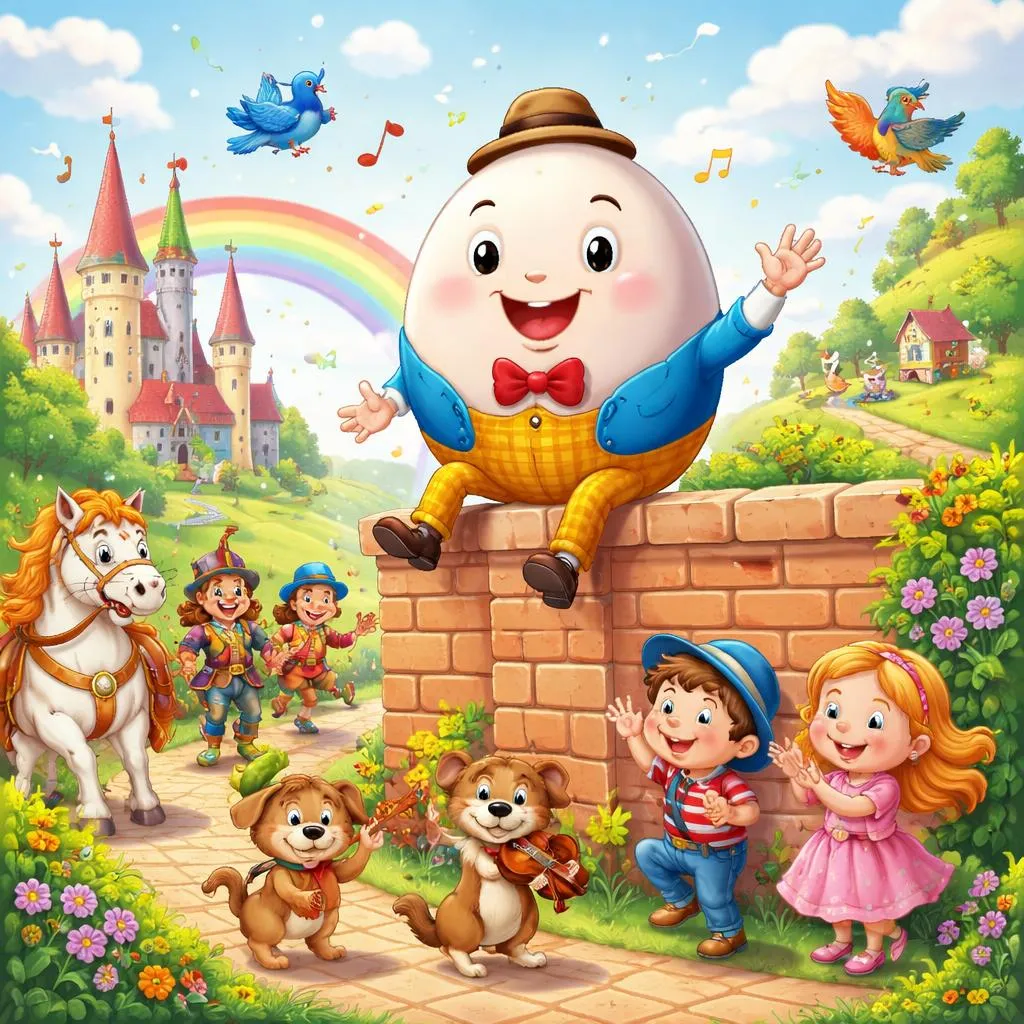

What Is the Rhyme “dumpty humpty dumpty”?
“Dumpty humpty dumpty” often refers to the classic English nursery rhyme about Humpty Dumpty. This rhyme has appeared in English-speaking homes, classrooms, and books for many generations. It is short, rhythmic, and easy to remember. The rhyme introduces rhythm, rhyme, and early storytelling skills in a natural way.
This rhyme also connects with classic English literature. It appears in “Alice Through the Looking-Glass” by Lewis Carroll. The character Humpty Dumpty became a cultural icon in English-speaking countries.
Using “dumpty humpty dumpty” as a learning resource supports early listening, speaking, and reading development. The rhyme uses repetition, simple words, and clear sounds. These features help young learners build confidence with English.
The Lyrics of “Dumpty Humpty Dumpty”
Here is the classic version of the rhyme.
Humpty Dumpty sat on a wall. Humpty Dumpty had a great fall. All the king’s horses and all the king’s men Couldn’t put Humpty together again.
The lines are short and musical. The rhyme pattern helps memory and pronunciation. The rhythm supports natural speech flow.
Vocabulary Learning with “dumpty humpty dumpty”
This rhyme introduces useful English words in a meaningful context. Each word appears in a simple story.
Humpty Dumpty: A character name. Often shown as an egg. Sat: Past tense of “sit.” Wall: A structure made of stone or bricks. Fall: To drop from a high place. King: A male ruler. Horses: Animals used for riding or work. Men: Adult male people. Together: In one piece or group. Again: One more time.
These words appear in many daily conversations and stories. Connecting words to a rhyme helps retention and comprehension.
Phonics Points in “dumpty humpty dumpty”
The rhyme supports early phonics learning. Several key sounds appear clearly.
The short vowel sound in “Humpty” and “Dumpty” helps practice the /ʌ/ sound. The long vowel sound in “wall” supports /ɔː/. The /f/ sound in “fall” strengthens consonant awareness. The /k/ sound in “king” introduces a strong initial consonant.
Repeating the rhyme supports listening accuracy and pronunciation clarity. Clapping to the rhythm helps connect sounds to syllables.
Grammar Patterns in the Rhyme
The rhyme includes basic grammar structures. These structures appear in everyday English.
“Sat on a wall” shows past tense action. “Had a great fall” also uses past tense. “All the king’s horses and all the king’s men” uses possessive form. “Couldn’t put Humpty together again” shows negative past tense and phrasal verb use.
These patterns support early sentence awareness. Hearing grammar in stories builds intuitive understanding.
Meaning and Explanation of the Story
The rhyme tells a simple story with a strong emotional element. Humpty Dumpty sits on a wall. Humpty Dumpty falls and breaks. The king’s helpers cannot fix Humpty Dumpty.
This story introduces cause and effect. Sitting on a wall leads to falling. Falling leads to breaking. Trying to fix does not always succeed.
The rhyme also encourages empathy and imagination. The character feels fragile and memorable. Many illustrations show Humpty Dumpty as an egg to emphasize fragility.
Cultural Notes About Humpty Dumpty
Humpty Dumpty is more than a nursery rhyme character. The name appears in literature, cartoons, toys, and educational materials. In Lewis Carroll’s book, Humpty Dumpty speaks about words and meaning. This makes the character popular in language education contexts.
The rhyme also appears in modern media and songs. It remains one of the most recognized English nursery rhymes worldwide.
Daily Life Examples Using Rhyme Vocabulary
Words from the rhyme appear in daily English.
“Sit on the wall” appears in playground or park contexts. “Fall” appears in safety conversations and stories. “Put together” appears in puzzles, toys, and crafts. “Again” appears in classroom routines and games.
Using rhyme vocabulary in daily talk strengthens language transfer.
Printable Flashcards for “dumpty humpty dumpty”
Flashcards help visual and memory learning. Cards can include pictures and simple words.
One card can show Humpty Dumpty. Another card can show a wall. Another card can show a fall scene. Another card can show horses and men.
Flashcards support matching games, reading practice, and storytelling tasks. Large clear images and bold text help early readers.
Learning Activities with the Rhyme
Singing and chanting support pronunciation and rhythm. Acting out the story supports comprehension and speaking. Drawing Humpty Dumpty supports creative expression.
Simple role-play can include sitting on a “wall,” pretending to fall, and trying to fix Humpty Dumpty. Story sequencing cards can help place events in order.
Retelling the story in simple sentences builds narrative skills. This also supports early writing and speaking confidence.
Educational Games Based on “dumpty humpty dumpty”
Memory matching games can use rhyme vocabulary cards. Rhyming games can match “wall” with “fall.” Listening games can focus on identifying words in the rhyme.
Building puzzles of Humpty Dumpty can connect physical play with language learning. Digital games can include listening and tapping to the rhythm.
These games integrate listening, speaking, and cognitive skills.
Storytelling Expansion with Humpty Dumpty
The rhyme is short, so storytelling expansion helps language growth. Additional sentences can describe how Humpty Dumpty felt. New characters can appear to help Humpty Dumpty. Alternative endings can encourage creativity.
For example, a story can show Humpty Dumpty learning to sit safely. This adds moral and practical lessons.
Integrating “dumpty humpty dumpty” into Early Literacy
Nursery rhymes support phonological awareness. They help recognize sounds, syllables, and rhyme patterns. This skill supports reading readiness.
The repetitive structure makes the rhyme ideal for shared reading. Pointing to words while reading supports word recognition. Chanting supports fluency and prosody.
Cross-Curricular Learning Opportunities
The rhyme can connect with art through drawing and crafts. It can connect with science by discussing gravity and falling. It can connect with social skills through teamwork and helping others.
These connections make the rhyme a versatile learning tool.
Tips for Effective Teaching with “dumpty humpty dumpty”
Short daily repetition improves retention. Clear pronunciation models accurate speech. Visual aids strengthen comprehension.
Encouraging retelling in simple sentences builds expressive language. Celebrating creative variations builds motivation and confidence.
Why “dumpty humpty dumpty” Works Well for English Learners
The rhyme is short and rhythmic. It uses common vocabulary. It includes clear past tense examples. It introduces narrative structure.
These features make it ideal for early English exposure. The character also engages imagination and emotion.
Creative Writing Prompts with Humpty Dumpty
A short prompt can describe what happened before the fall. Another prompt can describe what happened after the fall. Another prompt can describe a friend who helped Humpty Dumpty.
These prompts encourage early writing and storytelling. They also reinforce vocabulary and grammar patterns.
Building Listening Skills with the Rhyme
Listening to recordings improves pronunciation awareness. Repeating after the audio improves articulation. Clapping syllables builds rhythm awareness.
Listening activities can include identifying specific words or sounds. This builds focused listening and comprehension skills.
Extending the Rhyme into Songs and Chants
Adding simple melodies or actions increases engagement. Chanting with gestures supports kinesthetic learning. Using instruments like drums or clapping adds rhythm practice.
These activities make language learning dynamic and memorable.
“Dumpty humpty dumpty” remains a powerful entry point into English rhythm, vocabulary, and storytelling. Its simplicity, cultural relevance, and phonetic clarity make it a timeless resource for early English learning and creative language development.