
“Sydney,” said Mr. Stryver, on that self-same night, or morning, to his jackal; “mix another bowl of punch; I have something to say to you.”
Sydney had been working double tides that night, and the night before, and the night before that, and a good many nights in succession, making a grand clearance among Mr. Stryver’s papers before the setting in of the long vacation. The clearance was effected at last; the Stryver arrears were handsomely fetched up; everything was got rid of until November should come with its fogs atmospheric, and fogs legal, and bring grist to the mill again.
Sydney was none the livelier and none the soberer for so much application. It had taken a deal of extra wet-towelling to pull him through the night; a correspondingly extra quantity of wine had preceded the towelling; and he was in a very damaged condition, as he now pulled his turban off and threw it into the basin in which he had steeped it at intervals for the last six hours.
“Are you mixing that other bowl of punch?” said Stryver the portly, with his hands in his waistband, glancing round from the sofa where he lay on his back.
“I am.”
“Now, look here! I am going to tell you something that will rather surprise you, and that perhaps will make you think me not quite as shrewd as you usually do think me. I intend to marry.”
“DO you?”
“Yes. And not for money. What do you say now?”
“I don’t feel disposed to say much. Who is she?”
“Guess.”
“Do I know her?”
“Guess.”
“I am not going to guess, at five o’clock in the morning, with my brains frying and sputtering in my head. if you want me to guess, you must ask me to dinner.”
“Well then, I’ll tell you, said Stryver, coming slowly into a sitting posture. “Sydney, I rather despair of making myself intelligible to you, because you are such an insensible dog.
“And you,” returned Sydney, busy concocting the punch, “are such a sensitive and poetical spirit—”
“Come!” rejoined Stryver, laughing boastfully, “though I don’t prefer any claim to being the soul of Romance (for I hope I know better), still I am a tenderer sort of fellow than YOU.”
“You are a luckier, if you mean that.”
“I don’t mean that. I mean I am a man of more—more—”
“Say gallantry, while you are about it,” suggested Carton.
“Well! I’ll say gallantry. My meaning is that I am a man,” said Stryver, inflating himself at his friend as he made the punch, “who cares more to be agreeable, who takes more pains to be agreeable, who knows better how to be agreeable, in a woman’s society, than you do.”
“Go on,” said Sydney Carton.
“No; but before I go on,” said Stryver, shaking his head in his bullying way, I’ll have this out with you. You’ve been at Doctor Manette’s house as much as I have, or more than I have. Why, I have been ashamed of your moroseness there! Your manners have been of that silent and sullen and hangdog kind, that, upon my life and soul, I have been ashamed of you, Sydney!”
“It should be very beneficial to a man in your practice at the bar, to be ashamed of anything,” returned Sydney; “you ought to be much obliged to me.”
“You shall not get off in that way,” rejoined Stryver, shouldering the rejoinder at him; “no, Sydney, it’s my duty to tell you—and I tell you to your face to do you good—that you are a devilish ill-conditioned fellow in that sort of society. You are a disagreeable fellow.”
Sydney drank a bumper of the punch he had made, and laughed.
“Look at me!” said Stryver, squaring himself; “I have less need to make myself agreeable than you have, being more independent in circumstances. Why do I do it?”
“I never saw you do it yet,” muttered Carton.
“I do it because it’s politic; I do it on principle. And look at me! I get on.”
“You don’t get on with your account of your matrimonial intentions,” answered Carton, with a careless air; “I wish you would keep to that. As to me—will you never understand that I am incorrigible?”
He asked the question with some appearance of scorn.
“You have no business to be incorrigible,” was his friend’s answer, delivered in no very soothing tone.
“I have no business to be, at all, that I know of,” said Sydney Carton. “Who is the lady?”
“Now, don’t let my announcement of the name make you uncomfortable, Sydney,” said Mr. Stryver, preparing him with ostentatious friendliness for the disclosure he was about to make, “because I know you don’t mean half you say; and if you meant it all, it would be of no importance. I make this little preface, because you once mentioned the young lady to me in slighting terms.”
“I did?”
“Certainly; and in these chambers.”
Sydney Carton looked at his punch and looked at his complacent friend; drank his punch and looked at his complacent friend.
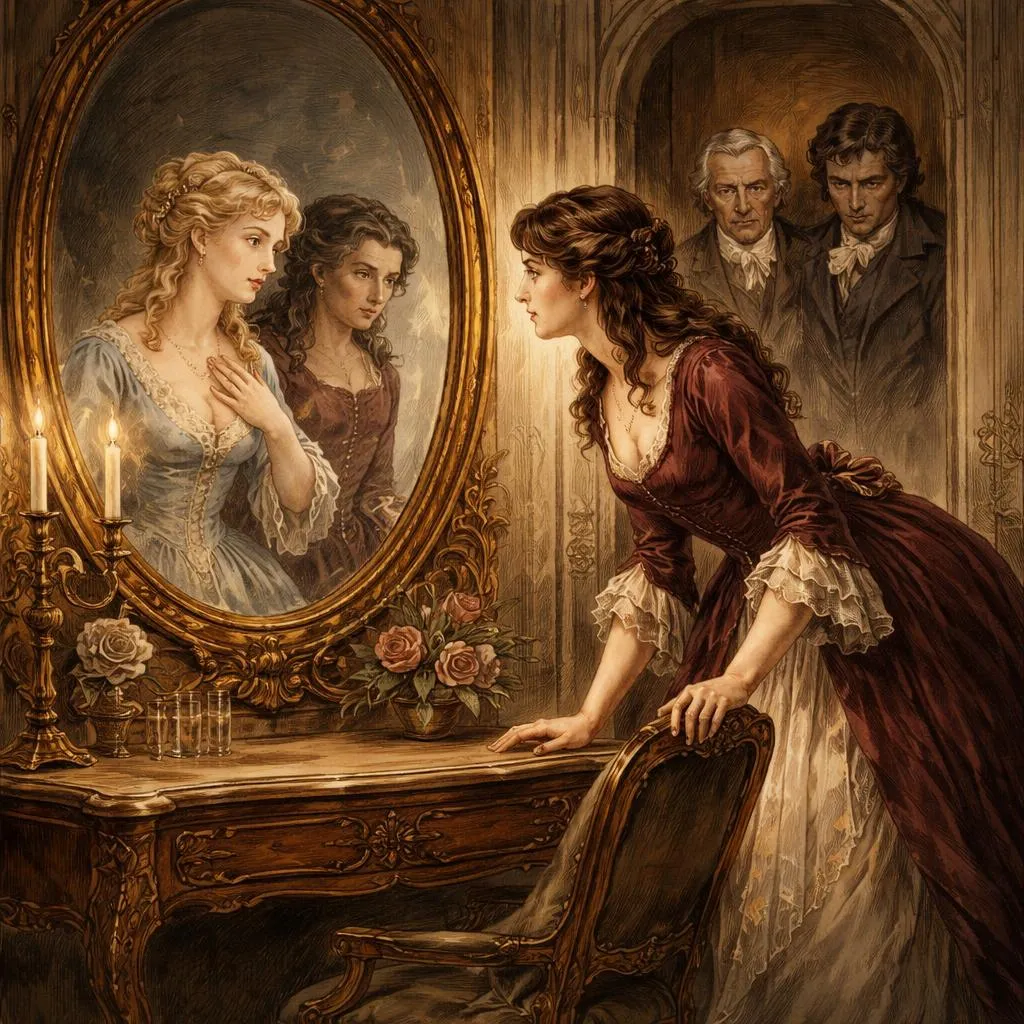
“You made mention of the young lady as a golden-haired doll. The young lady is Miss Manette. If you had been a fellow of any sensitiveness or delicacy of feeling in that kind of way, Sydney, I might have been a little resentful of your employing such a designation; but you are not. You want that sense altogether; therefore I am no more annoyed when I think of the expression, than I should be annoyed by a man’s opinion of a picture of mine, who had no eye for pictures: or of a piece of music of mine, who had no ear for music.”
Sydney Carton drank the punch at a great rate; drank it by bumpers, looking at his friend.
“Now you know all about it, Syd,” said Mr. Stryver. “I don’t care about fortune: she is a charming creature, and I have made up my mind to please myself: on the whole, I think I can afford to please myself. She will have in me a man already pretty well off, and a rapidly rising man, and a man of some distinction: it is a piece of good fortune for her, but she is worthy of good fortune. Are you astonished?”
Carton, still drinking the punch, rejoined, “Why should I be astonished?”
“You approve?”
Carton, still drinking the punch, rejoined, “Why should I not approve?”
“Well!” said his friend Stryver, “you take it more easily than I fancied you would, and are less mercenary on my behalf than I thought you would be; though, to be sure, you know well enough by this time that your ancient chum is a man of a pretty strong will. Yes, Sydney, I have had enough of this style of life, with no other as a change from it; I feel that it is a pleasant thing for a man to have a home when he feels inclined to go to it (when he doesn’t, he can stay away), and I feel that Miss Manette will tell well in any station, and will always do me credit. So I have made up my mind. And now, Sydney, old boy, I want to say a word to YOU about YOUR prospects. You are in a bad way, you know; you really are in a bad way. You don’t know the value of money, you Eve hard, you’ll knock up one of these days, and be ill and poor; you really ought to think about a nurse.”
The prosperous patronage with which he said it, made him look twice as big as he was, and four times as offensive.
“Now, let me recommend you,” pursued Stryver, “to look it in the face. I have looked it in the face, in my different way; look it in the face, you, in your different way. Marry. Provide somebody to take care of you. Never mind your having no enjoyment of women’s society, nor understanding of it, nor tact for it. Find out somebody. Find out some respectable woman with a little property—somebody in the landlady way, or lodging-letting way—and marry her, against a rainy day. That’s the kind of thing for YOU. Now think of it, Sydney.”
“I’ll think of it,” said Sydney.
Antecedentes e Introducción al Autor
Este pasaje es de Historia de Dos Ciudades, una famosa novela escrita por Charles Dickens, uno de los más grandes novelistas ingleses del siglo XIX. Publicada en 1859, esta novela está ambientada durante los tiempos turbulentos de la Revolución Francesa. Dickens es conocido por sus personajes vívidos y su profundo comentario social, a menudo destacando las luchas de los pobres y las injusticias de la sociedad.
La historia contrasta la vida en Londres y París, explorando temas de sacrificio, resurrección y la posibilidad de redención. Los personajes de la novela se enfrentan a dilemas morales y transformaciones personales en medio del caos político.
Interpretación Detallada del Pasaje
En esta escena, el Sr. Stryver, un abogado confiado y algo jactancioso, revela a Sydney Carton, su amigo y colega, que tiene la intención de casarse con la señorita Manette. Sydney, que tiene una personalidad compleja y algo autocrítica, reacciona con una mezcla de sarcasmo e indiferencia.
El diálogo revela rasgos clave de los personajes: la ambición de Stryver y su deseo de ascenso social a través del matrimonio, y el cinismo y el distanciamiento emocional de Carton. La mención de la señorita Manette conecta con la historia más amplia, ya que es una figura central cuyo destino afecta profundamente a los protagonistas.
El consejo de Stryver a Carton sobre el matrimonio es práctico pero también condescendiente, lo que refleja las actitudes sociales de la época. La respuesta de Carton muestra su conflicto interno y prefigura sus eventuales acciones heroicas más adelante en la novela.
Lecciones e Ideas para Estudiantes
-
Comprender la Complejidad del Personaje: Este pasaje ayuda a los estudiantes a apreciar que las personas a menudo son complicadas, con fortalezas y debilidades. La mezcla de humor, tristeza y perspicacia de Sydney Carton lo convierte en un personaje memorable que crece a lo largo de la historia.
-
Responsabilidad Social y Personal: El enfoque de Stryver en el matrimonio como un medio de seguridad y estatus refleja las presiones sociales. Los estudiantes pueden aprender a pensar críticamente sobre cómo las expectativas sociales influyen en las elecciones personales.
-
Amistad y Honestidad: A pesar de sus diferencias, Stryver y Carton comparten una relación sincera. Esto muestra el valor de la comunicación honesta entre amigos, incluso cuando las opiniones difieren.
-
Autorreflexión: Las observaciones sarcásticas de Carton y su eventual disposición a “pensarlo” sugieren la importancia de la autoconciencia y la apertura al cambio.
Aplicando Estas Lecciones en la Vida y el Aprendizaje
-
En la Escuela: Los estudiantes pueden aprender a analizar personajes en profundidad, comprendiendo motivaciones y conflictos, lo que mejora el pensamiento crítico y la empatía.
-
En Situaciones Sociales: Reconocer que las personas tienen diferentes personalidades y luchas puede ayudar a los estudiantes a desarrollar paciencia y amabilidad en las amistades.
-
En el Crecimiento Personal: Al igual que Sydney Carton, los estudiantes pueden enfrentar momentos de duda o cinismo. Reflexionar sobre sus actitudes y estar abiertos a nuevas perspectivas puede conducir a la mejora personal.
-
En la Toma de Decisiones: Comprender las influencias sociales, como se muestra en el enfoque pragmático de Stryver, puede ayudar a los estudiantes a tomar decisiones informadas sobre su futuro, equilibrando los deseos personales con las consideraciones prácticas.
Cultivando Cualidades Positivas de la Historia
-
Empatía: Al ver el mundo a través de los ojos de personajes como Carton y Manette, los estudiantes pueden desarrollar una comprensión más profunda de los sentimientos de los demás.
-
Coraje y Sacrificio: La novela en su conjunto enseña sobre la valentía y poner a los demás antes que a uno mismo, inspirando a los estudiantes a actuar con integridad.
-
Resiliencia: Los personajes enfrentan dificultades pero continúan esforzándose por una vida mejor, animando a los estudiantes a perseverar ante los desafíos.
Conclusión
Este extracto de Historia de Dos Ciudades ofrece material rico para que los estudiantes exploren la naturaleza humana, la dinámica social y las elecciones morales. Al participar en la historia, los jóvenes lectores pueden obtener conocimientos que les ayuden a navegar por sus propias vidas con mayor sabiduría y compasión.
