
Nearing four in the afternoon. The scene was just outside the walls of London. A cool, comfortable, superb day, with a brilliant sun; the kind of day to make one want to live, not die. The multitude was prodigious and far-reaching; and yet we fifteen poor devils hadn’t a friend in it. There was something painful in that thought, look at it how you might. There we sat, on our tall scaffold, the butt of the hate and mockery of all those enemies. We were being made a holiday spectacle. They had built a sort of grand stand for the nobility and gentry, and these were there in full force, with their ladies. We recognized a good many of them.
The crowd got a brief and unexpected dash of diversion out of the king. The moment we were freed of our bonds he sprang up, in his fantastic rags, with face bruised out of all recognition, and proclaimed himself Arthur, King of Britain, and denounced the awful penalties of treason upon every soul there present if hair of his sacred head were touched. It startled and surprised him to hear them break into a vast roar of laughter. It wounded his dignity, and he locked himself up in silence. Then, although the crowd begged him to go on, and tried to provoke him to it by catcalls, jeers, and shouts of:
“Let him speak! The king! The king! his humble subjects hunger and thirst for words of wisdom out of the mouth of their master his Serene and Sacred Raggedness!”
But it went for nothing. He put on all his majesty and sat under this rain of contempt and insult unmoved. He certainly was great in his way. Absently, I had taken off my white bandage and wound it about my right arm. When the crowd noticed this, they began upon me. They said:
“Doubtless this sailor-man is his minister—observe his costly badge of office!”
I let them go on until they got tired, and then I said:
“Yes, I am his minister, The Boss; and to-morrow you will hear that from Camelot which—”
I got no further. They drowned me out with joyous derision. But presently there was silence; for the sheriffs of London, in their official robes, with their subordinates, began to make a stir which indicated that business was about to begin. In the hush which followed, our crime was recited, the death warrant read, then everybody uncovered while a priest uttered a prayer.
Then a slave was blindfolded; the hangman unslung his rope. There lay the smooth road below us, we upon one side of it, the banked multitude wailing its other side—a good clear road, and kept free by the police—how good it would be to see my five hundred horsemen come tearing down it! But no, it was out of the possibilities. I followed its receding thread out into the distance—not a horseman on it, or sign of one.
There was a jerk, and the slave hung dangling; dangling and hideously squirming, for his limbs were not tied.
A second rope was unslung, in a moment another slave was dangling.
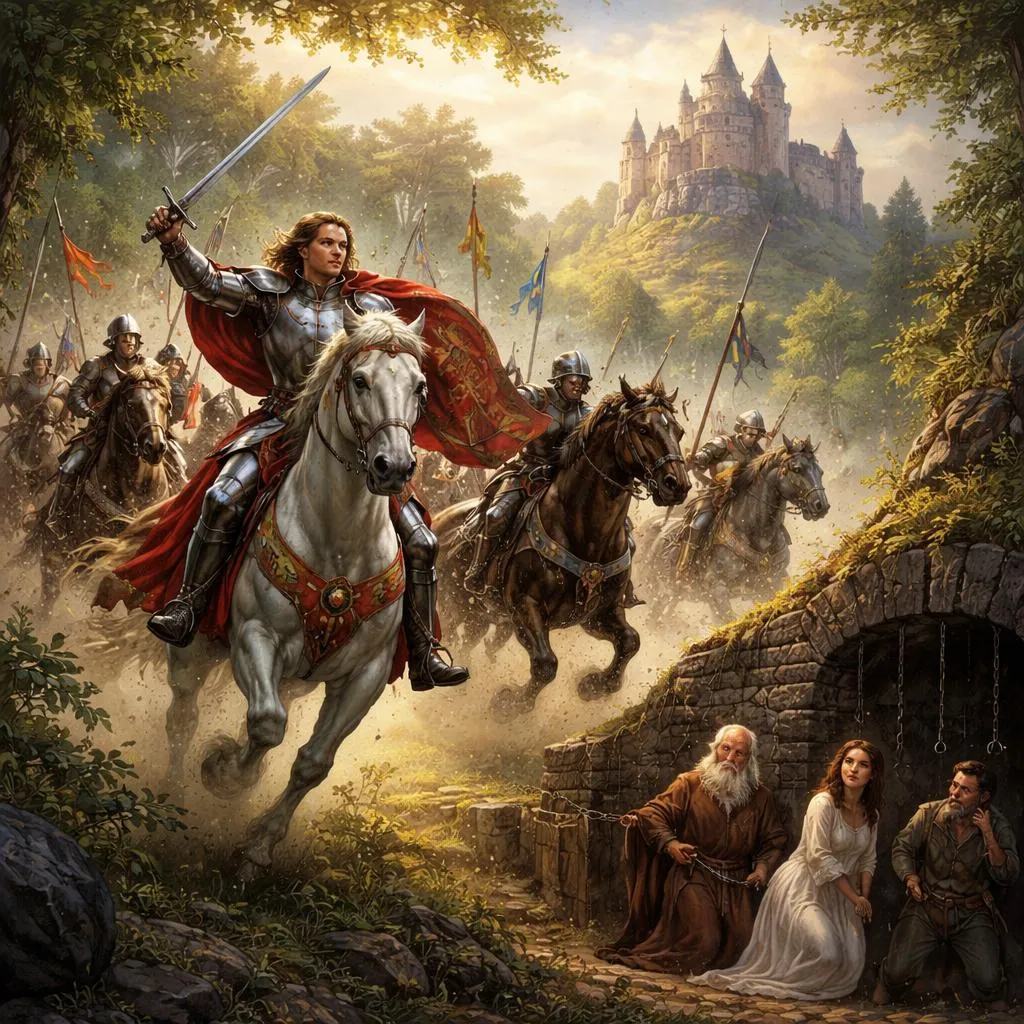
In a minute a third slave was struggling in the air. It was dreadful. I turned away my head a moment, and when I turned back I missed the king! They were blindfolding him! I was paralyzed; I couldn’t move, I was choking, my tongue was petrified. They finished blindfolding him, they led him under the rope. I couldn’t shake off that clinging impotence. But when I saw them put the noose around his neck, then everything let go in me and I made a spring to the rescue—and as I made it I shot one more glance abroad—by George! here they came, a-tilting!—five hundred mailed and belted knights on bicycles!
The grandest sight that ever was seen. Lord, how the plumes streamed, how the sun flamed and flashed from the endless procession of webby wheels!
I waved my right arm as Launcelot swept in—he recognized my rag —I tore away noose and bandage, and shouted:
“On your knees, every rascal of you, and salute the king! Who fails shall sup in hell to-night!”
I always use that high style when I’m climaxing an effect. Well, it was noble to see Launcelot and the boys swarm up onto that scaffold and heave sheriffs and such overboard. And it was fine to see that astonished multitude go down on their knees and beg their lives of the king they had just been deriding and insulting. And as he stood apart there, receiving this homage in rags, I thought to myself, well, really there is something peculiarly grand about the gait and bearing of a king, after all.
I was immensely satisfied. Take the whole situation all around, it was one of the gaudiest effects I ever instigated.
And presently up comes Clarence, his own self! and winks, and says, very modernly:
“Good deal of a surprise, wasn’t it? I knew you’d like it. I’ve had the boys practicing this long time, privately; and just hungry for a chance to show off.”
Antecedentes e Introducción del Autor
Este vívido pasaje es una recreación creativa inspirada en los legendarios cuentos del Rey Arturo y sus caballeros, ambientada en un telón de fondo dramático y teatral. La historia se basa en la rica tradición de las leyendas artúricas, que se han contado y recontado durante siglos. Estas leyendas se originaron en la Gran Bretaña medieval y han sido adaptadas por innumerables autores, poetas y dramaturgos. El autor de esta narrativa en particular utiliza un tono moderno, algo humorístico, para dar nueva vida a la historia clásica, mezclando imágenes históricas con un toque de sátira y sorpresa.
Interpretación Detallada y Significado
La escena captura un momento de tensión y espectáculo: el rey condenado y sus compañeros son objeto de burla por una multitud hostil, pero la dignidad del rey y la lealtad de sus caballeros finalmente cambian el rumbo. La llegada de los caballeros en bicicleta, un giro humorístico y anacrónico, simboliza la esperanza, la valentía y el triunfo de la justicia sobre la crueldad y la injusticia. La historia explora temas de lealtad, coraje, dignidad en la adversidad y el poder del liderazgo.
La negativa del rey a ser doblegado por la burla de la multitud resalta la importancia de la fuerza interior y el respeto por uno mismo. El dramático rescate de los caballeros demuestra el valor de defender lo que es correcto, incluso cuando las probabilidades parecen abrumadoras. Esta historia también toca la idea de que la verdadera nobleza no proviene de la apariencia exterior o el estatus social, sino de las acciones y el carácter.
Lecciones e Ideas para Estudiantes
-
Coraje y Resiliencia: El rey y sus seguidores se enfrentan a la humillación y el peligro, pero no se rinden. Los estudiantes pueden aprender la importancia de mantenerse firmes en sus creencias y valores, incluso cuando otros se burlan o se oponen a ellos.
-
Lealtad y Amistad: La lealtad de los caballeros a su rey enseña el valor de apoyar a los amigos y permanecer unidos en tiempos difíciles.
-
Liderazgo y Dignidad: El porte tranquilo y majestuoso del rey, a pesar de sus harapos y heridas, muestra que el verdadero liderazgo se trata de carácter, no solo de poder o apariencia.
-
Justicia y Equidad: El clímax de la historia, donde los caballeros rescatan al rey de una ejecución injusta, anima a los estudiantes a pensar en la equidad y el coraje para defender lo que es correcto.
Aplicando Estas Lecciones en la Vida Diaria
-
En la Escuela: Los estudiantes pueden practicar la resiliencia al no rendirse cuando se enfrentan a desafíos, como materias difíciles o presiones sociales. También pueden mostrar lealtad apoyando a sus compañeros de clase y oponiéndose al acoso.
-
En las Amistades: Al igual que los caballeros, los estudiantes deben ser amigos confiables y solidarios, ayudándose mutuamente en los momentos difíciles.
-
En el Liderazgo: Ya sea en proyectos grupales o clubes, los estudiantes pueden aprender a liderar con dignidad y equidad, inspirando a otros con su ejemplo.
-
En Situaciones Sociales: Defender la justicia y la equidad, incluso en pequeñas cosas, ayuda a crear una comunidad más amable y respetuosa.
Cultivando Cualidades Positivas de la Historia
-
Construir Fuerza Interior: Practicar la confianza en uno mismo y la calma, especialmente cuando se enfrenta a críticas o contratiempos.
-
Desarrollar la Lealtad: Valorar y nutrir las amistades, mostrando amabilidad y apoyo.
-
Abrazar el Coraje: Afrontar los desafíos con valentía y hablar en contra de la injusticia.
-
Practicar el Liderazgo: Liderar con el ejemplo, con respeto e integridad.
Reflexión y Apreciación
Esta historia invita a los lectores a reflexionar sobre lo que significa ser verdaderamente noble y valiente. Nos desafía a mirar más allá de las apariencias y a valorar el coraje, la lealtad y la justicia. Al participar en estas historias, los estudiantes pueden desarrollar empatía, conciencia moral y una comprensión más profunda del carácter humano. Estas cualidades les servirán bien no solo en la literatura, sino en todas las áreas de la vida.
En resumen, esta recreación imaginativa de un momento artúrico es más que un simple cuento entretenido. Es una rica fuente de inspiración y orientación para los jóvenes lectores, animándolos a cultivar virtudes que les ayudarán a convertirse en individuos reflexivos, valientes y compasivos.
