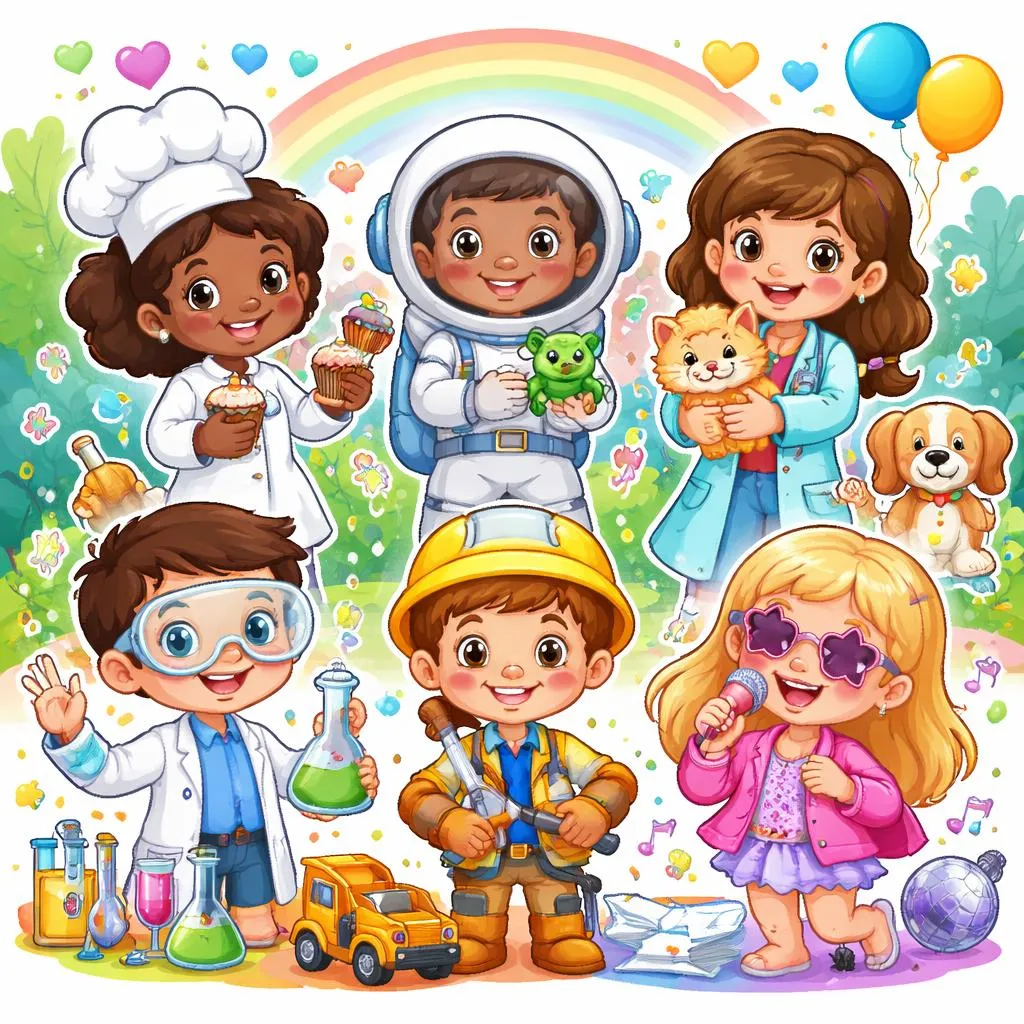

What Are Job Names? Job names are the titles people have at work. They tell what someone does every day. Children can learn job names to understand work and community. Job names help identify responsibilities and skills. Learning job names improves vocabulary and reading. It also shows how people contribute to society.
Job names can be simple, like “teacher” or “driver.” They can also be more specific, like “pediatrician” or “software engineer.” Learning these words helps children describe people and actions. Children notice tools, uniforms, and workplaces connected to jobs. Job names can spark curiosity about future careers. They make learning about work fun and engaging.
Meaning and Explanation A job name shows the kind of work someone does. For example, a “chef” cooks food. A “nurse” cares for patients. A “pilot” flies airplanes safely. Every job name connects to tasks, actions, and responsibilities. Understanding job names teaches children about roles and teamwork.
Job names also show respect for work. Children learn that every job has value. Jobs involve skills, effort, and sometimes training. Some jobs need school or university education. Other jobs depend on practice and experience. Learning job names builds knowledge about people and society.
Categories or Lists of Job Names Job names can be organized into categories. Community jobs include teachers, police officers, and firefighters. Creative jobs include artists, musicians, and writers. Technical jobs include engineers, programmers, and scientists. Service jobs include chefs, hairdressers, and shop assistants. Outdoor jobs include farmers, gardeners, and construction workers.
Grouping jobs helps children understand differences and similarities. It makes learning vocabulary easier and structured. Children can explore categories they find interesting. Sorting jobs by workplace or activity strengthens memory. Categories also teach children about teamwork and collaboration. They show how different jobs help communities function.
Daily Life Examples Job names appear everywhere in daily life. Teachers guide learning in schools. Doctors and nurses help patients stay healthy. Chefs prepare meals for restaurants and homes. Police officers and firefighters keep people safe. Farmers grow food that everyone eats.
Recognizing jobs in daily life connects words to real experiences. Children notice tools, uniforms, and actions linked to jobs. Daily examples make learning interactive and meaningful. Children can observe adults and peers performing tasks. Examples build understanding of work and responsibility. Learning through daily life prepares children for social awareness.
Printable Flashcards Flashcards are helpful for learning job names and pictures. One side shows an image of a worker. The other side shows the job name, like “baker” or “engineer.” Flashcards can also include verbs or short descriptions.
Children can play memory or matching games with cards. Matching images and words strengthens vocabulary. Cards can be used at home or in the classroom. Flashcards make learning visual, interactive, and fun. They also encourage discussion about job roles and tasks.
Learning Activities or Games Learning job names becomes exciting with games. Children can act out different jobs through role-play. Pretending to be a chef, teacher, or firefighter makes learning hands-on. Movement helps internalize vocabulary and understanding. Drawing or coloring jobs enhances memory and creativity.
Games like “Guess the Job” allow children to describe jobs. Others guess based on clues or actions. Sorting games can group job names by category or workplace. Creative activities support speaking and imagination skills. Interactive learning turns vocabulary practice into play.
Vocabulary Learning Job names introduce new words and concepts. Children learn nouns, verbs, and adjectives through jobs. For example, “baker” relates to the verb “bake.” “Gardener” connects to “plant” and “water.” Vocabulary expands with visuals, actions, and context.
Children also learn about responsibilities and contribution. Discussing jobs helps understand purpose in society. Songs or rhymes about jobs reinforce words naturally. Multi-sensory learning strengthens retention. Words are easier to remember when connected to real actions.
Phonics and Spelling Job names support phonics practice. Children notice beginning, middle, and ending sounds. Words like “doctor,” “engineer,” and “teacher” introduce different sounds. Repetition helps recognize spelling patterns.
Children can clap syllables to hear word sounds. Singing or chanting job names improves pronunciation. Movement with words strengthens memory. Phonics learning becomes fun with gestures and music. Patterns in sounds are easier to remember in context.
Grammar Patterns Job names naturally show grammar patterns. Sentences like “The teacher teaches children” show subject-verb-object. “The firefighter helps people” introduces simple present tense. Children observe sentence structure in context.
Using verbs with job names reinforces grammar. Children can practice making sentences aloud or in writing. Short, repeated sentences make grammar clear. Examples in activities and songs support understanding of verbs and tenses. Children learn naturally while playing or singing.
Children exploring job names discover imagination, teamwork, and language. Printable materials, flashcards, and role-play make learning interactive. Vocabulary, phonics, and grammar improve with engaging activities. Children can create their own stories or games with job names. Exploring job names opens curiosity and builds understanding of work and society.