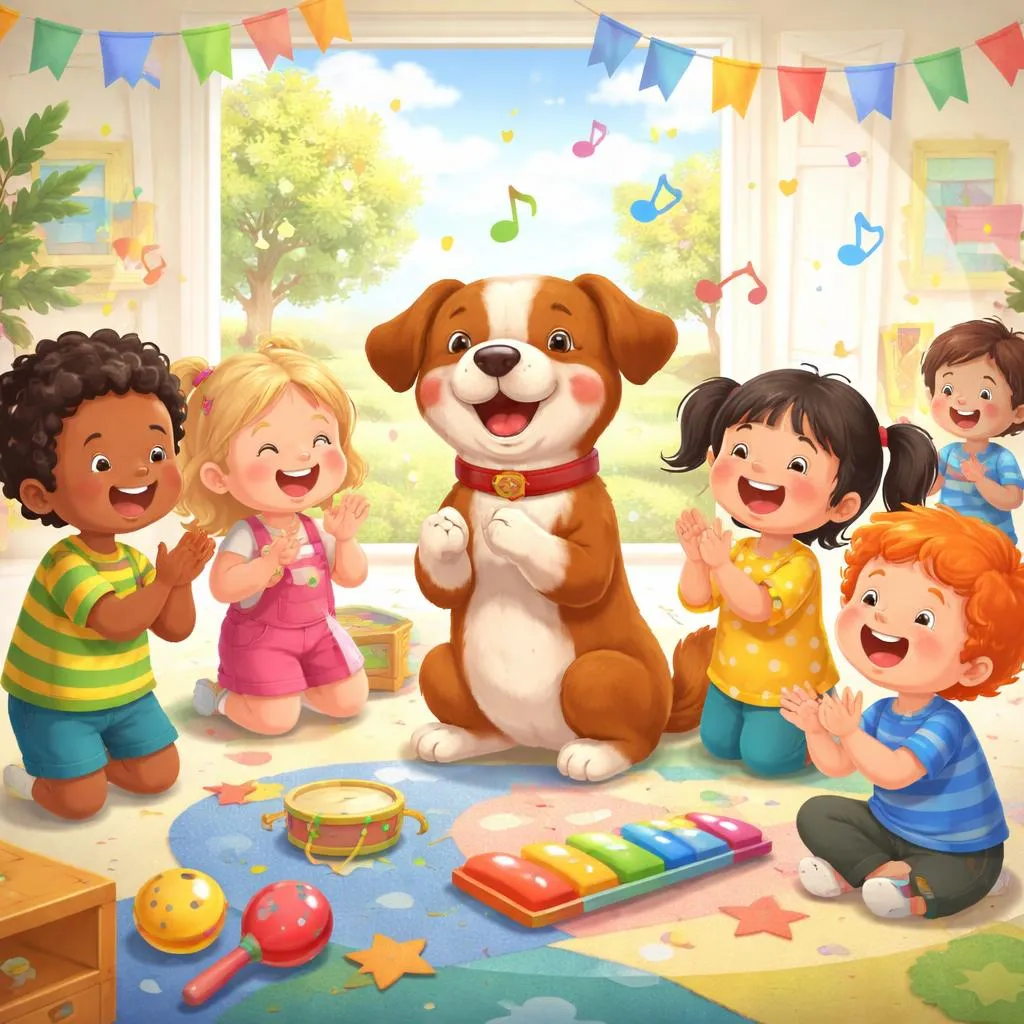

What is the “Bingo Is His Name O” song? “Bingo Is His Name O” is a classic children’s song that teaches letters, rhythm, and vocabulary. The song tells the story of a dog named Bingo. It is sung with clapping and hand motions to make learning interactive. Children enjoy repeating the letters in Bingo’s name. The song introduces sequencing, spelling, and rhythm. It is widely used in classrooms, playgrounds, and music activities for early learners.
The repetitive structure makes the song easy to remember. Singing with clapping improves coordination and listening skills. The song encourages participation, teamwork, and social learning. Children practice pronunciation while enjoying rhythm and melody. It creates a natural learning environment without formal instruction. Songs like this combine music, movement, and language learning in one activity.
Lyrics of the Song The main lyrics go: “There was a farmer who had a dog And Bingo was his name-o B-I-N-G-O B-I-N-G-O B-I-N-G-O And Bingo was his name-o”
Each verse removes one letter, replaced by a clap: “There was a farmer who had a dog And Bingo was his name-o [Clap]-I-N-G-O [Clap]-I-N-G-O [Clap]-I-N-G-O And Bingo was his name-o”
This pattern continues until all letters are replaced with claps. The song encourages children to remember letters and sequence. It also introduces rhythm, repetition, and counting naturally. The interactive element makes it engaging for young learners. Children learn to follow patterns and anticipate changes in the song. The combination of letters and clapping enhances memory retention.
Vocabulary Learning The song introduces basic vocabulary like “farmer,” “dog,” and “name.” Repetition helps children internalize the words quickly. Children can connect words with actions, such as pretending to pet a dog. Using props like toy animals or pictures reinforces understanding. Vocabulary learning is integrated into singing and clapping. Children practice spelling while learning word meanings.
The name “Bingo” itself teaches letters in sequence. Children recognize the order of letters while singing. The song encourages phonetic awareness through letter sounds. Playing with words and letters supports early literacy skills. Children develop recognition of both uppercase and lowercase letters. Language learning happens through active, enjoyable participation.
Phonics Points The song supports phonics through letter recognition and sounds. Each letter in Bingo is pronounced clearly, emphasizing individual sounds. Clapping the missing letters strengthens auditory and motor skills. Children notice consonant and vowel sounds as they sing. The repetition of letters helps distinguish sounds and blends.
The song encourages children to segment and blend sounds. They learn syllables and letter patterns in a musical context. Phonics learning becomes playful, associating sounds with actions. Singing the song regularly improves pronunciation and listening skills. Children internalize phonics rules without formal drills. Music turns abstract phonics concepts into enjoyable learning experiences.
Grammar Patterns The song demonstrates simple sentence structures. Lines like “There was a farmer who had a dog” show subject-verb-object patterns. Children hear correct grammar repeatedly in context. The song introduces past tense through “was” and “had.”
Children internalize sentence structure naturally by singing. The repetition of phrases strengthens understanding of word order. The song provides examples of possessive forms like “Bingo was his name.” Grammar learning is embedded in music and rhythm, making it less abstract. Children practice using verbs and nouns in complete sentences. Language is learned naturally while enjoying movement and play.
Daily Life Examples The song connects to daily life through play and imagination. Children can pretend to be farmers or dogs while singing. Clapping and moving enhances coordination and focus. Singing together builds social interaction and teamwork skills. The story of Bingo introduces concepts like naming, counting, and letters.
Role-play activities make learning more tangible and memorable. Children use imagination to act out scenes from the song. Practical learning supports vocabulary, phonics, and grammar understanding. Active participation engages multiple senses for deeper learning. The combination of music, movement, and language creates a holistic learning experience. Songs like this make English fun and meaningful for children.
Printable Flashcards Flashcards can feature the letters B-I-N-G-O and key vocabulary words. Children match letters while singing or clapping along with the song. Visual aids help link words, letters, and actions together.
Flashcards with illustrations of a dog or farmer add context. Games with cards reinforce memory and letter recognition. Teachers and parents can customize cards for different learning levels. Visual and auditory learning together strengthens retention. Flashcards encourage repetition and independent practice. Children learn letters, words, and meanings while playing.
Learning Activities and Games “Clap the Missing Letter” has children clap for letters removed in each verse. “Letter Match” uses flashcards to identify letters while singing. “Act It Out” allows children to pretend to be the farmer or Bingo.
Games reinforce spelling, rhythm, vocabulary, and sentence patterns. Children enjoy learning through movement, play, and music. Group activities enhance listening skills, coordination, and teamwork. Repeated practice improves fluency and memory retention. Music-based learning integrates cognitive, physical, and social skills. Children develop language and rhythm skills in a fun and interactive way.
Regular singing and clapping with “Bingo Is His Name O” improves language skills. The song encourages phonics, vocabulary, sentence structure, and memory. Music, rhythm, and movement create a joyful learning environment. Children engage actively in English learning while having fun with peers. The combination of repetition, melody, and clapping supports holistic development. Songs like this make learning English an exciting and memorable experience for children.