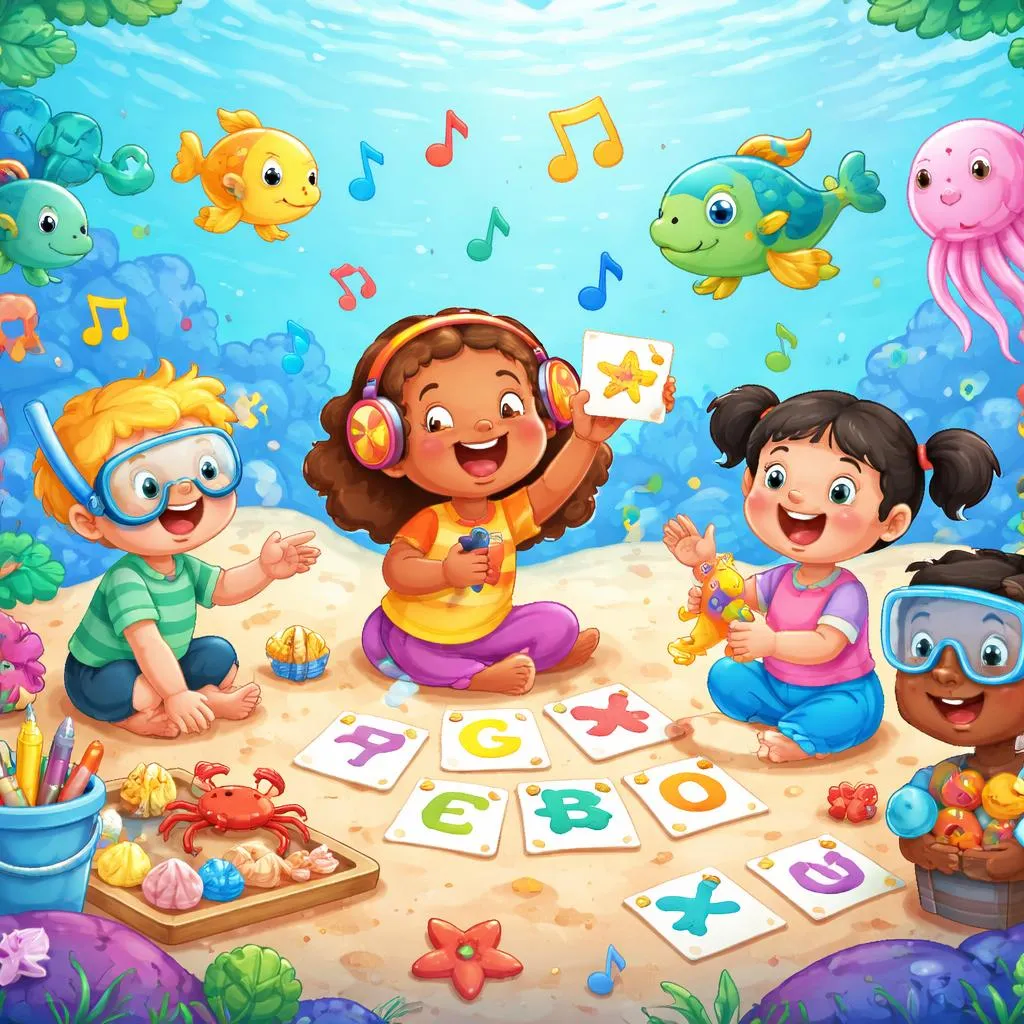

What is the rhyme or song?
The phrase under the sea song and lyrics often refers to a joyful ocean-themed song that appears in children’s media and family films. The song celebrates life in the ocean. It uses rhythm, repetition, and colorful images. These features make it perfect for early English learning.
Songs with ocean themes invite imagination. They also introduce new words in a natural way. Melody supports memory and pronunciation. Repetition supports confidence and fluency.
This song often includes fish, coral, waves, and playful sea creatures. Each verse paints a picture of underwater life. This imagery helps connect language with meaning.
Song lyrics for classroom learning
The full under the sea song and lyrics are protected by copyright in many cases. Short excerpts can support learning in class settings. These excerpts highlight rhythm and vocabulary.
“Under the sea, under the sea Darling it’s better down where it’s wetter Take it from me.”
These lines show rhyme, rhythm, and simple sentence patterns. They also introduce comparative language like “better.”
When using song lyrics, focus on key phrases and repeated lines. This method supports listening and speaking skills.
Vocabulary learning with under the sea song and lyrics
Ocean songs introduce rich vocabulary. Many words connect with animals, nature, and movement.
Words often include fish, crab, shell, coral, seaweed, wave, and sand. Action words often include swim, dance, jump, and sway. Descriptive words often include blue, deep, bright, and shiny.
Each word connects to an image. Images help build strong mental connections. Context helps learners understand meaning without translation.
Short sentences support clarity. “The fish swim.” “The crab dances.” “The waves move.”
These patterns reinforce subject and verb structure.
Phonics points in the song
Phonics patterns appear often in under the sea song and lyrics. Rhyming words support sound awareness.
Words like sea, me, free, and be share the long “ee” sound. Words like sand, hand, and land share the short “a” sound. Words like wave and cave share the long “a” sound.
Listening for rhyme builds phonemic awareness. Repeating lines builds pronunciation skills. Singing slowly helps focus on each sound.
Clapping for syllables supports rhythm and word stress. This method strengthens listening and speaking skills.
Grammar patterns in the song
Songs often use simple grammar structures. These structures support early sentence building.
Present tense appears often. “The fish swim.” “The crab dances.”
Imperatives appear in playful lines. “Listen to me.” “Come with us.”
Comparatives appear in expressive lines. “Better down where it’s wetter.”
Prepositions appear frequently. “Under the sea.” “On the sand.”
These patterns provide natural grammar exposure. Repetition supports retention.
Daily life examples inspired by the song
Ocean songs inspire real-life language practice.
A classroom scene can include pictures of sea animals. Sentences can describe each animal. “The turtle is slow.” “The dolphin is fast.”
A story time scene can describe underwater adventures. “The diver swims under the sea.”
Art activities can inspire descriptive language. “The coral is red.” “The fish are yellow.”
Connecting song language to daily activities supports comprehension.
Learning activities with under the sea song and lyrics
Music-based activities engage multiple skills. Listening, speaking, and movement all work together.
Singing with gestures supports comprehension. Swimming motions represent fish. Clapping represents waves.
Drawing activities reinforce vocabulary. Coloring fish, shells, and coral supports word recall.
Storytelling activities extend the song theme. A short story about an underwater city encourages creative language.
Role-play activities encourage speaking practice. A pretend ocean market scene can use simple dialogues.
Printable materials for classroom use
Printable resources support structured learning.
Flashcards with sea animals and key words support vocabulary practice. Sentence strips with lines from under the sea song and lyrics support reading practice. Coloring pages with ocean scenes support creativity and language recall.
Matching worksheets connect words with pictures. Tracing worksheets support early writing skills.
These materials support independent and guided practice.
Educational games based on the song
Games reinforce learning in an enjoyable way.
A “Sea Creature Bingo” game uses vocabulary from the song. A “Swim and Say” movement game connects actions with words. A “Lyric Line Puzzle” game asks learners to arrange song lines in order. A “Sound Match” game connects rhyming words from the song.
Games encourage repetition without boredom. They also promote collaboration and communication.
Listening skills with ocean songs
Listening to under the sea song and lyrics supports auditory skills. Melody helps learners catch stress and intonation. Repetition helps learners predict language patterns.
Listening activities can include: Identifying animals mentioned in the song. Clapping for rhymes. Pointing to pictures when hearing key words.
These tasks strengthen comprehension and attention.
Speaking skills with song-based practice
Songs reduce anxiety when speaking. Group singing builds confidence. Choral repetition supports pronunciation.
Simple speaking tasks can follow the song. Describe a favorite sea animal. Say one sentence about the ocean.
Short dialogues can emerge from song themes. “Do you like fish?” “Yes, I like fish.”
These patterns build conversational skills.
Reading skills connected to lyrics
Printed lyrics support reading practice. Short lines help track words. Large fonts and spacing improve readability.
Highlighting key words supports sight word recognition. Repeated lines reinforce word forms.
Reading aloud builds fluency. Paired reading builds confidence.
Writing skills inspired by ocean songs
Writing tasks can extend song learning. Short sentences describe sea animals. Simple poems describe the ocean.
Creative prompts inspire imagination. “Write about a day under the sea.” “Draw and label your favorite sea creature.”
Writing integrates vocabulary and grammar naturally.
Cultural and thematic learning
Ocean songs often reflect themes of nature, harmony, and adventure. These themes connect with science and social studies topics.
Discussing sea life supports environmental awareness. Talking about underwater habitats supports science vocabulary.
Songs create cross-curricular connections. They integrate language with content learning.
Classroom routines with music
Songs like under the sea song and lyrics fit many classroom routines. They work well as warm-up activities. They also work as transition songs.
Music can signal the start of a lesson. Music can signal clean-up time.
Routine songs create structure and predictability. Predictability supports comfort and engagement.
Parent and home learning connections
Ocean songs support home practice. Families can sing together. Songs can play during car rides or quiet time.
Simple activities at home can include drawing sea animals and naming them in English. Storytelling about underwater adventures can encourage speaking.
Home practice reinforces classroom learning.
Inclusive learning through music
Songs support diverse learning styles. Auditory learners benefit from melody. Visual learners benefit from pictures. Kinesthetic learners benefit from movement.
Ocean songs allow everyone to participate. Movement, singing, and drawing provide multiple entry points.
This inclusive approach builds motivation and confidence.
Extending vocabulary beyond the song
The ocean theme allows vocabulary expansion. Words like ocean, island, beach, reef, and submarine connect to the theme. Adjectives like deep, wide, calm, and stormy add detail.
Sentence building can include these words. “The ocean is deep.” “The beach is calm.”
This extension builds language depth.
Creative projects with ocean themes
Creative projects deepen engagement. An underwater mural project encourages teamwork and vocabulary use. A puppet show with sea animals encourages speaking. A mini-book about ocean adventures supports reading and writing.
Projects integrate language with art and storytelling.
Using rhythm and movement for memory
Rhythm supports memory. Movement supports meaning.
Swimming motions, waving arms, and tapping beats connect language to action. These connections strengthen retention.
Songs with actions create multisensory learning experiences.
Assessment through song activities
Observation during singing and games provides assessment data. Pronunciation, vocabulary recall, and participation indicate progress.
Short quizzes can use pictures and simple sentences. Creative outputs like drawings and stories show understanding.
Assessment can remain low-stress and playful.
Digital resources and multimedia integration
Videos, animations, and karaoke versions of under the sea song and lyrics support multimedia learning. Subtitles support reading skills. Animated visuals support comprehension.
Interactive apps can reinforce vocabulary and phonics. Digital flashcards and games support independent practice.
Technology enriches language learning.
Building emotional connection through music
Songs create emotional connection. Ocean songs often sound joyful and adventurous. Positive emotions support motivation and memory.
Singing together builds community. Shared music experiences strengthen classroom bonds.
Encouraging creativity and imagination
Underwater themes inspire imagination. Imaginary sea cities, talking fish, and friendly sharks spark creative thinking.
Creative language tasks encourage expression. Imagination supports storytelling and descriptive language.
Integrating grammar practice with lyrics
Lyrics provide natural grammar examples. Prepositions like under, in, and on appear frequently. Comparatives like better and more appear in expressive lines.
Sentence transformation tasks can use song lines. Change positive sentences to negative. Change present tense to past tense.
These tasks build grammar awareness.
Long-term benefits of song-based learning
Music-based learning improves pronunciation, memory, and confidence. Songs provide repetitive, meaningful input. They also create a positive learning environment.
Ocean-themed songs combine science, art, and language. This integration supports holistic education.
The joyful rhythm of under the sea song and lyrics invites curiosity, builds vocabulary, and strengthens language skills through melody, movement, and imagination.