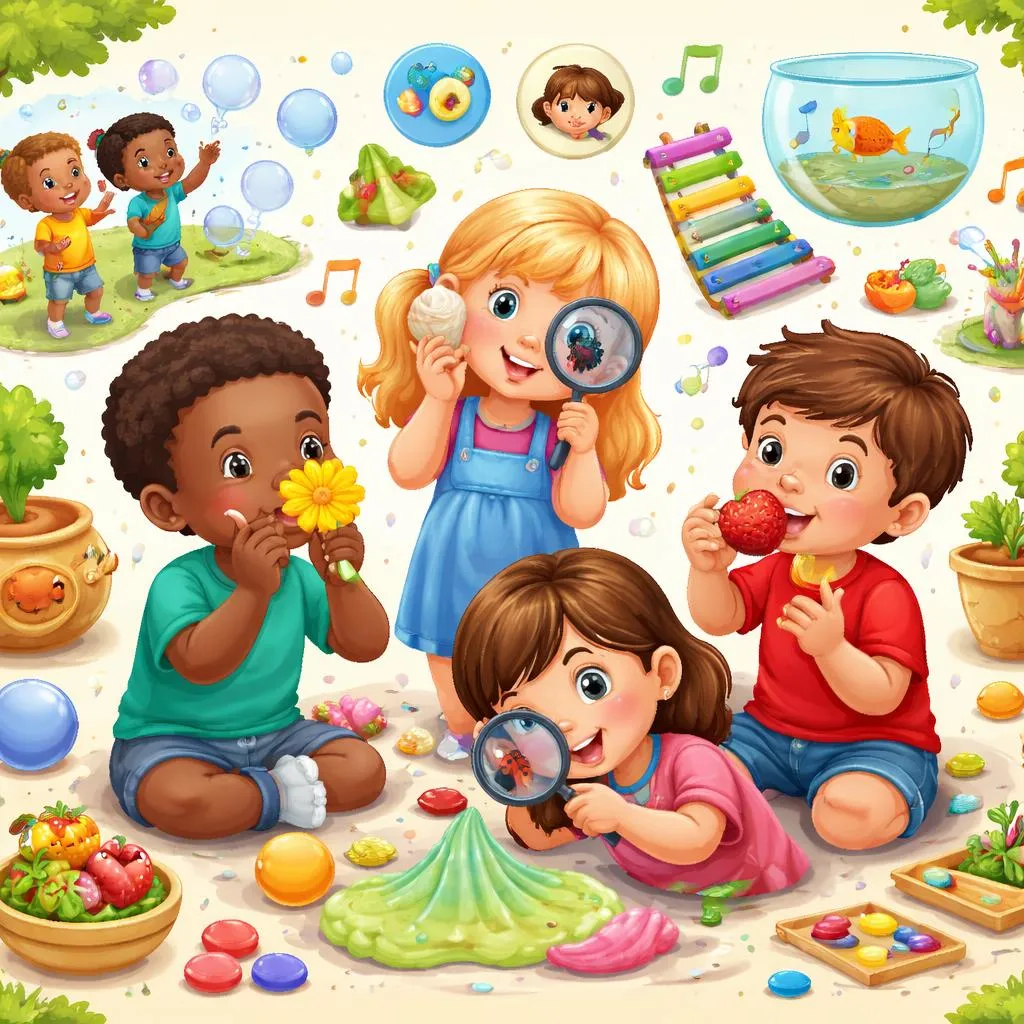

What Are the Five Senses?
The five senses help children explore the world around them. They include sight, hearing, touch, taste, and smell. Each sense provides important information about the environment.
Sight helps children see colors, shapes, and movements. Hearing allows children to notice sounds, music, and speech. Touch helps feel textures, temperatures, and shapes. Taste allows children to enjoy flavors in foods. Smell lets children detect scents from flowers, food, and nature.
Understanding the five senses is important for preschoolers. It improves language, observation skills, and curiosity. Learning about senses encourages exploration and creativity in daily life.
Meaning and Explanation
5 senses preschool activities are designed to help children experience each sense actively. Activities involve seeing, listening, touching, tasting, and smelling in fun ways.
These activities encourage hands-on learning. They help children understand differences between textures, sounds, flavors, and smells. They also improve motor skills, attention, and memory.
Using activities based on the five senses makes learning exciting. Children are more likely to remember words, sensations, and experiences when they actively participate.
Categories or Lists of Activities
Activities for the five senses can be divided into five categories:
Sight Activities:
Color matching games with blocks or cards
Sorting objects by size or shape
Observing nature or pictures in books
Hearing Activities:
Listening to different musical instruments
Playing sound matching games
Identifying sounds from the environment, like birds or vehicles
Touch Activities:
Feeling objects with different textures, like soft, rough, or smooth
Sensory bins with rice, sand, or water
Shape tracing with fingers
Taste Activities:
Tasting different fruits or vegetables
Comparing sweet, sour, and salty flavors
Making simple snacks and discussing tastes
Smell Activities:
Smelling herbs, flowers, or spices
Matching scents to objects
Blindfolded scent games
Organizing activities by sense ensures children can focus on one skill at a time. It also allows teachers and parents to guide learning effectively.
Daily Life Examples
The five senses are part of daily life. Children see toys, hear music, touch textures, taste food, and smell flowers every day. Incorporating senses into routines makes learning natural.
For example, during snack time, children can describe what they taste and smell. During outdoor play, they can notice colors, shapes, and sounds. Linking activities to real life improves understanding and vocabulary.
Printable Flashcards
Flashcards are useful for teaching the senses. Cards can show objects representing each sense:
Sight: rainbow, ball, tree
Hearing: drum, bell, bird
Touch: feather, stone, fabric
Taste: apple, lemon, chocolate
Smell: flower, coffee, soap
Children can match flashcards to real objects or sort them by senses. Flashcards help reinforce vocabulary and observation skills.
Learning Activities and Games
Interactive games make the five senses exciting:
Mystery Bag: Place objects in a bag. Children feel each object without looking and guess what it is. This improves touch and descriptive language skills.
Sound Hunt: Play different sounds and ask children to identify them. This improves listening skills and concentration.
Taste Test: Provide small amounts of food with different flavors. Children describe what they taste and compare sensations.
Scent Match: Present small containers with scents. Children match smells to objects. This improves smell awareness and memory.
Color and Shape Hunt: Ask children to find objects of specific colors or shapes in the classroom or outdoor space. This improves observation and categorization skills.
Educational Benefits
Activities for the five senses have many benefits:
Enhance vocabulary by describing sensations
Improve observation, concentration, and memory
Encourage curiosity and creativity
Strengthen motor skills through touching, grasping, and moving
Develop social skills through shared activities and discussion
Tips for Parents and Teachers
Repeat activities regularly to reinforce learning
Use real objects and everyday items for hands-on experiences
Ask questions like “What does it feel like?” or “What color is it?” to promote discussion
Combine senses in activities, such as smelling flowers while describing their colors and shapes
Encourage children to express feelings and observations using words
Why Children Love These Activities
The activities are playful and engaging. Children enjoy exploring new textures, tastes, and sounds. Games and hands-on experiences make learning memorable.
The 5 senses preschool activities also allow children to learn at their own pace. Each child can explore and discover in ways that feel fun and safe.
Integrating these activities in classrooms or at home creates a rich learning environment. Children develop observation, language, and cognitive skills while enjoying creative exploration of the world around them.